










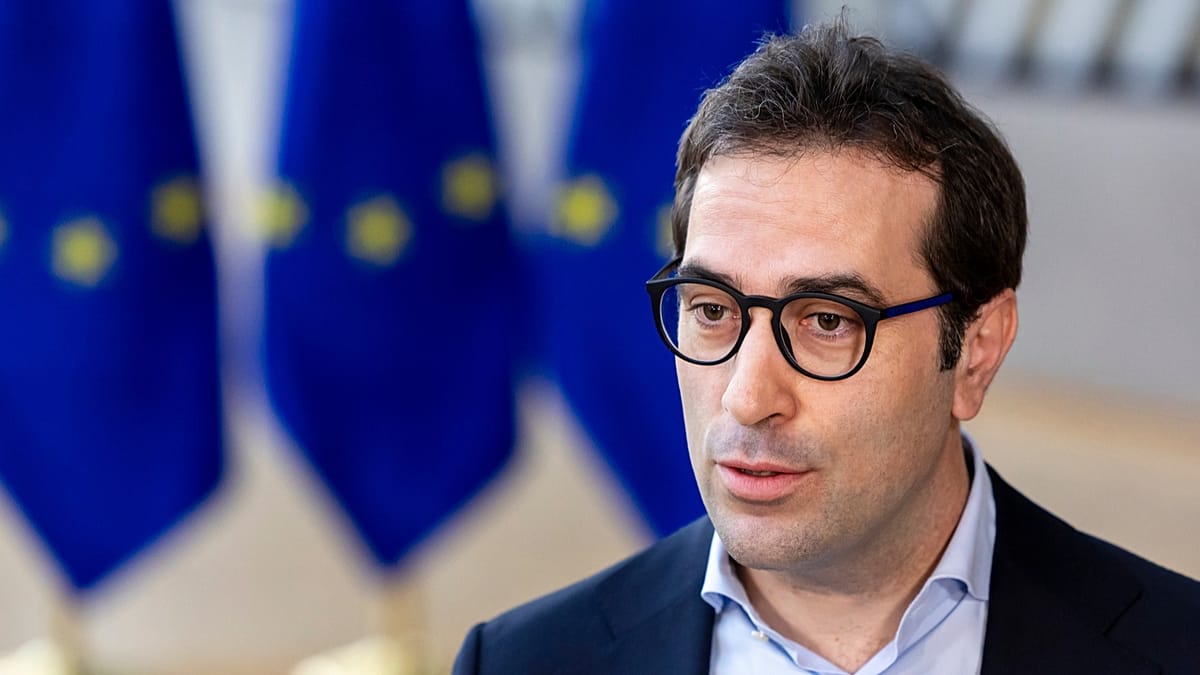
There is a “window of opportunity” to push for a new mechanism for EU joint borrowing, as the bloc seeks to strengthen the euro’s international role, Spanish Finance Minister Carlos Cuerpo told Euronews.
ADVERTISEMENT


ADVERTISEMENT
With the United States resuming hostilities with Iran on Wednesday, the implications for Europe have returned to the top of the EU’s agenda. Against a backdrop of heightened geopolitical uncertainty, the search for safe assets has become an increasing priority.
In parallel, the EU is building up to give the euro an international role as a global reserve currency.
“We think there’s a good window of opportunity to put that proposal forward now. We’ve been having discussions on the international role of the euro over the past few months, with very good contributions on the fact that we need a safe asset,” Cuerpo told Euronews.
“We thought it was about time that there was a specific proposal,” the Spanish minister added.
Spain distributed a paper on Wednesday containing a detailed proposal on a new EU common borrowing mechanism, called “European Sovereign Facility”. It would centralise joint debt, reducing costs due to national fragmentation, while requiring participating countries to comply with EU fiscal rules.
Annual issuance would reach €850 billion if all 27 member states, the European Stability Mechanism and the European Financial Stability Facility participated, enabling the EU to build a €5 trillion stock of joint debt within five years.
If not all EU countries are willing to participate, Spain envisages creating a “coalition of the willing” as an initial stage.
“For the initiative to be meaningful, however, at least the five largest euro area issuers would need to participate, as they alone would enable an annual issuance volume of approximately €540–550bn,” according to the document containing the proposal and seen by Euronews.
The guarantees for this mechanism would be twofold: The loan to the participating member states and the EU budget.
The bloc’s 27 members are currently discussing the 2028–2034 long-term budget, set to be agreed by the end of 2026, with intense debate over how the budget will be financed.
However, Spain will have to win over countries that are strongly opposed to any kind of joint borrowing. Several Nordic countries, Germany, and the Netherlands are staunchly against taking on any further joint debt.
On the other hand, countries such as France and Greece have publicly endorsed new common borrowing.
Read the full article here