









Welcome back, this newsletter comes to you from the hall of the Justus Lipsius, as I am getting kicked out from the premises of the European Council summit after a whirlwind week of high-stakes diplomacy running between the placid shores of Lake Geneva in Évian-les-Bains and a too-hot-to handle Brussels.
ADVERTISEMENT


ADVERTISEMENT
Un jeune homme si brillant. Frankly, you have to give it to Emmanuel Macron.
The French president orchestrated a near-perfect G7 summit, balancing a mix of flattery, self-interest, European charm and a bit of luck to land a joint declaration with a clear win for Ukraine — and stage the end of hostilities between the US and Iran in none other than the Palace of Versailles.
None of that was a given going into the summit, certainly not after the disastrous G7 meeting held in Canada last year, in which Donald Trump bailed early as war broke out between Israel and Iran, leaders found no common ground on Russia, and the summit unfolded in an atmosphere of confrontation.
Macron called it “the Évian moment,” a turning point for Ukraine and Europe.
The French president loves pomp, but he does have a point. Europeans came out of the G7 relieved, the US President is a total wildcard but in this case it played in their favour. A European official told me there was “real convergence” across the atlantic.
On Ukraine, the official said, it is no secret that it’s been a bumpy ride, but ultimately both Americans and Europeans have reached the same conclusion: Russia does not want to negotiate peace.
For the Coalition of the Willing — the group of countries supportive of Ukraine led by France and the United Kingdom — it was also vindication. One diplomat told me the European dual-track approach to Trump is working. On issues where you need America, engage — even flatter. For the rest, do your own thing.
A beaming Macron told reporters that Europeans had refused to be sidelined when Putin seemed to have the ear of the US president last summer, and had instead decided to “organise” themselves independently of Trump. At the G7, the Europeans felt that not only do they have a seat at the table, they have earned it.
With Ukraine safe in the declaration, came the coup d’éclat.
Macron understands the psychology of the US President. He wants to be treated like a king and he likes all things big to match his ego, so what better than a lavish dinner in Versailles, home to the Sun King, before parting ways?
On his way to the palace, Trump waved at the TV cameras — priorité au direct — as the Beast strolled through the golden gates of Versailles. From afar, he made hand gestures, pointing up and down. It took me a while to figure out he was in fact signalling: oil down, stocks up, as markets applauded the end of hostilities.
With the US President buzzing from birthday celebrations, a wrestling bonanza at the White House, and a touch of French seduction, Macron knew how to play him like a violin. A senior official even told me Trump seemed “to be in love with Macron” during his séjour gaulois. With the imperial red carpet waiting at Versailles, Trump stayed for the entire G7 and ultimately signed the deal.
Even here, fortune favoured the French President. As media leaks began to trickle from a memorandum of understanding between Washington and Tehran, Trump grew irritated, lashing at reporters and calling Obama a “son of a b****”. With backlash mounting over a deal seen as too soft on the regime, the President rushed to get it over the line before it could be sunk.
By candlelight, he grabbed a Sharpie (Americans rushed to get a printer over dinner) and got it done. For the Europeans, the deal isn’t ideal, but it gets the job done: ease the pressure on global energy markets and focus minds on Ukraine. They were also encouraged by what appeared to be a red line for Israeli Prime Minister Benjamin Netanyahu on striking Lebanon any further.
Évian marked the last G7 for Macron, with French elections due in 2027 and no clear outcome. Europeans will miss him — he is certainly the smartest of the bunch, and also the creator of a big mess at home after the dissolution of 2024.
As we grabbed our things to leave the press centre and finally have our one decent dinner of the trip by the lake with my colleague Angela, French diplomats spoke of a summit that went “according to plan”. All’s well that ends well.
Unless you’re Giorgia Meloni, who found herself on the short end of the stick after the US president told an Italian journalist she had “begged” for a picture to prove their “reconciliation” at the G7 in a way that made him feel sorry for her. How gracious of King Trump to take mercy on his subjects.
In all seriousness, the episode is remarkable, and so is the response of the Italian prime minister, who came out with guns blazing in a video recorded on an iPhone during a European summit to declare she, just like Italy, never begs.
More interesting than the theatrics of it was her lightbulb moment caught on camera: Trump often has more respect for his foes than for his allies.
There is no Trump whisperer. Meloni found out the hard way. Trump is someone you manage, nothing more, and Macron could offer some tips. But the Italian did well to stand up for herself and along the way maybe even boost her approval numbers. One last piece of advice for leaders: whenever you see a camera, always assume it’s rolling.
The sacred rule of television. The mic is always hot.
When it comes to Russia, Costa is doing his job
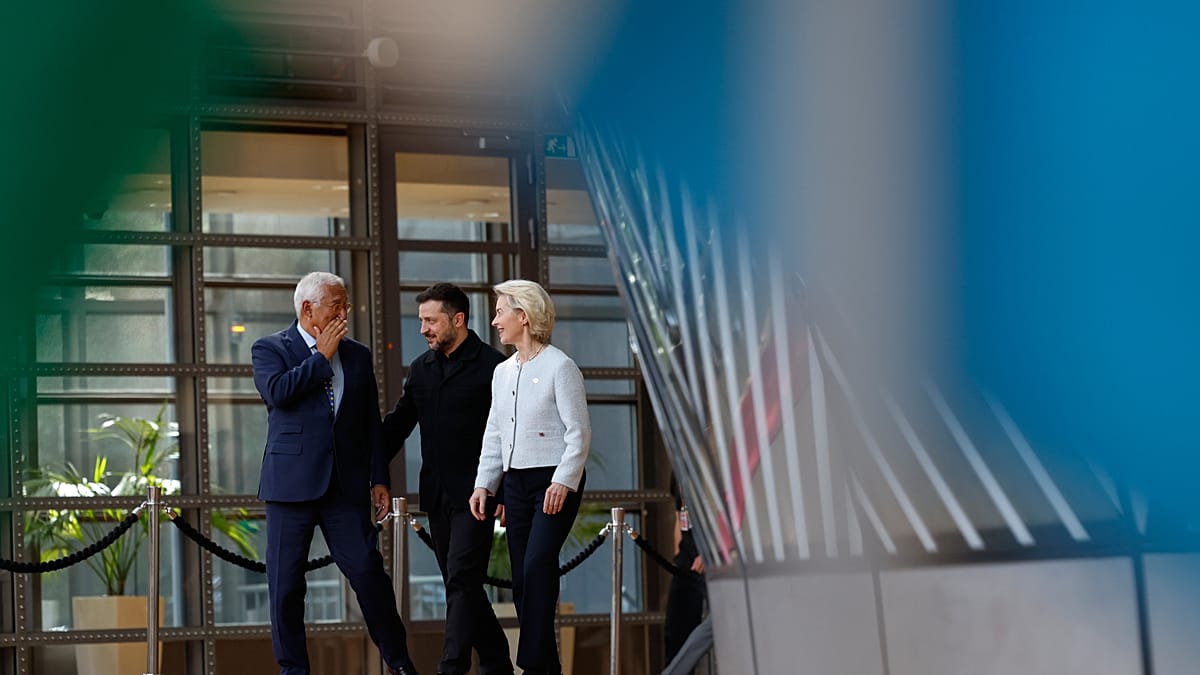
António Costa has made maintaining unity among the EU’s 27 member states the central theme of his mandate as European Council boss.
So naturally, when news emerged that his head of cabinet had tested diplomatic channels with Russia without first consulting all member states in an undisclosed phone call at his request, Brussels bubble drama ensued.
Don’t get me wrong, the phone call (actually two, although one lasted only 30 seconds, so it hardly counts) is no small matter.
It marks a significant pivot away from the policy of zero contact with Moscow pursued by Europeans after Russia’s full-scale invasion of Ukraine. Far from talking, they opted to punish the Kremlin through sanctions, travel bans, and billions of euros in military and financial assistance to Kyiv.
It was the right decision, and it was fully justified.
But two important factors have changed the calculus: the return of Trump to the White House, who has no qualms about speaking directly with Moscow and is eager to make a deal, and Volodymyr Zelenskyy’s own strategy, which calls for engagement to prove a point: that Russia is not serious about peace.
To that point, Costa is doing his job. For months, Europeans have fretted about being sidelined; peace in Europe without the Europeans would be unacceptable. Europe, we often hear in Brussels, does not need an interlocutor because it will speak with its own voice. But to do that, you need a channel of communication. Based on that logic, the backlash to the President’s initiative is overblown.
Not only is some form of contact with Russia — which does not amount to submission — inevitable when it comes to defining Europe’s security architecture on European terms, it also responds to Kyiv’s demands.
The timing of the news about the call is poor form — but context matters.
As I understand, the call took place in close succession to bilateral conversations among European leaders and Zelenskyy himself. At an informal leaders’ meeting held in Cyprus in April this year, the Ukrainian leader told the EU to be ready for communication with Moscow. The same message was stressed at a gathering of the European Political Community held in Armenia in early May.
The lag between the call and the news of it becoming public is awkward, granted, because the circumstances have changed. At the time, Kyiv feared that the US was too focused on the situation in the Middle East to even think about Ukraine.
Since then, Ukraine has been able to strike Russia hard, bringing the war closer to home and creating a perception that the dynamics on the battlefield are shifting. This was acknowledged by the President of the European Commission herself at Thursday’s summit, as Euronews reported.
It’s not just Costa. Ursula von der Leyen also told leaders that now is the right time to consider what a mandate for talks with Russia could look like, provided that Ukraine guides the process. Again, opening a diplomatic channel does not mean immediate negotiations. And the Ukrainians would agree.
Von der Leyen knew about Costa’s call, and so did Zelenskyy.
Zelenskyy himself told G7 leaders in Évian that talks should begin before the winter and noted that Vladimir Putin had not responded to an open letter in which he demanded a meeting. For Ukraine, the goal is simple: test every avenue to show Russia does not want peace, so therefore the pressure has to go up.
The Ukrainian leader reiterated that message to EU leaders during Thursday’s summit, in which he urged them to crack down harder on Russia’s shadow fleet. He was equally clear that the role of a mediator is a hypothetical for as long as Russia doesn’t come around for serious negotiations.
For months, the question of who would represent the Europeans at the table has dominated Brussels chatter. It matters because the complexity of the institutional framework does not provide for a simple answer.
Costa represents the 27 member states, but Kaja Kallas, the bloc’s chief diplomat, is supposed to handle foreign policy. At the same time, there is a strong argument in saying that countries that can provide actual security guarantees for Ukraine should guide the process. That takes me to the Coalition of the Willing and the big hitters, France, Germany, and the UK, which isn’t a member state, but is key for continental security.
Costa’s secret call has now brought all those issues into the open. And it’s about time, because at some point, decisions will have to be made. For months, EU leaders have asked to be at the table; the Council chief has provided a platform.
We can debate the methods and the timing, but there are more relevant questions: what will Europe use that channel for, and how can it play it to its advantage faced with a man who has no regard for human life and who benefits from chaos?
Europeans better have a good answer before the next call comes around.
You can subscribe to Off the Record by Maria Tadeo here
Read the full article here