









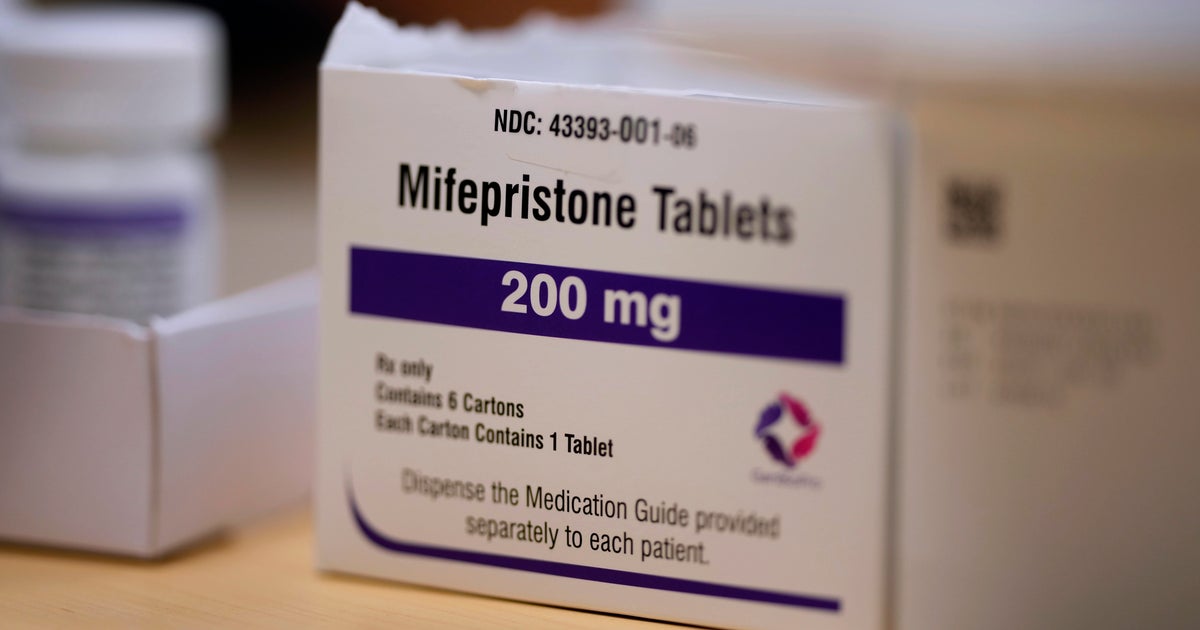
A maker of the widely used abortion pill mifepristone asked the Supreme Court on Saturday to block an appellate court ruling that cut off mail-order access to the drug just a day earlier, in what was the biggest jolt to abortion policy in the U.S. since the overturning of Roe v. Wade.
Danco Laboratories, which is also a defendant in the lawsuit in question, asked to block the New Orleans-based 5th U.S. Circuit Court of Appeals decision while appeals are pending, saying the appellate ruling “injects immediate confusion and upheaval into highly time-sensitive medical decisions.”
The appeals court’s unanimous ruling Friday marked a substantial victory for abortion opponents seeking to stem the flow of abortion pills prescribed online, which they view as subverting state bans. It requires that mifepristone be distributed only in person and at clinics, overruling regulations set by the federal Food and Drug Administration.
“Every abortion facilitated by FDA’s action cancels Louisiana’s ban on medical abortions and undermines its policy that ‘every unborn child is human being from the moment of conception and is, therefore, a legal person,'” the ruling states.
In their ruling, the judges stated that the current regulation “creates an effective way for an out-of-state prescriber to place the drug in the hands of Louisianans in defiance of Louisiana law.”
Judges have long deferred to the FDA’s judgments on the safety and appropriate regulation of drugs.
FDA officials under President Trump have repeatedly stated the agency is conducting a new review of mifepristone’s safety, at the direction of the president.
The judges noted in their ruling that the FDA “could not say when that review might be complete and admitted it was still collecting data.”
In a court filing, Louisiana’s attorney general and a woman who says she was coerced into taking abortion pills requested that the FDA rules be rolled back to when the pills were allowed to be prescribed and dispensed only in person.
A Louisiana-based federal judge last month ruled that those allowances undermined the state’s abortion ban but stopped short of undoing the regulations immediately.
Since the Supreme Court’s 2022 ruling that overturned Roe v. Wade and allowed enforcement of abortion bans, prescriptions by mail have become a major way that abortions are provided — including to states where bans are in place.
“Louisiana’s legal attack on mifepristone shamelessly packaged lies and propaganda as an excuse to restrict abortion — and the Fifth Circuit rubber-stamped it,” American Civil Liberties Union lawyer Julia Kaye said Friday in a statement. “For countless people, especially those who live in rural areas, face intimate partner violence, or live with disabilities, losing a telemedicine option will mean losing access to this vital medication altogether.”
Mifepristone was approved in 2000 as a safe and effective way to end early pregnancies. It is typically used in combination with a second drug, misoprostol.
Because of rare cases of excessive bleeding, the FDA initially imposed strict limits on who could prescribe and distribute the pill — only specially certified physicians and only after an in-person appointment where the person would receive the pill.
Both those requirements were dropped during the COVID-19 years. At the time, FDA officials under President Joe Biden said that after more than 20 years of monitoring mifepristone use, and reviewing dozens of studies involving thousands of women, it was clear that women could safely use the pill without direct supervision.
In a statement, Reproductive Freedom for All said Friday’s ruling is “one step closer to a national abortion ban.”
“Louisiana built this case on debunked, junk science,” Reproductive Freedom for All President and CEO Mini Timmaraju said in a statement. “The safety of mifepristone has never actually been in question. As this case moves towards the U.S. Supreme Court, we will fight until every person has access to the care they need.”
The conservative-majority high court overturned abortion as a nationwide right in 2022 but unanimously preserved access to mifepristone two years later.
That 2024 decision sidestepped the core issues, however, by ruling that the anti-abortion doctors behind the case didn’t have legal standing to sue.