









By Kirsten Ripper, Euronews
Published on
At Frankfurt am Main central station, Deutsche Bahn also warns passengers on board trains about pickpockets. Travellers leaving the station are confronted with the misery of drug addicts who linger in Kaiserstraße and the surrounding streets, whether they want to see it or not. Police are usually on the scene, but from the outside not much appears to have changed in recent years.
ADVERTISEMENT


ADVERTISEMENT
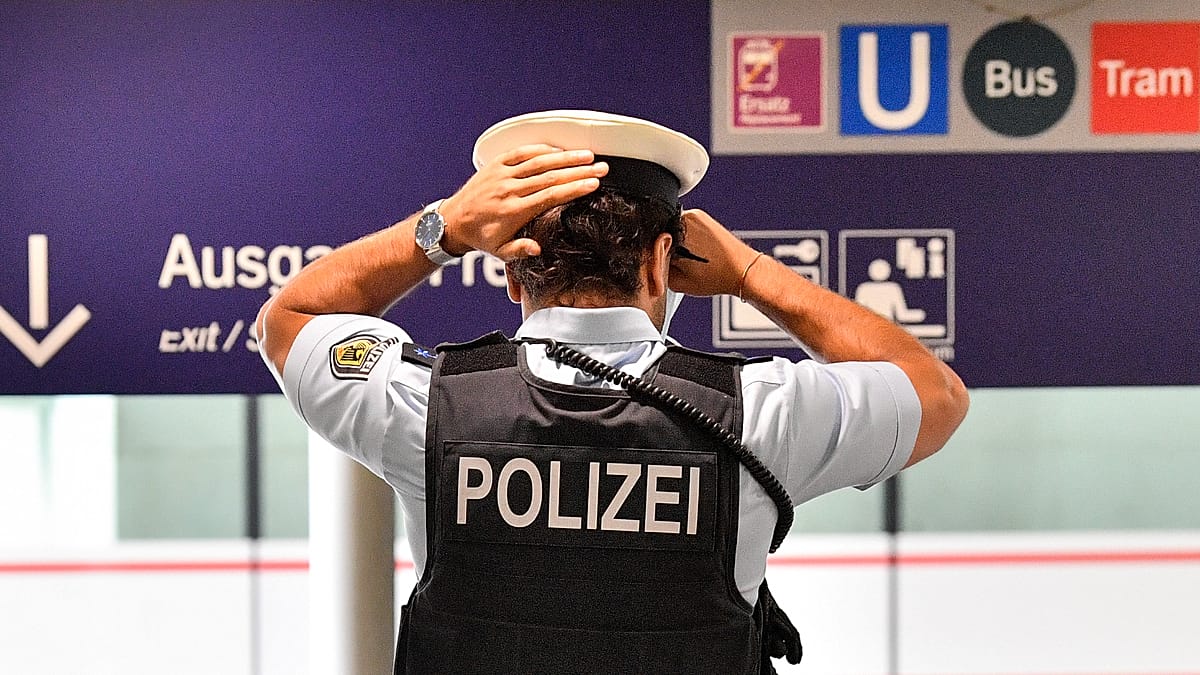
And the figures on violence at Germany’s railway stations are causing headaches for many officials. Since this weekend the federal police have stepped up their presence at stations in ten major German cities. When it comes to crime at stations, Frankfurt is not even at the top of the list.
In 2025 the stations particularly affected by crime were Leipzig central station with 859 violent offences, Dortmund central station with 735, and Berlin central station with 654.
Most recently, people were deeply shocked by the fatal attack on a train guard on a regional service in Rhineland-Palatinate last February. This was followed by a debate about the scale of attacks on Deutsche Bahn employees.
Expert: “No station in Germany is a no-go area”
According to police statistics, a total of 27,800 violent offences were committed at railway stations last year. These included 980 recorded knife attacks and more than 2,200 registered sexual offences. There were 5,660 acts of violence against federal police officers. According to the police, there were significantly more non-Germans than Germans among the suspected perpetrators.
Criminologist Dirk Baier describes stations as “hotspots of crime”. But speaking to WELT, the expert also explains that violence at stations is particularly visible precisely because the police presence there is greater and because it is reported on more frequently. “In my view there is no major station in Germany that is a no-go area.”
In fact, directly opposite Frankfurt central station many people, including families and women, shop in the chemists and the supermarket without any problems.
Police officers at stations instead of at border controls
The deputy head of the CDU parliamentary group in the Bundestag, Günter Krings, wants to improve public safety at stations through technological measures such as more cameras, while at the same time easing the burden on police officers. Discussions on this are currently under way within the parties in the coalition.
The AfD describes German stations as “spaces of fear” and is calling for tougher sentences, more consistent deportations and an increased police presence.
However, the Greens’ domestic policy spokesman Marcel Emmerich argues that while video surveillance can be useful, it cannot replace officers on the ground. The government, he says, is deploying thousands of federal police officers for “expensive, useless and unlawful border controls” instead of strengthening their presence at stations.
Weapons and alcohol bans at stations
According to the Süddeutsche Zeitung, weapons bans now apply from Friday to Sunday at Munich central station and the Ostbahnhof in the Bavarian capital, as well as at the central stations in Nuremberg, Regensburg and Rosenheim. This means that at weekends people are not allowed to carry knives or dangerous tools there either. According to the SZ, officers can also stop, question and search people even without a specific reason.
A ban on alcohol consumption has been in force at Cologne central station (Hbf) since April; it now also applies to the stations in Bonn, Düsseldorf, Duisburg, Essen, Dortmund and Münster.
Deutsche Bahn holds the property rights at stations and can therefore enforce its own rules there, such as a ban on alcohol.
Violence at railway stations is by no means a purely German phenomenon, as the recent knife attack in Winterthur in Switzerland also shows.
Read the full article here