









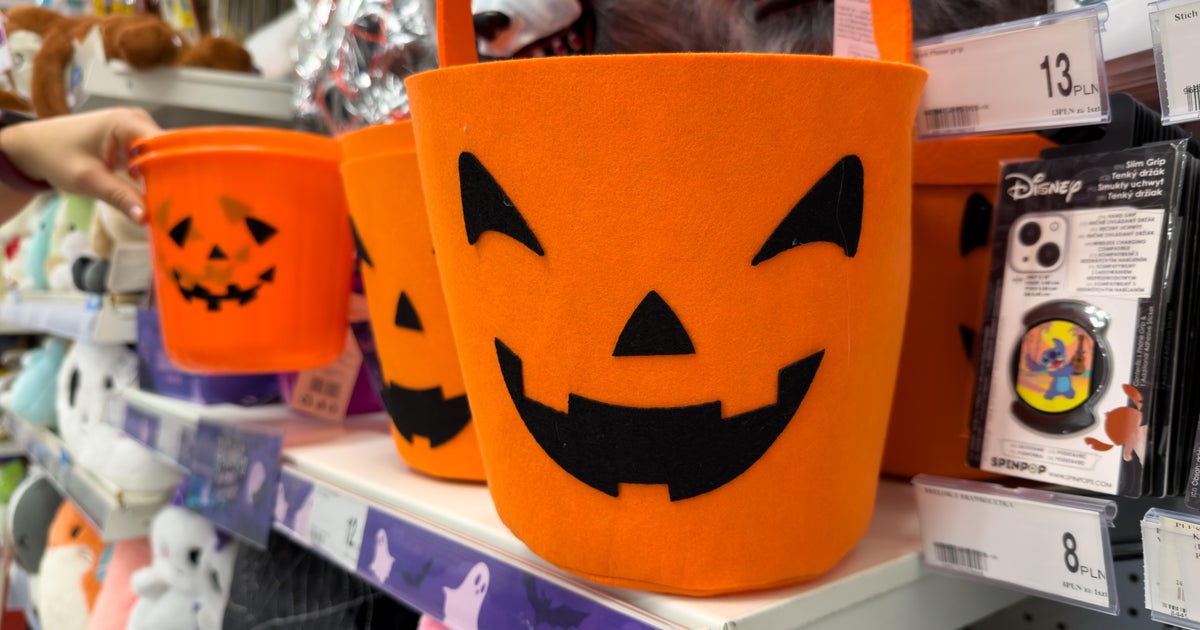
Americans are on track to spend a record $13.5 billion on Halloween this year amid rising costs associated with the national scarefest, according to the National Retail Federation.
Consumers are forecast to shell out $4.1 billion on candy alone. Cocoa costs remain elevated despite surging over the last two years, with shipping and other expenses also pushing up treat costs.
Despite higher prices, the NRF expects consumers to spend $400 million more on Halloween this year than in 2025, and $1.9 billion more than in 2024. A poll from consulting firm PwC found that the average person expects to spend about $263; parents often spend the most because they’re shopping for multiple Halloween events.
Two-thirds of Americans think Halloween has gotten too expensive, according to a recent survey from personal finance site WalletHub.
Why costumes cost more this year
The general manager of Chicago Costume, Cortland Hickey, told CBS News higher transportation and fulfillment costs are driving up Halloween-related prices this year.
“The tariff costs are pretty much baked into the products as opposed to being a surprise like they were last year,” Hickey said. “But now it’s the fuel surcharges and the cost of diesel and those kinds of things when you’re receiving products on pallets and truckloads. “
For shoppers ordering online, waiting until the last minute can mean paying more for rush shipping or risking a costume that arrives after Halloween. Online shopping is less popular for Halloween purchases this year, with 27% of consumers planning to shop online, slightly down from 31% in 2025, according to the National Retail Federation.
Why candy is expensive
Chocolate prices are expected to be 8% higher than last Halloween, according to the Wells Fargo Agri-Food Institute. FinanceBuzz found that a 100-piece bag of assorted Halloween candy costs an average of $16.96 in 2026, up 3.5% from last year and 71% higher than in 2021.
Mondelez, the maker of Sour Patch Kids and Swedish Fish, raised prices on gummy candy packs 39%, while Ferrero, whose candy brands include Butterfinger, Crunch and Baby Ruth, raised chocolate pack prices nearly 19%.
The higher prices are a lagging effect of the cocoa market. Cocoa prices have fallen from record highs in 2024 and 2025, but shoppers have yet to see the full benefit because candy makers are still using cocoa purchased during the 2025 price spikes, according to economists.
Most of the world’s cocoa supply comes from Ghana and Côte d’Ivoire in West Africa. In 2025, heat waves and heavy rains linked to climate change affected cocoa crops, contributing to shortages and price spikes. Higher U.S. tariffs on cocoa-producing countries also affected prices, although levies on cocoa and other commodities that can’t be grown in the U.S. were removed last November.
Some candy makers have cut production costs by replacing traditional ingredients in milk chocolate with cheaper alternatives such as vegetable oil. Products that no longer meet the official criteria for milk chocolate can instead be labeled “chocolate candy,” “chocolatey” or “chocolate coating.”
According to federal rules, milk chocolate must contain at least 10% cocoa mass and solids, so candy products like Butterfinger, Rolo and Almond Joy that contain 2% or less of cocoa are labeled “Chocolate Candy.”
Earlier this year, Hershey’s faced criticism for changing Reese’s classic recipe in certain products, such as limited-edition or seasonal candies, to use less chocolate. Following the backlash, the company said it will revert to its original recipes in 2027.
How to save
Phil Lempert, editor of the Lempert Report and an analyst focused on consumer behavior, said shoppers should look online for better deals on candy, telling CBS News that ordering on Amazon “is going to be a lot less expensive.”
Comparing prices can also make a difference. Checking the price per piece or per pound on variety candy packs can reveal significant differences, with some chocolate assortments costing nearly twice as much as bags of gummy candy.
For costumes, Hickey recommends ditching prepackaged costumes and instead prioritizing items shoppers are less likely to already own or make themselves, such as specific wigs, face paints, special makeup products and props.
The higher costs are also changing when and how consumers shop. About half of shoppers said they started shopping in September or earlier, allowing them to spread out costs and search for deals, according to the NRF.
Lempert also expects Halloween-related costs to continue rising in the years ahead, citing the impact of climate change on global cocoa prices and higher fuel prices, among other factors.
“We’re going to see these prices go up through 2027 and probably 2028,” he said.