









Published on
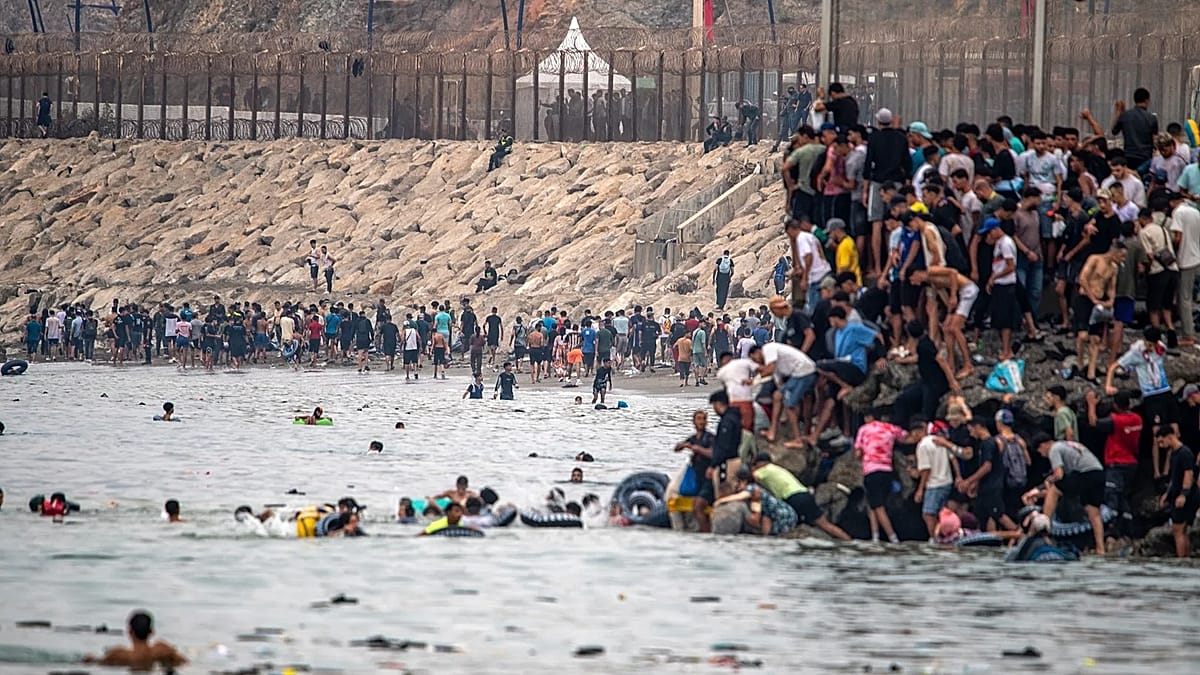
Ceuta Mayor Juan Jesús Vivas has described the breach of the Spanish enclave’s border with Morocco as an “invasion” and demanded the immediate return of migrants still there after last week’s border incident.
ADVERTISEMENT


ADVERTISEMENT
Vivas made the remarks in his testimony before the European Parliament’s Committee on Civil Liberties, Justice and Home Affairs on Thursday. The hearing was convened after roughly 80,000 migrants entered Ceuta by sea in what has been described as one of the largest migration crises in the EU’s history.
The Spanish government declined its invitation to attend the session; the European Commission was represented by Magnus Brunner, the commissioner responsible for migration.
“According to the Royal Spanish Academy’s dictionary, the second definition of ‘invasion’ refers to the anomalous or irregular occupation of a specific place. This is precisely what happened on 30 and 31 July, when some 80,000 people – equivalent to the entire population of Ceuta – stormed into our city,” Vivas told MEPs.
The mayor said the episode had called into question the integrity of Ceuta, Spain and the European Union as a whole. Although most of the migrants have since returned to Morocco, he said the crisis had left the city traumatised.
“We faced a humanitarian emergency of enormous proportions, compounded by disturbances to public order and a serious risk to public safety,” he said.
Vivas added that between 3,000 and 5,000 migrants remain in local reception centres, which are overwhelmed.
“This in no way allows us to say that our city has returned to normal for its citizens,” he said, adding that the exact number of migrants still in Ceuta had not been disclosed owing to a lack of resources.
He renewed his calls for stronger border controls and the immediate return of migrants who entered the city irregularly.
“We demand the immediate expulsion of the Moroccans who have entered our city irregularly and who remain here,” Vivas said, while noting that unaccompanied minors could be returned to their country of origin only with their consent.
Responding to a question from an MEP, Vivas said he had no information on whether any jihadists previously expelled from Europe had entered Ceuta during the crisis.
“We don’t know from local authorities whether there are any jihadists among those who entered,” he added.
Vivas said Ceuta had warned Spanish authorities before last Thursday’s surge about rising numbers of irregular arrivals from Morocco.
“We told the ministries about the situation we were experiencing, and we pointed out that there had been an alarming increase in arrival flows,” he said.
He also said the city had been unable to establish contact with Moroccan authorities, who had refused to engage.
“What has become apparent,” he said, “is that our border is porous and vulnerable.”
Read the full article here