
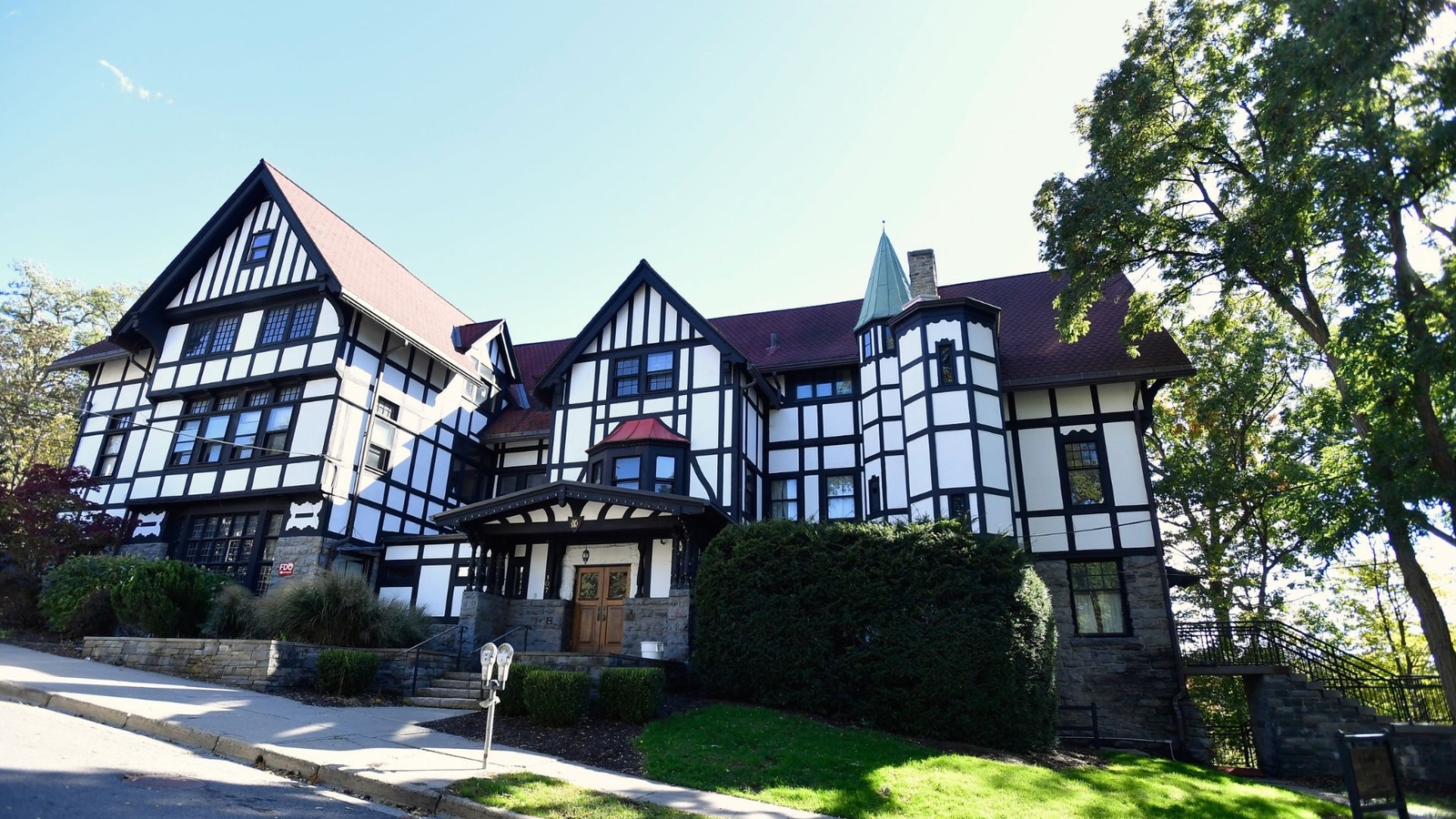







A quick glance from the sidewalk shows a midsize home in the Valley. Fallen leaves from a large tree scatter across the neatly trimmed front lawn. It’s just like any other house in a suburban neighborhood outside of Los Angeles.
Inside, there’s a whole network TV operation going on.
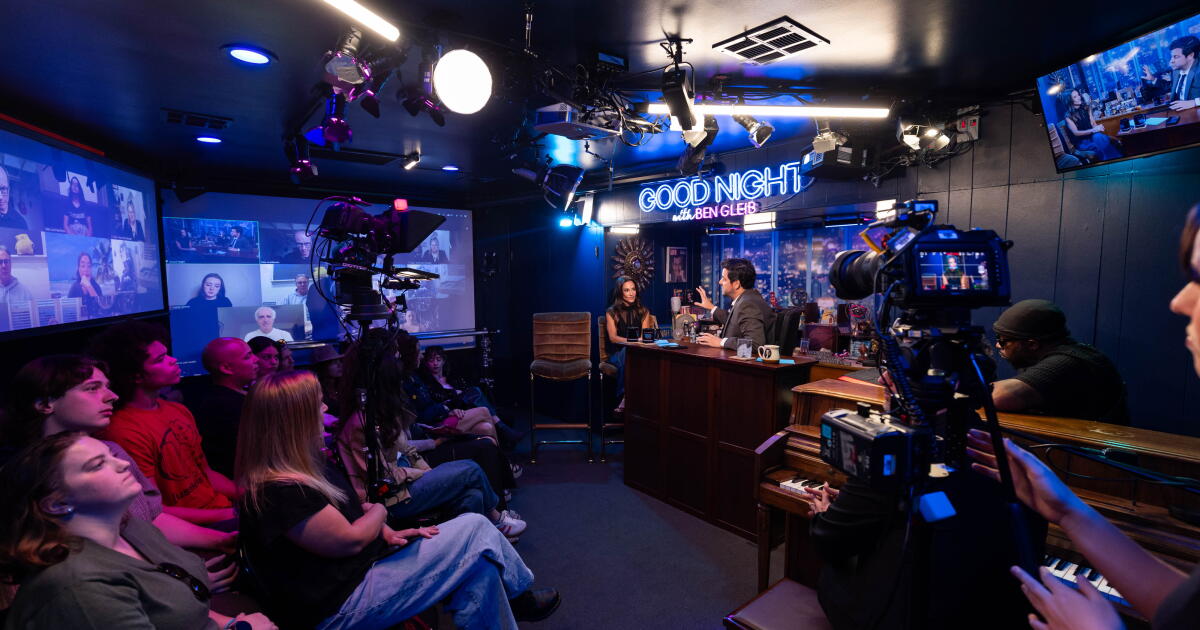
The three-bedroom chateau is packed with people. Every inch of space in the house is being used to make “Good Night With Ben Gleib” happen. The living room TV displays the multiple angles of cameras spread across the house. The pantry doubles as a control room while the backyard shed was turned into a venue for the musical guest.
It’s not a traditional late-night talk show. It’s not on a legacy network, it isn’t filmed in a studio, and the U.S. president isn’t calling the host a “deranged lunatic.”
This show is filmed in a room of Gleib’s house that was converted into an 18-seat studio. The host drinks a cocktail as he delivers his topical monologue in front of blue drapes, and after the taping concludes the cameras continue to roll and capture the nightcap, where Gleib mingles with audience members.
Rather than following the traditional path — from stand-up or sketch comedy to eventually landing behind a late-night desk — Gleib built his own opportunity and releases it on YouTube, a trend becoming more prominent in the comedy world.
“The landscape has changed very largely,” Gleib said. “It’s hard to make your mark in TV and a stand-up appearance on late night doesn’t change your career like it use to, you really have to find creative ways to create your dream career.”

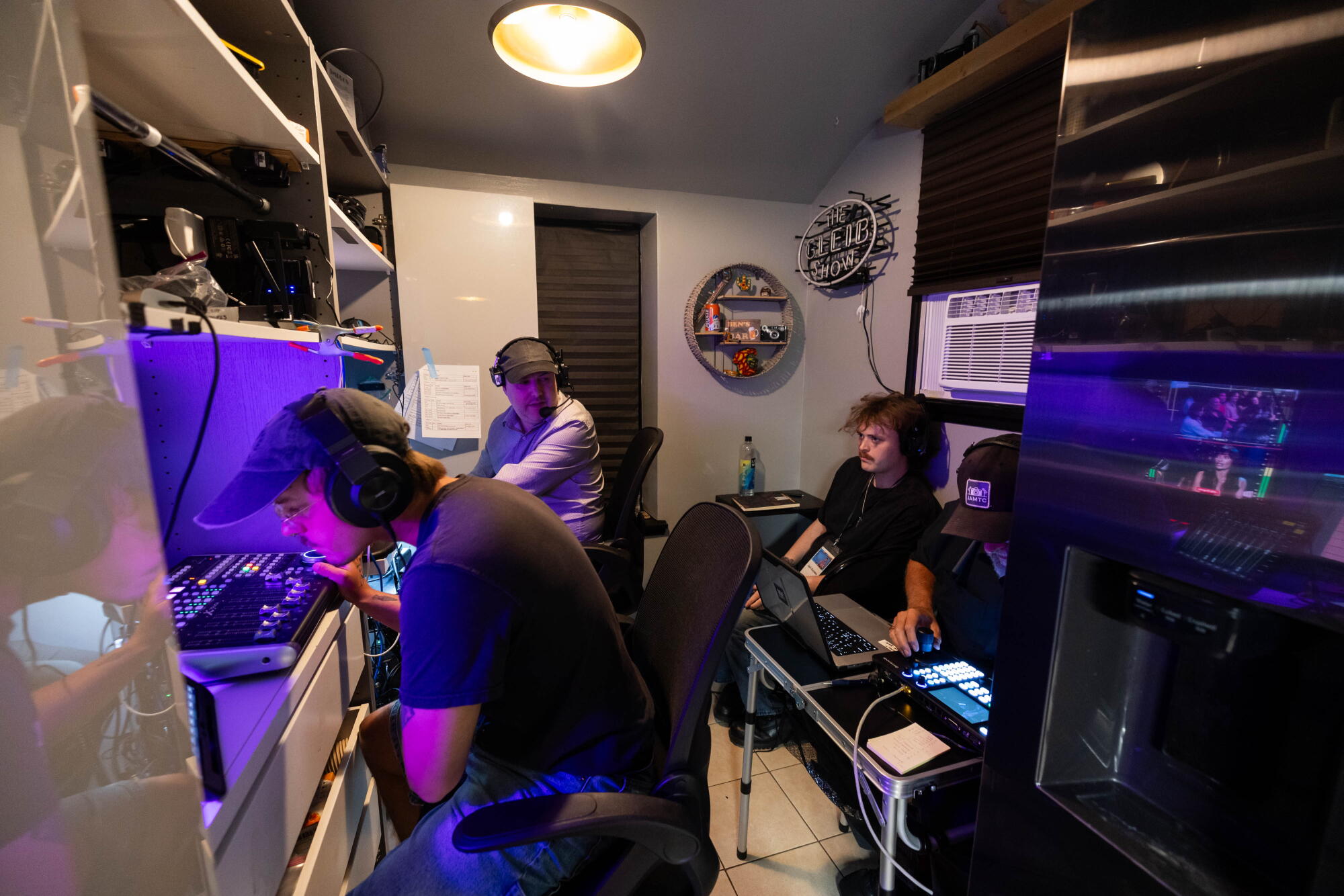
Production staff controls the taping of the show “Good Night With Ben Gleib” on Sept. 16.
(Brian Feinzimer / For The Times)
Since “Lazy Sunday” from “Saturday Night Live” hit the airwaves and caught a second wind on YouTube, the comedy landscape “had changed forever,” according to Seth Meyers.
“What made it so great then and still today is that it was an instant hit but also felt DIY in a way things hadn’t for so long,” said the “Late Night” host in an interview with GQ.
Social media platforms like YouTube have helped make it easier for anyone with a camera to create original content and spread it to the masses. The hashtag “comedy” has 20 billion views on TikTok and genres such as stand-up and sketch comedy grow every year, according to Business Insider. Meanwhile, late-night television has taken a dip in audience and ad revenue.
The old guard of comedy is changing and the DIY movement has transformed fame in the comedy world. Comics no longer have to wait to get stage time on a late-night talk show, they just need to get it done, said Nicole Blaine, owner of the Crow comedy club. It is also inexpensive to create digital content. With platforms like TikTok, Instagram and YouTube, the ability to be seen is easier, she added.
“I don’t think you can count on anyone to ‘make it,’” Blaine said. “I think you literally have to make it yourself and I do believe that the industry [is] paying attention behind the scenes in more ways than the artists know.
“You want to be your own showrunner,” she added.

Makeup artist Lisa Lopez gets musical guest Ada Pasternak ready in the kitchen of Ben Gleib’s home, also the set of “Good Night.”
(Brian Feinzimer / For The Times)
Representation comes and goes, but the fan base a comedian creates for themselves stays with them, Blaine said. Creating digital content for social media to back up a career in stand-up demonstrates that success is completely within the control of comics, she continued.
The DIY formula relies on taking advantage of the skills each performer has and using them to self-produce material to build a fan base, a concept that comedian Emmy Browning is putting into practice. Using her background in screenwriting, she pitched “Hands!” to the Elysian Theater and performed it for its Spaghetti Festival, designed to showcase new work, within three months.
“I essentially wrote, cast, directed, produced, got a crew together …,” she said. “It was just a crazy team of people that came together for no money to make this thing happen.”
“Hands!” spoofs FX’s “The Bear,” while satirizing TV conventions, like the will-they-won’t-they romantic plotlines, multicamera operation and filming in front of a live studio audience. Browning’s show was performed live while a camera crew shot different angles that were being projected on screens located on stage.
It made the stream of the show feel like an actual live performance. Now the stream can be seen by anyone, anywhere in the world, at any time. Browning said when her comic friends began to create clips for social media, they were able to travel around the country and perform for the fans they’ve garnered from their content.
“There are so many different ways and opportunities to be seen first,” Browning said. “…If you have the stamina to generate content online that promotes yourself, you can really make a living or create a fan base yourself.”
Self-producing isn’t only about promotion, it’s about creative ownership.
“There’s nothing as creatively freeing as being your own boss and not having to conform to network notes or the comedic ideas and opinions of people who have never been comedians and have never been recognized for their comedy skills,” Gleib said.

Guests are interviewed during the taping of “Good Night With Ben Gleib.”
(Brian Feinzimer / For The Times)
The sentiment is shared by Ron Lynch, a comedian known for voicing Hugo, the neurotic health inspector in Fox’s animated series “Bob’s Burgers,” who’s produced a variety show at the Elysian Theater called “Tomorrow!” for 20 years now.
The show gives participants the opportunity to do whatever they want, within a five-minute time frame. Half the acts are stand-ups, the other half “are just weird.”
“We’re not responsible for sponsors or anything like that,” Lynch said. “We can basically do whatever we want.”
Self-producing allows creators to explore their voice without any limitations.
“What we do is provide entertainment,” Lynch said.
In the new DIY era, it is not a matter of when a performer will make it, but rather how much a performer really wants it, Blaine said. It’s a lot of work that needs to get done, even after a day job, but it will separate the people who want it badly over those not wanting to put in the time, she added.
It isn’t about landing a late-night talk show, it is about creating.
“It isn’t easy,” Blaine said. “But artists will always find a way if we really want to do it.”
The DIY movement also comes with big risks that will not work unless the comedian believes in it, said Gleib. His team is putting a lot on the shoulders of the comedian to reinvent late night and make it a lucrative business.
And if the big swing doesn’t work?
“I’ll have to come crawling back to the traditional entertainment industry, hoping that I still have a place there,” he added.