









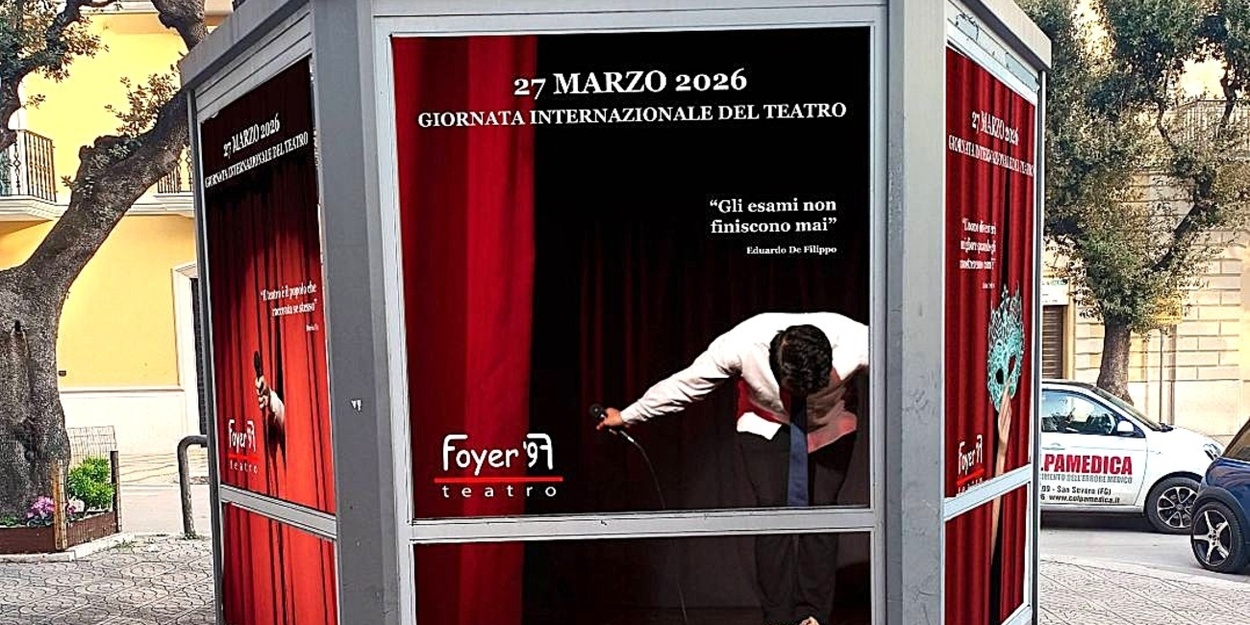
In a quiet corner of San Severo, a small city in Italy’s Puglia region, a long-abandoned newsstand has been reborn as what may be the most radically intimate playhouse on earth.
It’s called Teatro Edicola – Italian for “Newsstand Theatre” – and it lays claim to the title of the world’s smallest theatre. The venue, the brainchild of artistic director Francesco Gravino and his company Foyer ’97, opened to coincide with World Theatre Day on March 27, 2026, and it has spent the weeks since drawing pilgrims, press, and a national conversation that reaches well beyond its few square metres.
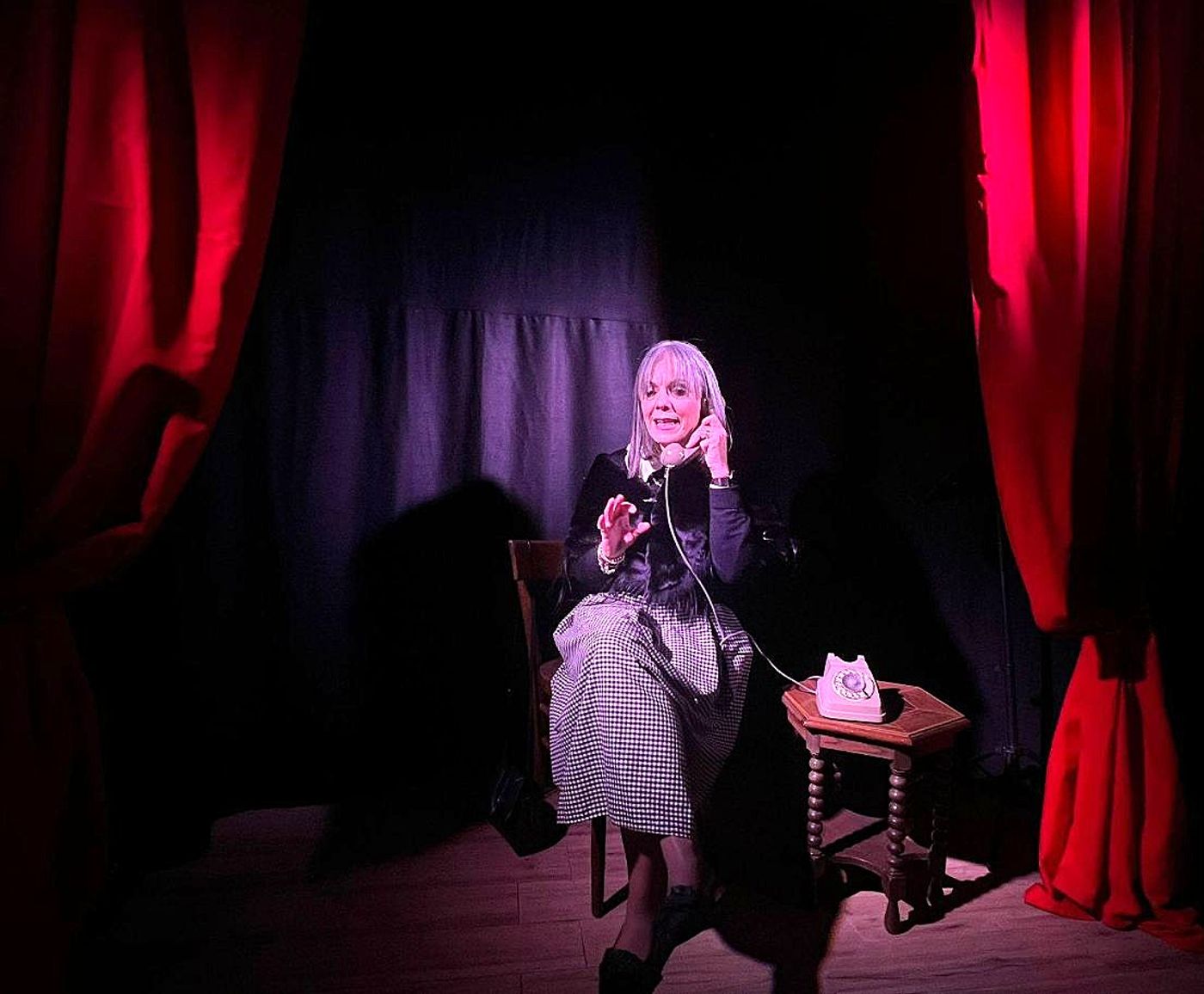
The numbers tell most of the story. The performers play inside the kiosk. The audience – exactly six people per show – sits outside, less than three feet from the stage. Each performance runs roughly fifteen minutes. There is no lobby, no balcony, no fly system. There is barely a wing. What there is, by every account from those who have squeezed onto the benches, is something almost unrecognizable as a “night at the theatre” – and all the more powerful for it.
That, Gravino insists, is the point. “This is a proximity theatre,” he said of the project. “In an age of digital distance, we are putting human contact back at the centre.”
The statement reads less like a press quote than a manifesto, and it has resonated. In a moment when the global theatre industry is still wrestling with hybrid programming, streaming experiments, and a post-pandemic reckoning over what makes live performance live, a six-seat venue in southern Italy is offering a deliberately analog answer: as close as physically possible.
The municipal government of San Severo has thrown its weight behind the initiative, framing it as a model of cultural urban regeneration. “You don’t need large investments to create culture,” city officials said in a statement. “You need ideas that bring a community together.”
Teatro Edicola also lands in the middle of a story Italy has been quietly grieving for two decades. According to industry data, the number of active newsstands in the country has fallen from roughly 35,000 in 2005 to about 20,000 in 2024 – a 42.8 percent decline in under twenty years. Once cornerstones of neighborhood life – places to grab a paper, a chat, a recommendation – thousands of these kiosks have been shuttered by the collapse of print media and the migration to digital news. Empty newsstands now dot Italian cities like little ghosts.

Foyer ’97’s gesture, in that context, is more than a clever bit of site-specific theatre. It is a reclamation.
The civic stakes are sharper still in San Severo. Like much of Southern Italy, the city is often defined in public discourse by its structural challenges – organized crime, economic hardship, urban marginalization. In that landscape, a tiny stage tucked into a forgotten kiosk becomes something more than an arts project: it becomes an act of belonging, and quietly, an act of resistance.
Buoyed by the response to the inaugural season, Gravino is now weighing an expanded, ongoing slate of programming and is in conversations to purchase the newsstand outright, securing Teatro Edicola a permanent home.