










If you searched Aaron Tveit on Spotify this month, you’d find something new: a moody, rain-slicked single called “Shadows in the Rain,” released July 4 and tagged, improbably, as hip-hop. It has nearly 10,000 streams. It also has nothing to do with Aaron Tveit. The track – credited to a “Bennett Michelle” in its line and “featuring” the real rock bands Narrow Head and Loathe, who appear to have no connection to it either – is one of at least a dozen AI-generated songs BroadwayWorld has identified sitting on the official streaming profiles of Broadway performers who never recorded them.
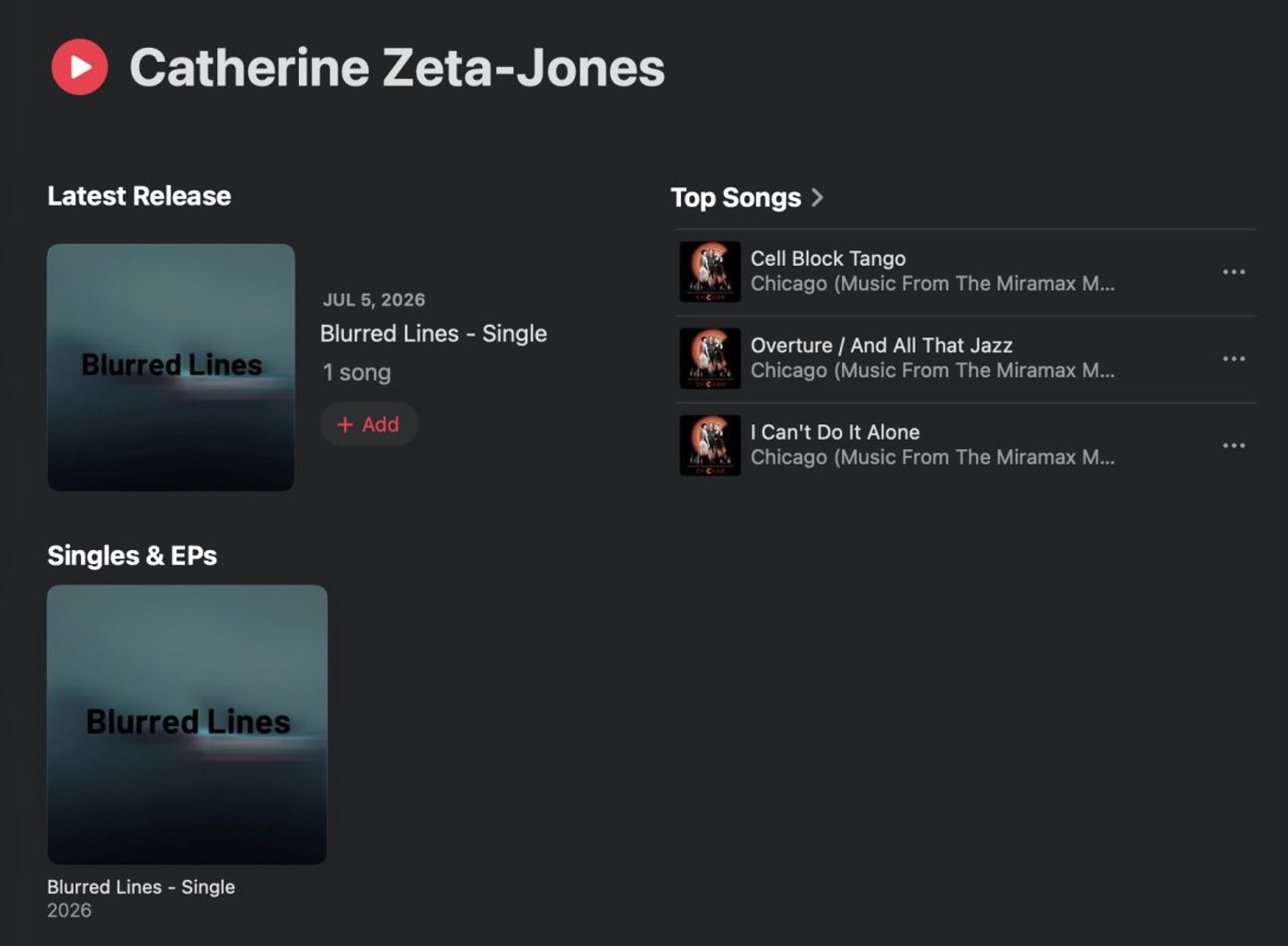
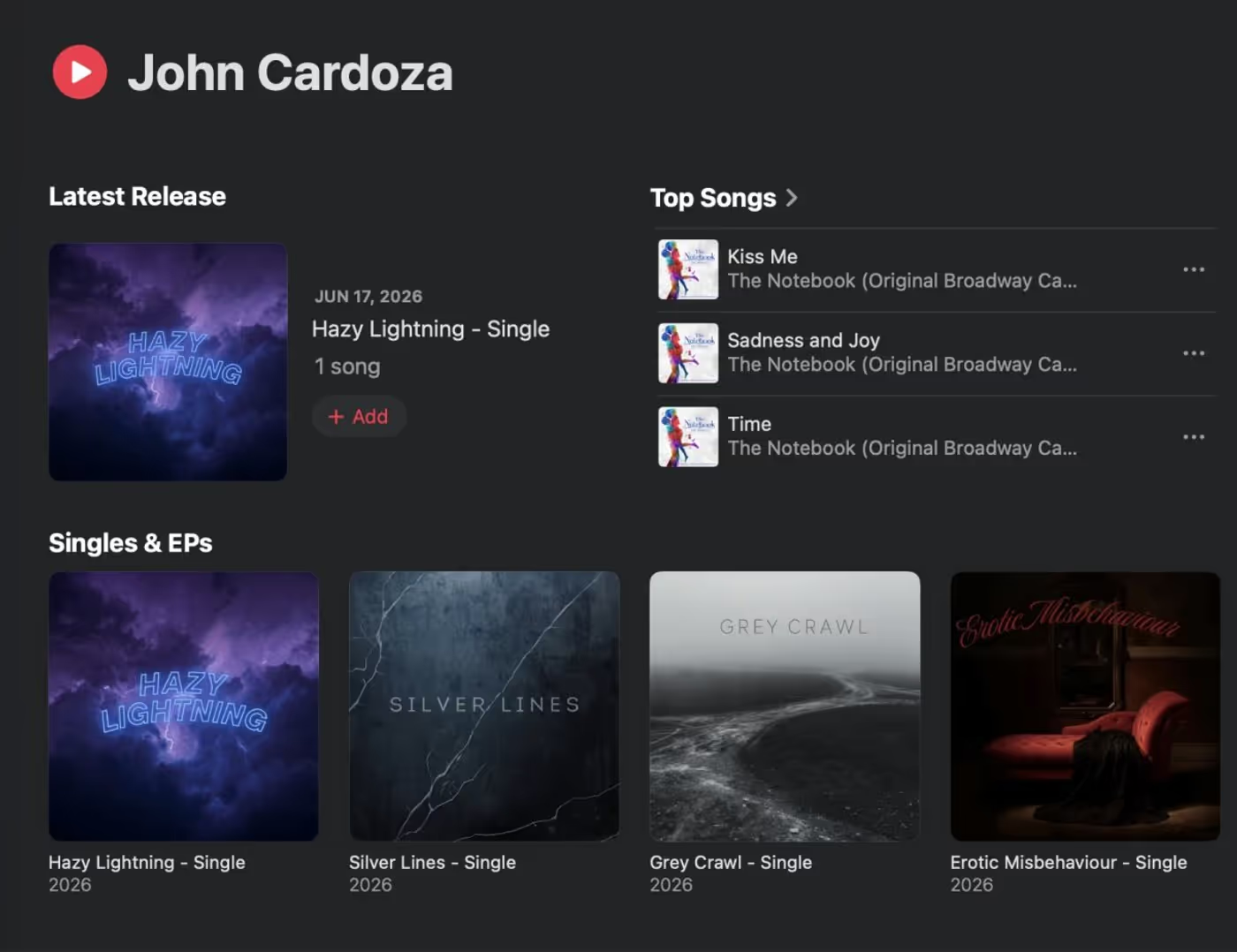
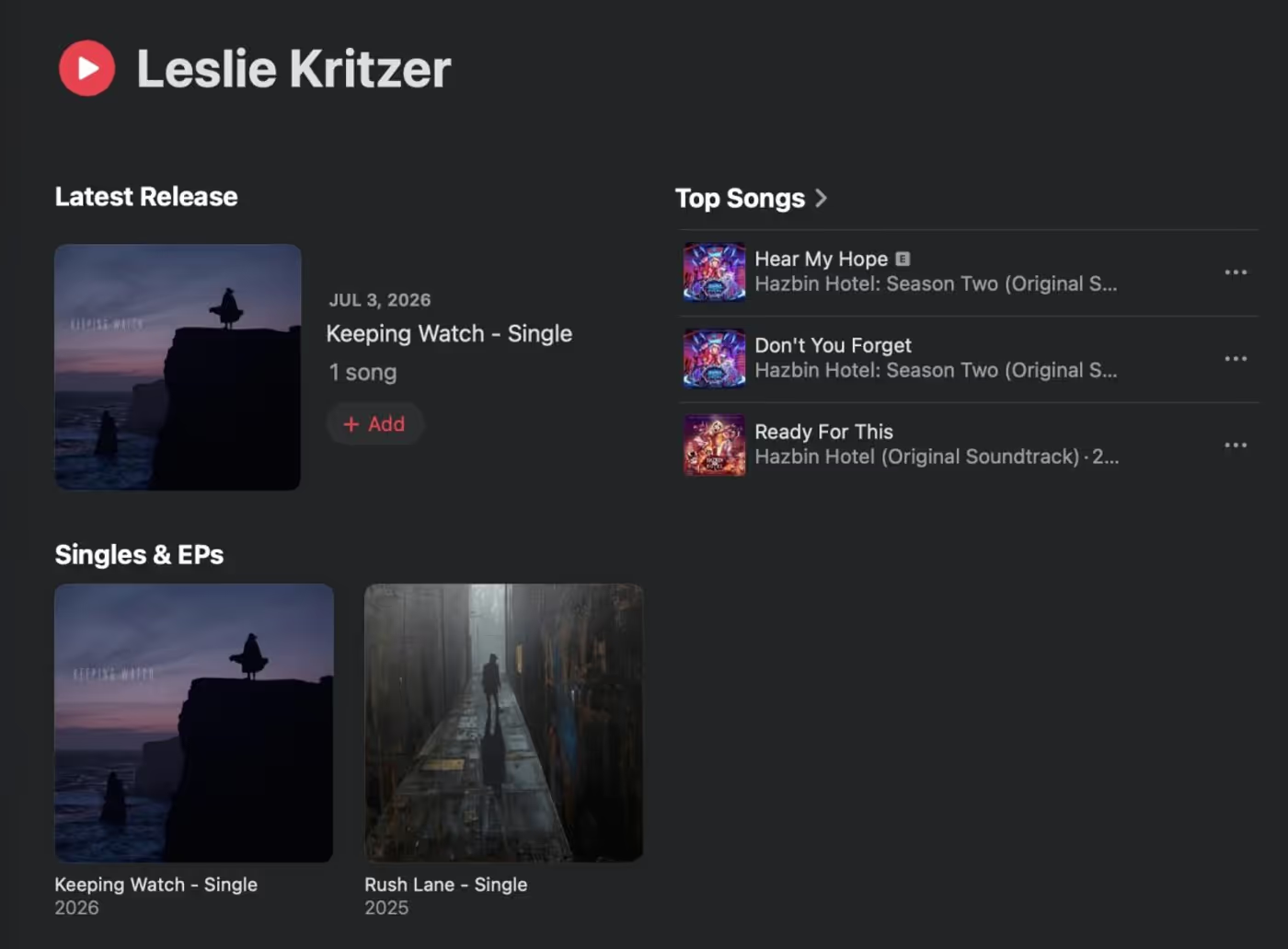
The pattern is unmistakable. A single with a generic title and AI-generated cover art appears on a legitimate artist’s page, wedged between cast recordings the performer actually made. In the past six weeks alone, fake releases have surfaced on the profiles of Leslie Kritzer (“Keeping Watch,” July 3), Catherine Zeta-Jones (“Blurred Lines,” July 5), Alex Brightman (“Only You,” July 13), Mary Beth Peil (“Dashboard Lights,” June 22), Jonathan Freeman (“Shadows Flicker,” June 19), and Ann Harada (“Hill to Climb,” June 5). John Cardoza, currently starring in The Notebook, has accumulated four fraudulent singles since June, including one titled “Erotic Misbehaviour.” Earlier uploads targeted Alex Newell (“Mama Told Me,” August 2025 – which is also the title of a real song recorded by Newell), Sara Chase (“Sarita, Sarita,” February 2026), and Michael Arden (“Magnesium,” November 2025).
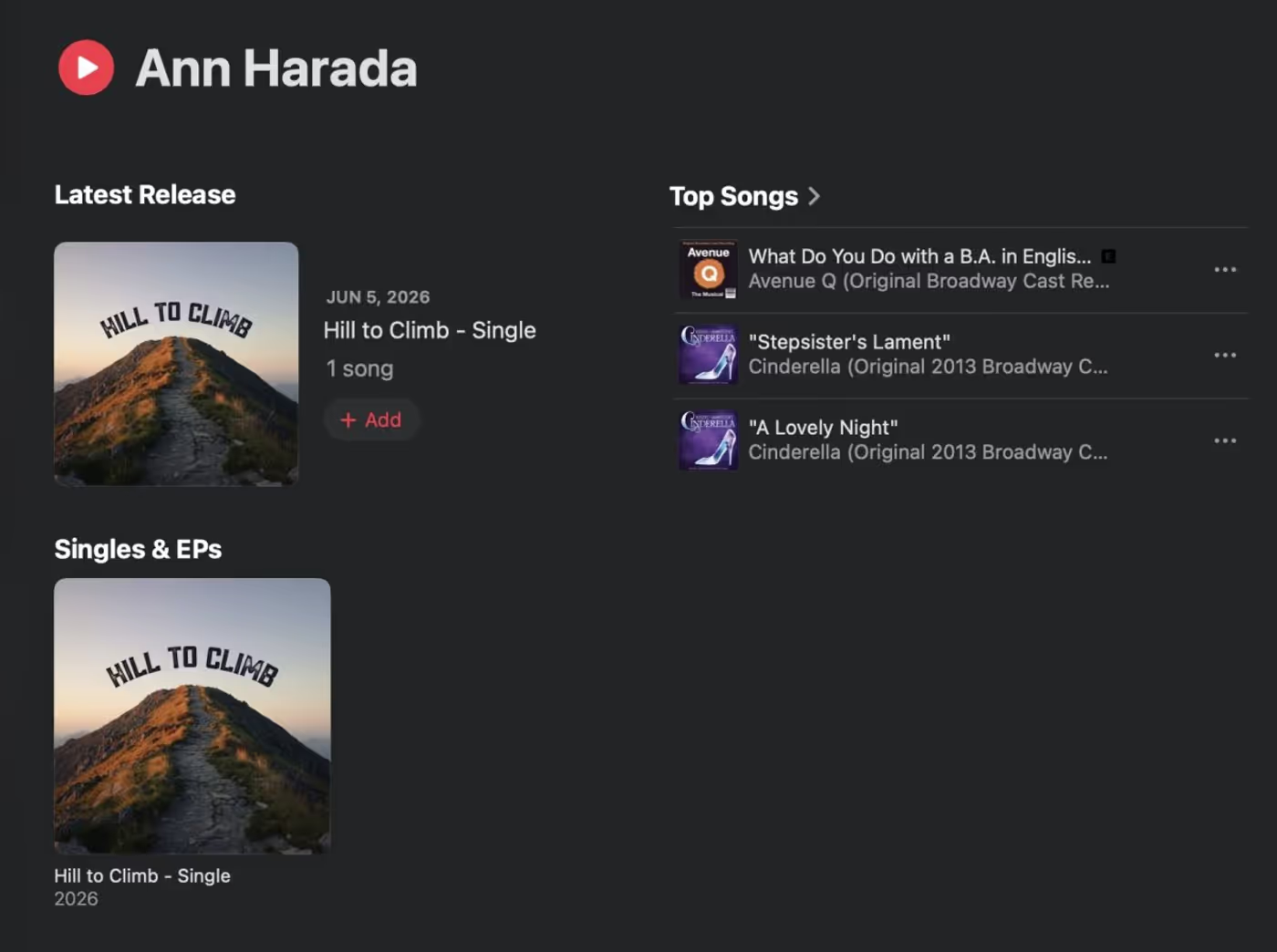

Little effort goes into plausibility. Zeta-Jones, whose actual catalog is anchored by the Chicago film soundtrack, is credited with a track sharing its name with a Robin Thicke hit. Newell’s fake is a 113-second song labeled “Dance.” Chase’s is filed under Latin. Kritzer’s, Peil’s, and Freeman’s sit directly alongside their real work on Hazbin Hotel, Anastasia, and Aladdin.
Harada, currently on Broadway in Schmigadoon!, learned about her supposed new single from BroadwayWorld.
“Well, obviously this is extremely disturbing because they’re not even trying to come up with a song I could have sung. Suspiciously baritenor,” Harada said. “What kind of nut bag would do this? Also, don’t even bother trying to fish for buyers using my name. Nobody cares. Believe me.”
Nor is this the first wave. Fake releases have previously appeared under the names of Josh Groban, Josh Gad, Andrew Rannells, Mike Faist, Jack Wolfe, Michael Arden, Terrence Mann, Tammy Blanchard, and Denée Benton – and even ensembles that no longer exist as recording entities, including the Original Broadway Cast of Matilda and the 2006 revival cast of A Chorus Line.

Other Broadway performers we spoke to, some currently leading musicals, asked not to be included in this feature for fears of giving more attention to the tracks.
The persistence is what frustrates artists and their representatives. These tracks are not hard to spot: they arrive through third-party distributors, carry unfamiliar holders, sit in genres their supposed artists have never touched, and feature cover art with the telltale smeared look of image generators. Yet they routinely clear whatever review exists at the major streaming services and stay up for weeks or months.
The tracks are also being recommended by the platforms to fans of these artists. BroadwayWorld staff had several of these tracks suggested by algorithms as new music for us to listen to by the platforms, likely because we had listened to other music by these artists.
After BroadwayWorld contacted Spotify, Harada’s release was reportedly removed from her official profile – but as of press time, the track was still available there. Every other track we flagged remains online.

In a statement, a Spotify spokesperson said: “Protecting artists’ identities is a top priority, and we continue to invest in detection and prevention. Spotify is the only streaming service to offer Artist Profile Protection, which lets artists approve or decline releases before they go live on their profile. When it comes to artist names, ownership is a legal matter. Artists or rights holders who believe their name is being misused can report it through our legal reporting process.”
When we pushed back to a representative for Spotify that these were clearly AI-generated tracks targeting established artists, they told us the profiles appeared verified and that multiple artists can have the same name, and it’s a issue. BroadwayWorld was not able to verify any real artists behind these tracks with conflicting names. (If we’re wrong, and any real artist name doppelgangers see this – please get in touch with us.)

Artist Profile Protection, which Spotify introduced as an opt-in program, places the burden on performers to enroll and then police incoming releases – a system that assumes working actors are monitoring their streaming profiles for albums they didn’t make. For stage veterans whose discographies consist mostly of cast recordings, that assumption rarely holds. Harada’s response suggests how most learn about the fraud: they don’t, until someone tells them.
Apple Music, where a similar catalogue of the tracks we identified are hosted, did not respond to our requests for comment before press time.
The financial mechanics are murky but familiar. AI-generated tracks cost effectively nothing to produce and pennies to distribute; parked on a recognizable name, they skim streams – and royalties – from fans and algorithmic playlists alike. Tveit’s fake alone has logged nearly 10,000 plays. Multiplied across dozens of names and platforms, impersonation becomes a business model, one the streaming services have so far treated as a legal inconvenience rather than a platform integrity problem.
Until that changes, the fakes keep coming.