








Tucked in off the road to Mount Hood, the Hoodland Plaza Shopping Center serves as a gathering place for the people of Welches, Oregon, where they sometimes get things that money just can’t buy.
Sarah Caswell: It’s kind of a — a community hub … if someone needed to vent or talk or … need help, that’s where they’d go.
The plaza is home to Sarah Caswell’s pizza shop and the neighboring Hoodland Bazaar – the whimsical gift shop where her friend Phoenix Lane worked.
Sarah Caswell: November 22, 2024, we showed up to work … and she hadn’t showed up.
Phoenix was supposed to open the store at 11 a.m. that Friday.
Sarah Caswell: She hadn’t put the signs out yet. And I was like, that’s crazy … she would never not show up.
The search for Susan “Phoenix” Lane
Phoenix’s boss tried texting her, but she didn’t respond. Sarah became so concerned, she did something unusual. She reached out for help.
Sarah Caswell: … up here we don’t have a lot of law enforcement. … Even if you call them and you need them, it can take up to two hours because the county is so big. … so, a lot of the times when we have to deal with things up here, we take it on as mountain justice.
What the community calls “mountain justice” is a kind of self-reliance – lending a hand when a neighbor is in trouble.
Deputy Aaron Clark: It’s a very tight-knit community … they definitely, uh, tend to take care of their own problems.
Sarah called Aaron Clark, a Clackamas County sheriff’s deputy who often patrols the Mount Hood region. He wasn’t working in the area that day and suggested that Phoenix’s boss call the sheriff’s office to request a welfare check.
911 CALL: My employee did not show up for work today, you know, unexpectedly. And, uh, we were worried about, uh, her well-being.
Two deputies arrived at Phoenix’s house that night. The lights were on and the door was unlocked. But there was no sign of 61-year-old Phoenix or her two dogs.
Sarah Caswell: Elrond and Elros were wolf hybrids. … You wouldn’t know they were hybrids. They looked exactly like wolves. … They were very, very protective of her.
When Phoenix did not show up for work again on Saturday, Clark drove up to the mountain to talk to her friends and coworkers.
Deputy Aaron Clark: Everybody knew Phoenix. … Everybody really cared for her.
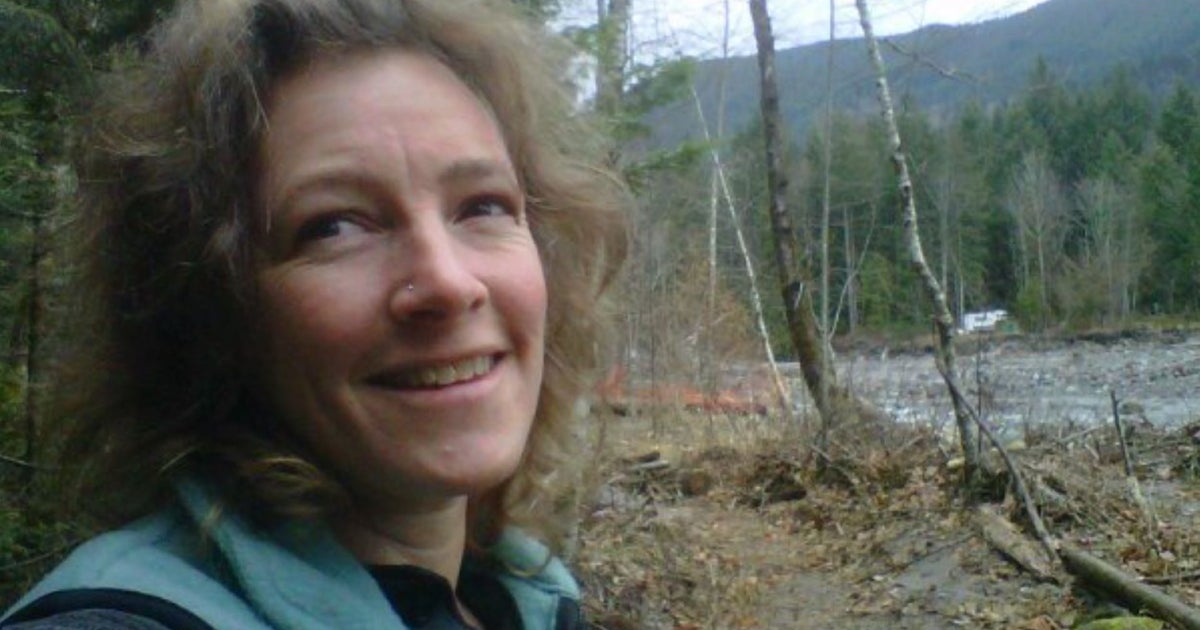
Though everybody there knew her as Phoenix, for many years, she went by her legal name – Susan. She had two adult sons, Jesse and Dakota, who she had raised in California and Kansas with her former husband, Fred.
Jesse Lane: She loved being goofy. She loved being silly, she loved being an artist.
Dakota Lane: A very distinctive memory … was being in kindergarten and her rolling up to the school on a motorcycle to pick me up and all the kids on the playground being really excited. … “Wow. Your mom rides a bike? That’s awesome.”
Peter Van Sant: The coolest mom in the world.
Dakota Lane: Coolest, coolest mom ever.
Sadly, their lives were upended in 2009 when Fred died in a car accident.
Peter Van Sant: Give me a sense of his death and the impact on — on the two of you.
Dakota Lane: Devastating. … She lost her soul mate. … I don’t want to say she lost her way, but she definitely struggled … to realign herself. … There was nothing keeping us in that area anymore. So, she was looking for a way to escape with us.
Several months later, Susan met Michel Fournier, a divorced, French-Canadian long-haul trucker who spent a lot of time on the road.
Mike Lane: That was pretty much his life, running his truck, making a life.
Susan’s brother, Mike Lane, says she was struggling to raise her teenage sons alone when Michel came into her life.
Mike Lane: He sees Susan and the kids and he goes, hey, wow, I can contribute to this. This could work.
Susan got her trucking license, and the two began driving as a team, trading shifts behind the wheel. A trip later in 2009 would change the course of their lives.
Jesse Lane: She kind of stumbled across … Mount Hood … and fell in love. She’s like, this is where I want to be.
She bought a fixer-upper just off Highway 26, and they all moved up to the mountain.
Jesse Lane: It was kind of a run-down home. … But, I mean, she wouldn’t have wanted it any other way. I mean, that’s what she really desired was simple life up in the woods.
Susan and Michel married in 2012 and she later adopted her new name, Phoenix.
Susan Lane-Fournier/Facebook 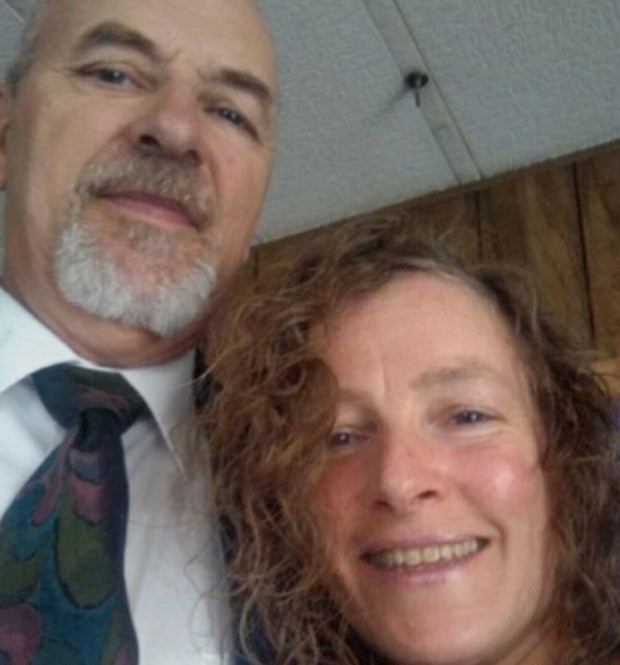

Sarah Caswell: All the trials and tribulations she had been to with her husband dying and rebuilding her life … that she felt that she had built herself up from the ashes. So … she gave herself the name Phoenix.
Christen Prudence: She was into meditation … and energy work.
Phoenix made deep connections with like-minded friends in the mountain community, including Christen Prudence.
Christen Prudence: I would lead guided meditations. … And we would have these beautiful, restorative women’s circles, and we had Phoenix join us and do a sound bath at one of them.
Peter Van Sant: It’s the first time I’ve ever heard of it. What is a sound bath?
Christen Prudence: A sound bath is where participants will relax … usually laying down. … It’s channeling the vibrational … frequencies of the instruments … which provide healing.
In 2023, Phoenix began working at the Hoodland Bazaar, where her art adorned the walls. She sold Afghan rugs and Turkish lamps along with crystals and rocks, often dispensing her new-age wisdom.
Christen Prudence: She had so much knowledge with crystals … and just the way that energy works. … It was … almost like a store was made for her to be there.
Mike Lane: She found herself there. … She found her nirvana.
But in November 2024, six days before Thanksgiving, Phoenix was now missing from that special place. Clark started a missing person’s report and went to Phoenix’s home himself on Saturday to look for her. Dakota, who lived there with his mother and stepfather, answered the door.
Dakota Lane: Deputy Clark said, “Did you know that your mother’s missing?” …
Peter Van Sant: Put that into words what that was like for you.
Dakota Lane: Shocking. I was — blindsided.
Dakota told Clark he had worked all day Friday and stayed out late in Portland, an hour away. He and his mother had last texted on Friday morning, and he said he didn’t know people were looking for her.
Peter Van Sant: And Michel was still not at the house.
Deputy Aaron Clark: Not at the house, no.
Peter Van Sant: Did Dakota know where he was?
Deputy Aaron Clark: No.
Shortly after leaving the property, Clark got some news –- a member of the mountain community had made an unexpected discovery.
The mountain community takes action
Peter Van Sant (driving with Cari Gesch): Back on November 23, 2024, a Saturday, you were out on this highway. Where were you going?
Cari Gesch
: Uh, I was going up Salmon River Road. … Was taking the dog to go for a little run out in the woods.
That morning, Cari Gesch set out on a hike, unaware that her friend Phoenix Lane had gone missing the day before.
Cari Gesch: We’re technically entering the National Forest here right now.
CBS News 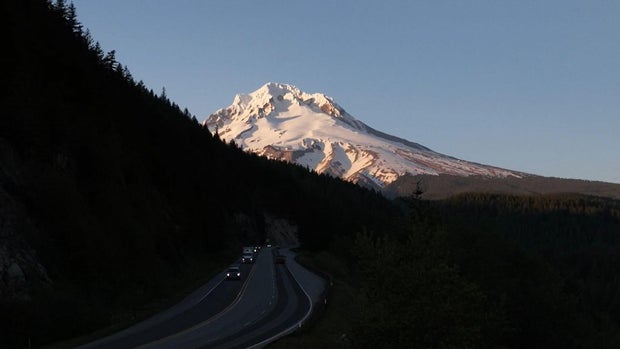

While the majestic Mount Hood National Forest covers more than a million acres, for locals like Cari, their favorite spots are as familiar as their backyard. So, she couldn’t help but notice something strange on her way home that day — a white pickup truck parked on the side of the road.
Peter Van Sant: Now, there’s hundreds of pickup trucks in this area. Why did this one catch your eye?
Cari Gesch: You know, this is — it — not a normal spot for someone to park that time of year. … It just looked out of place.
As odd as it was, Cari didn’t think much of it until she got home, and a post on Facebook caught her eye. Sarah Caswell had asked if anyone had seen Phoenix or her white Ford F-250.
Cari Gesch: And that’s when it clicked. I think that was her truck I saw up Salmon River Road. So, I went to the pizza shop.
Evidence/Clackamas County District Attorney’s Office 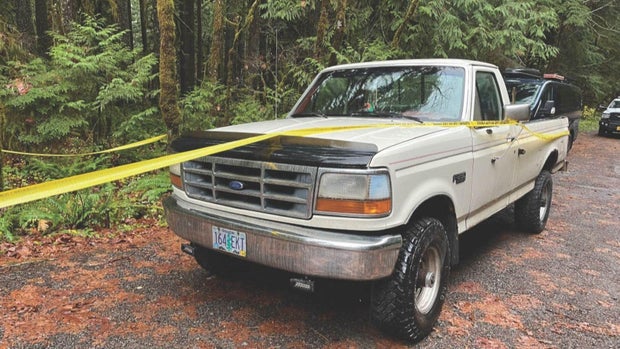
Word got out that Phoenix’s truck had been found seven miles from her home, but with no trace of her or the dogs. Deputy Clark was notified and says the truck’s location suggested something could have happened to her out in the woods.
Peter Van Sant: So, there’s concern that she may have gone up one of these more challenging trails and that she might be out there injured.
Deputy Aaron Clark: It was certainly possible … that she was out … hiking and had gotten hurt and couldn’t get herself back.
Within hours, a search and rescue operation was underway on Salmon River Road. Jim White and Alex Monarch are detectives with the Clackamas County Sheriff’s Office.
Det. Alex Monarch: The majority of the effort … are volunteer searchers from a number of organizations that come in … and blanket … these areas … like ants at a picnic. They’re all over the place. They’re incredible.
Peter Van Sant: And they know these trails. They know the landscape. … They are really seasoned searchers, correct?
Det. Jim White: Yes.
Although the authorities were focused on that area near Salmon River Road, Phoenix’s friends were searching elsewhere because they were convinced she would not have gone hiking there.
Sarah Caswell: She liked to have her dogs off leash. … So, she would have never taken her dogs there because … there’s too many people there. … And when they said missing hiker, I was like there’s –- we all knew.
What they also knew was that Phoenix and her husband Michel had been having problems.
Christen Prudence: She would talk about crystals that she would place behind her husband’s chair to absorb his negativity. And … it seemed like she would come alive when he was gone on the road.
Sarah Caswell: I know that she struggled with … paying the bills. … It was a struggle to get the money sometimes from Michel. … The last month-and-a-half is when she really started talking … and the stories were getting stranger.
One of those stories was about some soup Phoenix had donated to the community food pantry.
Sarah Caswell: She said Michel had found out that she had donated the food out of her own pantry and was really angry. So, he put a padlock on her pantry at home, so she couldn’t take anything else out of it.
Sarah says in October, a month before Phoenix’s disappearance, Phoenix told her she’d grown tired of Michel’s controlling behavior and was making plans to leave him.
Sarah Caswell: She had to be secret about how she texts or even made phone calls because he would look through her stuff. So, slowly she was bringing some of her items, even her laptop … to the Hoodland Bazaar and just storing it there.
And that wasn’t all she was bringing to the Bazaar.
Find Our Phoenix Facebook group 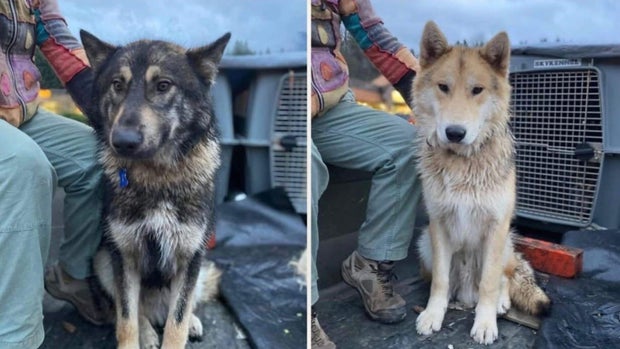
Sarah Caswell: She started bringing her dogs to work … and she said that it was because … he’s threatening the dogs.
Dakota Lane: Her biggest fear was that he would try to do something to the dogs, and that’s all she could think about.
When Phoenix went missing, her friends and family shared their concerns with authorities. And they couldn’t understand why it seemed investigators weren’t focusing on her husband.
Sarah Caswell: I thought for sure he did something.
Investigators had tried calling Michel but got no answer. No one had seen or heard from him until Sunday — two days after his wife had gone missing — when he called the sheriff’s office.
MICHEL FOURNIER: My name is Mike Fournier. I – I think they wanna talk to me.
OPERATOR: And why do you think the police wanna speak with you?
MICHEL FOURNIER: I don’t know. My wife’s been missing for a few days.
Authorities say they found Michel’s lack of emotion in that call unusual.
Det. Alex Monarch: He could have been more enthusiastic if he was ordering a sandwich.
Investigators went to the home Michel shared with Phoenix, where he met them in the driveway.
DETECTIVE (bodycam): Let’s go chat inside.
A body camera recorded the interview. Michel soon acknowledged the elephant in the room.
MICHEL FOURNIER: I got a big target on my back.
DET. ANDY KIESEL: Why?
MICHEL FOURNIER: My – my wife’s gone.
Clackamas County District Attorney’s Office 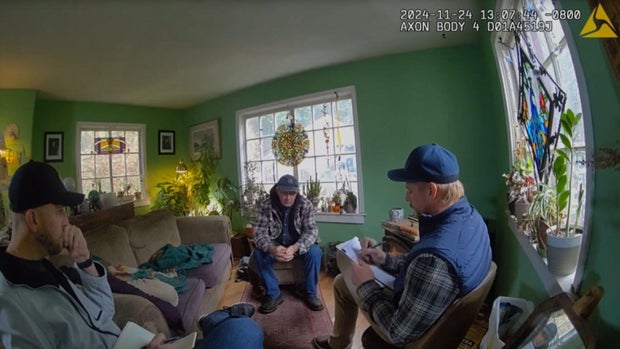
He told the detectives they’d been living separate lives, and Phoenix had served him with divorce papers just days earlier.
MICHEL FOURNIER: … it’s been going rough for, uh, quite a while. Uh, you know, can’t even talk to her anymore. She won’t answer my texts.
Michel said he’d last seen her at home Friday morning and told a strange story about his whereabouts that day.
MICHEL FOURNIER: Probably left around 9:30 … I ended up over at, uh, in – in Halsey.
Det. Jim White: So, Michel Fournier provided … this story that was almost farcical. He said that he hitchhiked into town to get this car part … all the way into Portland, Oregon, to this Halsey Auto Parts. … I believe it’s about 33 miles.
DET. KIESEL: How’d you get back? Hitchhiking?
MICHEL FOURNIER: Yeah.
Michel explained that he had been in and out of the house the rest of the weekend and he had not been concerned about Phoenix’s absence because he believed she was seeing someone else — and simply hadn’t come home. He allowed the detectives to swab him for DNA and take his cell phone.
MICHEL FOURNIER: Yeah, important thing for me is I got to get back to work.
It seemed his biggest worry was leaving the next morning on a long-haul trucking job. Investigators were suspicious but couldn’t detain him because they still didn’t know if anything happened to Phoenix. They continued searching at Salmon River Road, and the mountain community grew more frustrated.
Deputy Aaron Clark: There are a lot of people who called in who said they thought … Phoenix had been … murdered by her husband. … And I think there was a lot of anger at the sheriff’s office … that we were focused … on a search and rescue mission.
What the community didn’t know, was that at the same time, the sheriff’s office was also running a criminal investigation — one they were keeping secret for a very important reason.
Deputy Aaron Clark: I think if the sheriff’s office had, uh, told the community all the things that we were doing … that would have tipped him off, that would have, um, made it very hard to track him down.
Tracking Phoenix Lane’s cell phone — and Michel Fournier
On Monday, Nov. 25, with Michel Fournier now back on the road, detectives started collecting cell phone records to build a timeline of the day his wife went missing. They learned Phoenix sent a message to her friend Christen at 10:28 a.m. – half an hour before she was supposed to be at work.
Christen Prudence: She reminded me about her upcoming sound bath on Sunday and to help spread the word.
It was the last time anyone would hear from Phoenix. But investigators were still able to track her phone’s location.
Det. Jim White: The cell phone left the residence, and it’s traveled west toward Portland. …We got all the detectives together and we went along the route. We went to businesses … and said, “Hey, we’re looking for some video.”
And when they reviewed the video from those security cameras just after noon, they spotted something significant.
Det. Jim White: Susan Lane’s truck was driving with those dogs in the back.
Clackamas County District Attorney’s Office 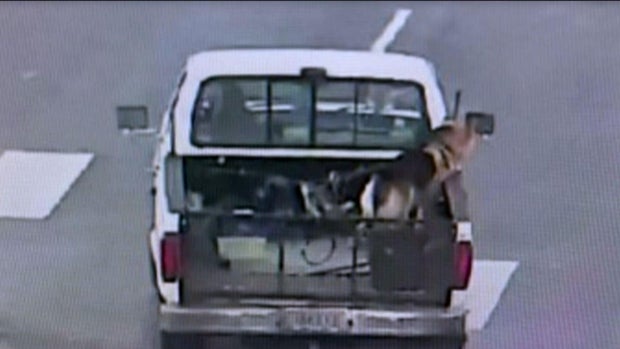
They tracked the phone and truck moving west – all the way to the Portland airport around 1 p.m.
Peter Van Sant: From the airport security video, were you able to tell who was driving?
Det. Jim White: We were not.
They couldn’t tell where Phoenix’s phone or truck had gone from there.
Det. Jim White: When that cell phone got out towards the airport, it went dead. So, no more location data.
But the airport wasn’t far from the auto parts store where Michel had said he’d hitchhiked to that day.
Store security video confirmed he’d been there. But when they checked the cameras in the parking lot — at 1:38 p.m. — just before Michel entered the store –
Det. Jim White: The truck shows up at Halsey Auto Parts. …
Clackamas County District Attorney’s Office 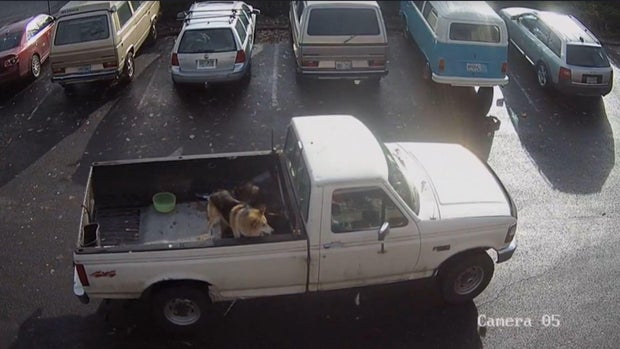
Peter Van Sant: And who’s driving?
Det. Jim White: Well, we believe Michel Fournier is driving.
Detectives found even more video of the truck two hours after Michel left the store — this time with one noticeable difference.
Det. Alex Monarch: We caught … more surveillance video … driving back towards the mountain … without the dogs. … The only conclusion … is that he disposed of the dogs somewhere and was driving back … to his home.
Detectives now knew Michel Fournier had not told the truth about hitchhiking that day. But they still hadn’t found Phoenix, so they went to look for her phone at its last known location.
Det. Jim White: We went roughly shoulder to shoulder down that runway, and we looked for that cell phone. … No dice, no cell phone. … So, we decided to do a search over by the river. … We were just trying to get organized … when all of a sudden, one of our detectives said, “I think I can see it in the water.”
Peter Van Sant: This is extraordinary. And what happens then?
Det. Jim White: Sure enough, we went down there and you could see … there was a rectangular device that … looked like a cell phone.
Det. Alex Monarch: Yeah.
Detective White waded into the frigid waters of the Columbia River and retrieved the phone … but found it was too damaged to provide any more information.
Det. Alex Monarch: The phone had been broken apart intentionally with … pry marks. So, not only was the phone thrown into the river … there were efforts made to … destroy it more than that.
They continued their investigation but stayed tight-lipped about what they had found, leaving Phoenix’s sons Jesse and Dakota desperate for answers. Jesse, who lived out of town, had come back to the mountain. On Thanksgiving Day, he was driving down Highway 26 when he caught sight of Michel.
Jesse Lane: I see his semi-truck coming up the mountain. And instantly I’m like, “I’d like to talk to him,” you know? She’s missing. Let’s see what he has to say. … So, I just turned the car around.
Jesse says he got to the house a few minutes after Michel. Both men stood in the driveway.
Peter Van Sant: What do you say to him?
Jesse Lane: Uh – I mean, at first, it was nothing. It was a long, long silence. I just stood there and stared at him for a good three, four minutes.
Peter Van Sant: You’re serious?
Jesse Lane: Yeah …
Peter Van Sant: So, you’re standing there in the driveway … and no one is saying a word.
Jesse Lane: Yeah.
Peter Van Sant: Who breaks the silence?
Jesse Lane: He did. He did.
Peter Van Sant: What’d he say?
Jesse Lane: Um, he said, uh – he said, “I wish I had answers for you.” … I didn’t really push. I was just expecting him to come clean. …
Peter Van Sant: Did you ask him directly, “Did you kill mom?”
Jesse Lane: I did not. … I kept trying to get him to open up, and he just wouldn’t participate. And I just finally left.
Jesse says it was clear he wasn’t going to get any answers from Michel. And it seemed the sheriff’s office was no closer to finding Phoenix. By then, after days at Salmon River Road, they had called off the official search and rescue operation.
Christen Prudence: I was devastated that they had spent that time searching in what I felt was the wrong area. And why not broaden that? Why give up and not pivot? …
Peter Van Sant: What do the locals do?
Christen Prudence: We did not give up. We kept broadcasting her flyers on social media … James Evans was forming a search party.
Peter Van Sant: Hey, James. Peter Van Sant, “48 Hours.”
James Evans: Nice to meet you
Peter Van Sant: Thanks so much for coming out here.
James Evans: Yeah.
James Evans had been out searching for Phoenix on foot and even in a kayak. But he says when he learned no one had looked in these woods off Highway 26, just a few hundred feet from her house, he posted on Facebook to get a search party together here — even if there was little hope Phoenix would be found alive. He arrived before anyone else the day after Thanksgiving.
CBS News 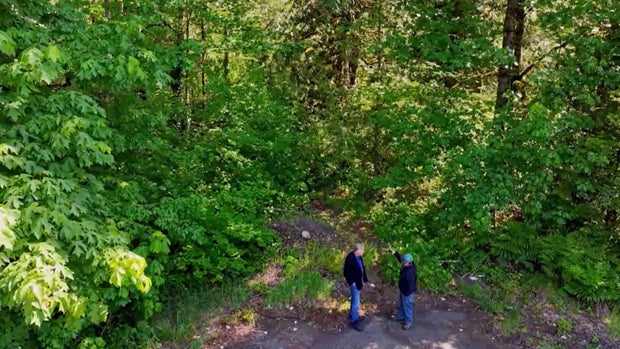
James Evans: So, I just … got out of my truck and surveyed area and – and walked back through this way … And so, I started coming through the woods here … and I seen this like a pile of garbage and a couple of tarps …
Peter Van Sant: Right in this spot here?
James Evans: Yeah, right in this spot right here … so I’m like, “oh, let me get this tarp out of the way” … So, I went down, I picked up the tarp, and that’s when I seen … boots and legs … and I knew it was Phoenix.
Michel Fournier’s accusation, denials – and a confession
Soon after James Evans found his friend Phoenix’s body, word spread through their tight-knit community that she was truly gone.
Christen Prudence: She was face down in the dirt under a tarp next to a heap of trash … she was just left out like garbage. … my heart broke.
Within hours on that Friday, Nov. 29, 2024, investigators approached the home Phoenix shared with Michel Fournier with guns drawn and found him outside.
DEPUTY: Hey Michel. Hey, come here. Sheriff’s Office. …
DET. MONARCH Well, OK. We’re just gonna head that way down the driveway, OK?
MICHEL FOURNIER: OK.
They did not tell Michel his wife’s body had been discovered, and he agreed to go to a nearby police station with Detective Monarch and another investigator for an interview. He was not yet under arrest.
MICHEL FOURNIER: When you do these interviews, are you supposed to have attorneys around here or something like that, or?
DET. MICHAEL ZACHER: Well, I’m gonna go ahead and I’m gonna advise you of your rights … Anything you say must be freely and voluntarily said. Do you understand these rights?
MICHEL FOURNIER: Yeah. In other words, shut up.
Despite his attempt to lighten things up, Michel agreed to answer questions.
MICHEL FOURNIER: Let’s see what you got …
Clackamas County District Attorney’s Office 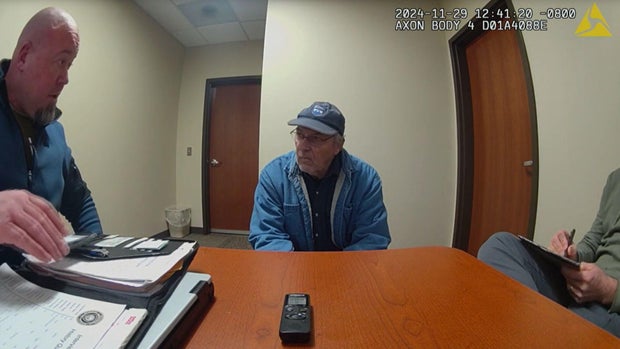
After again saying his marriage was over, Michel took the interview in a different direction. He claimed that just a few days before Phoenix went missing, he’d gotten sick at home after taking heart medication with an open bottle of Gatorade.
MICHEL FOURNIER: … I was itching all over the place. I was welted up, face, body, everywhere …
Michel said his heart was racing, so he drove to the hospital — but said that while in the parking lot, he began to feel better and never went inside. He told investigators that he thought there was something wrong with the Gatorade.
DET. ZACHER: Did you think that you’d been poisoned?
MICHEL FOURNIER: Yeah. I’ve been poisoned.
And Michel Fournier suggested that Phoenix was behind it.
DET. ZACHER: Did you think that she – I mean, who do you think did it?
MICHEL FOURNIER: Yeah. There would have been no one else.
Detectives then asked Michel again about his whereabouts the day his wife had gone missing.
Det. Alex Monarch: We walked through everything. … “is there any way that – that any – that you drove her truck?” “Oh, no, I never drive her truck.” OK. … All of those things that we knew he had done, and he denied all of those things.
After nearly three hours, Monarch decided it was time to reveal what they knew.
DET. MONARCH: … Is that you at the auto parts store?
MICHEL FOURNIER: Yeah. …
DET. MONARCH: The problem we – we found … is the auto parts store also has video cameras in the parking lot. … there’s her truck and her dogs. And there’s no one else in that truck. And you obviously drove the truck there.
Det. Alex Monarch: His physical demeanor significantly changed as he was being confronted with the information that we had.
They urged Fournier to come clean.
DET. ZACHER: You do have the ability to make this right. …
MICHEL FOURNIER: I’m void. I’m empty. … I can’t help you. …
DET. MONARCH: Did you wrap her body in a blue tarp, Mike?
MICHEL FOURNIER: I don’t know.
Det. Alex Monarch: He decided that he no longer wanted to communicate with us. So … we notified him that he was under arrest for murder.
Susan Lane-Fournier/Facebook 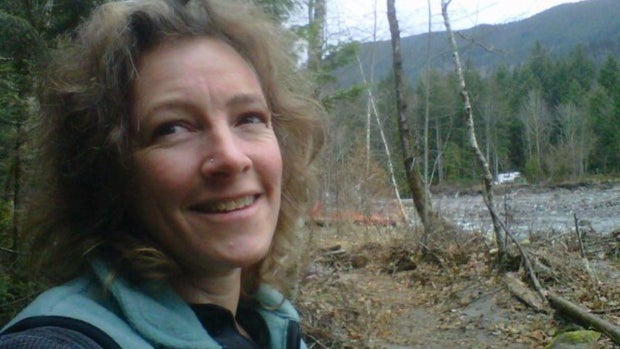
An autopsy later found that Phoenix had been shot three times: in the head, neck, and chest. Investigators determined she was shot with a .22-caliber weapon, likely from the side and behind.
Peter Van Sant: This sounds like an execution.
Det. Jim White: Any one of those bullets was fatal. … We believe that she was likely ambushed as she … left the house to go to work
Michel Fournier was charged with second-degree murder. He pleaded not guilty.
But what had happened to Phoenix’s beloved dogs, Elros and Elrond? Fournier told investigators he didn’t know. But soon after he was taken into custody, word came that their bodies had been found – off the highway along the Columbia River, on the way out of Portland.
Det. Jim White: The dogs were found down a steep embankment and they had zip ties … fastened around their neck tightly. …
Peter Van Sant: … What did this suggest about … who could do something like that? …
Det. Jim White: Cold-blooded.
Detectives continued to shore up their case, processing evidence from the property including Fournier’s Volkswagen truck.
Det. Jim White: It is our belief that … her body was stored there … or her body was moved using that truck.
In January 2025, almost two months after his arrest, detectives got a message from the Clackamas County Jail: Fournier was ready to talk again — and his story had evolved.
MICHEL FOURNIER: I verily believe that I’ve been … poisoned.
Fournier was now claiming that Phoenix had actually handed him that Gatorade bottle laced with poison which caused him to “lose it” for days.
Det. Alex Monarch: Now this was the reason for everything …
DET. MONARCH: You believe that your behavior and your actions were result of being poisoned?
MICHEL FOURNIER: Yes, sir.
To back up his claims, Fournier said he had left the Gatorade bottle on the passenger seat in his truck. But since he never entered the hospital, there was no record he had been there. He did, though, give the detectives a helpful suggestion.
MICHEL FOURNIER: You guys did a fantastic job tracking me, uh, with the pickup truck. OK. … I believe that you can do the same tracking … and – and find me at the hospital.
After some time, Fournier’s tone shifted – and he finally was ready to say what he did.
MICHEL FOURNIER: It was the hardest thing in my life …
That’s when he confessed — not to murdering Phoenix, but to killing her dogs.
MICHEL FOURNIER: They had the zip ties on. It wasn’t working. So, I suffocated them with the leash.
Det. Jim White: He justified it in a very strange way
Michel Fournier seemed to be implying he knew Phoenix was not coming back and wouldn’t be able to care for them anymore.
Det. Jim White: He discussed the dogs as if … they would suffer more by … being taken to the pound … or even being euthanized there.
After Fournier’s unusual interview, detectives set out to verify some of his claims.
Det. Jim White: We took that Gatorade bottle, and we sent it to the Oregon State Police … forensics laboratory, where they did testing on it for basically known poisons and heavy metals. None were found.
They did, however, find something they believed gave Fournier a reason to want his wife dead. It was a detail in those divorce papers he had been served.
Det. Jim White: Well, Susan Lane was requesting the property that they lived on. …
CBS News 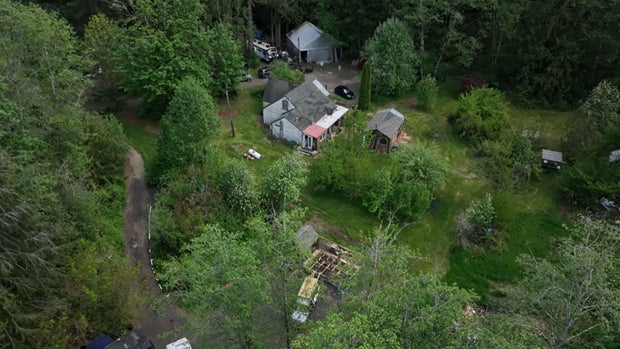
Peter Van Sant: Do you believe that … the realization that he could lose everything, for him became a motive for murder?
Det. Alex Monarch: Oh, absolutely. Absolutely.
With that motive in mind, Clackamas County deputy district attorneys John Millar and Alexander Hayes prepared for trial.
John Millar: Because this is a circumstantial case, there are certainly things that we don’t know … We never gathered … the murder weapon.
But forensic testing had revealed Phoenix’s blood was in the back of Fournier’s Volkswagen truck. They also found .22-caliber ammunition in the house, and a shell casing in the driveway.
Peter Van Sant: Did you feel you had a … powerful case?
Alexander Hayes: Most definitely. … but there are no guarantees in the criminal justice system.
And indeed, within months, Michel Fournier — dressed in clothing from the jail medical unit — asked to speak with detectives one more time … with a proposition.
MICHEL FOURNIER: … I wanted to see you folks here. If we can work something out together …
Michel Fournier has a request
On March 24, 2025, four months after his wife’s murder, Michel Fournier welcomed detectives White and Monarch back to the Clackamas County Jail and asked for a favor.
MICHEL FOURNIER (to detectives): … it’s a bit of a long shot, but I need some time out to take care of my personal affairs.
Det. Alex Monarch: He basically asked that he be allowed to leave jail for a period of time … He’s like, “you can put an ankle monitor on me … and I’ll stay – I’ll stay around.”
Fournier said he needed to get rid of his trucking equipment and liquidate assets. In return, he indicated he might be willing to give Phoenix’s sons some more answers.
MICHEL FOURNIER (to detectives): I’m trying to bring a closure, so we can move on.
Peter Van Sant: Was that actually considered?
Alexander Hayes: No, it wasn’t considered at all. … that request is absolutely absurd.
In February 2026, Michel Fournier went on trial for the murder of his wife, Susan “Phoenix” Lane. The prosecution began by presenting its theory of the crime.
JOHN MILLAR (in court): The evidence is gonna show that Ms. Lane … wanted to get out of a bad relationship, had the defendant served with divorce papers, and then about 41 hours later, he shot her three times in the head, in the neck, and in the chest.
Fournier was given court-appointed lawyers. They — and Fournier — declined “48 Hours”‘ request for interviews.
Peter Van Sant: What was the defense team’s strategy?
Alexander Hayes: So, the defense team strategy is to hold the State … to its burden … to, uh, prove the case beyond a reasonable doubt.
Fournier did not testify, but his voice was heard throughout the trial.
John Millar: We ended up at trial playing about eight hours of interviews.
Fournier’s attorneys had claimed he was in poor health during those interviews and should have had a lawyer present. And they argued that detectives never searched for security camera footage that could have substantiated Fournier’s story about being poisoned. But the prosecution maintained that Fournier spoke to them freely each time, and searching for video of him driving to the hospital would not have proved he was poisoned.
ALEXANDER HAYES (in court): There’s no evidence to support that he was, and it was tested by a forensic scientist. It’s irrelevant. … What matters is what happened on November 22 of 2024.
After seven days of testimony, the defense did not call any witnesses, and the case went to the jury.
Alexander Hayes: The jury deliberated approximately three hours, and that included lunch.
Michel Fournier was found guilty of second-degree murder.
Jesse Lane: I’m very grateful for how much effort and work everybody involved has put into it. … from the community to law enforcement … countless hours of effort and resources to see that he didn’t get away with it.
That same day, he was sentenced to life in prison with the possibility of parole after 25 years.
Peter Van Sant: At his age, this is essentially life in prison, right?
John Millar: Michel Fournier talked about his poor health … we don’t know his specific medical condition. But he’s in his 70s, and … he’ll … probably never … get out from behind bars.
For Phoenix’s sons, moving forward brings new challenges. Jesse, his wife Gina, and two young daughters adjust to a future without their free-spirited grandmother.
Susan Lane-Fournier/Facebook 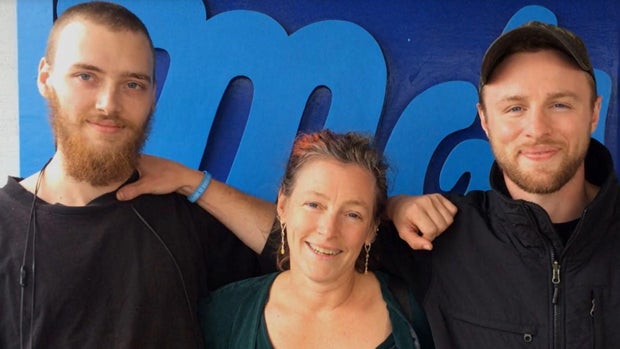
Jesse Lane: The hardest thing is … she doesn’t get to see my girls. She doesn’t get to see my kids. … we’ve gone through so much together. And now it’s this time where we can really enjoy something beautiful. … and she’s gone.
Dakota now owns, and is fixing up, the property his mother loved so dearly.
Dakota Lane: It’s her legacy. And it might go into a trust where if eventually I have kids, they can benefit from it. My nieces … can benefit from it. Use it as a seed to make a better life and let something good grow … from this tragedy.
And up the road at the Hoodland Plaza, the Mount Hood community holds Phoenix’s memory close.
Sarah Caswell: I just, I miss her being next door. I miss her light. … she made a huge difference in a lot of people’s lives up here. … she was able to bring, even in her death, bring so many people together.
Weeks after the trial ended, the community gathered at the Hoodland Bazaar to rename the room where Phoenix led her sound baths as The Phoenix Room.
CHRISTEN PRUDENCE: … want to welcome everybody in … Our intention is to celebrate that justice has been found, that her story … will continue to be spread and shared.
Christen Prudence: I hope that this space can be a place of healing and safety. … just to continue her legacy. … This place is special. … her presence is still in here. We can still feel her spirit.
In May 2026, Michel Fournier was charged in connection with the killing of Phoenix’s dogs, Elros and Elrond. He pleaded not guilty and is awaiting trial.
Produced by Lauren Clark and Dena Goldstein. Cindy Cesare and Greg Fisher are the development producers. Ken Blum and Diana K. DeCilio are the editors. Rebecca Laflam is the associate producer. Lourdes Aguiar is the senior producer. Nancy Kramer is the executive story editor. Judy Tygard is the executive producer.