









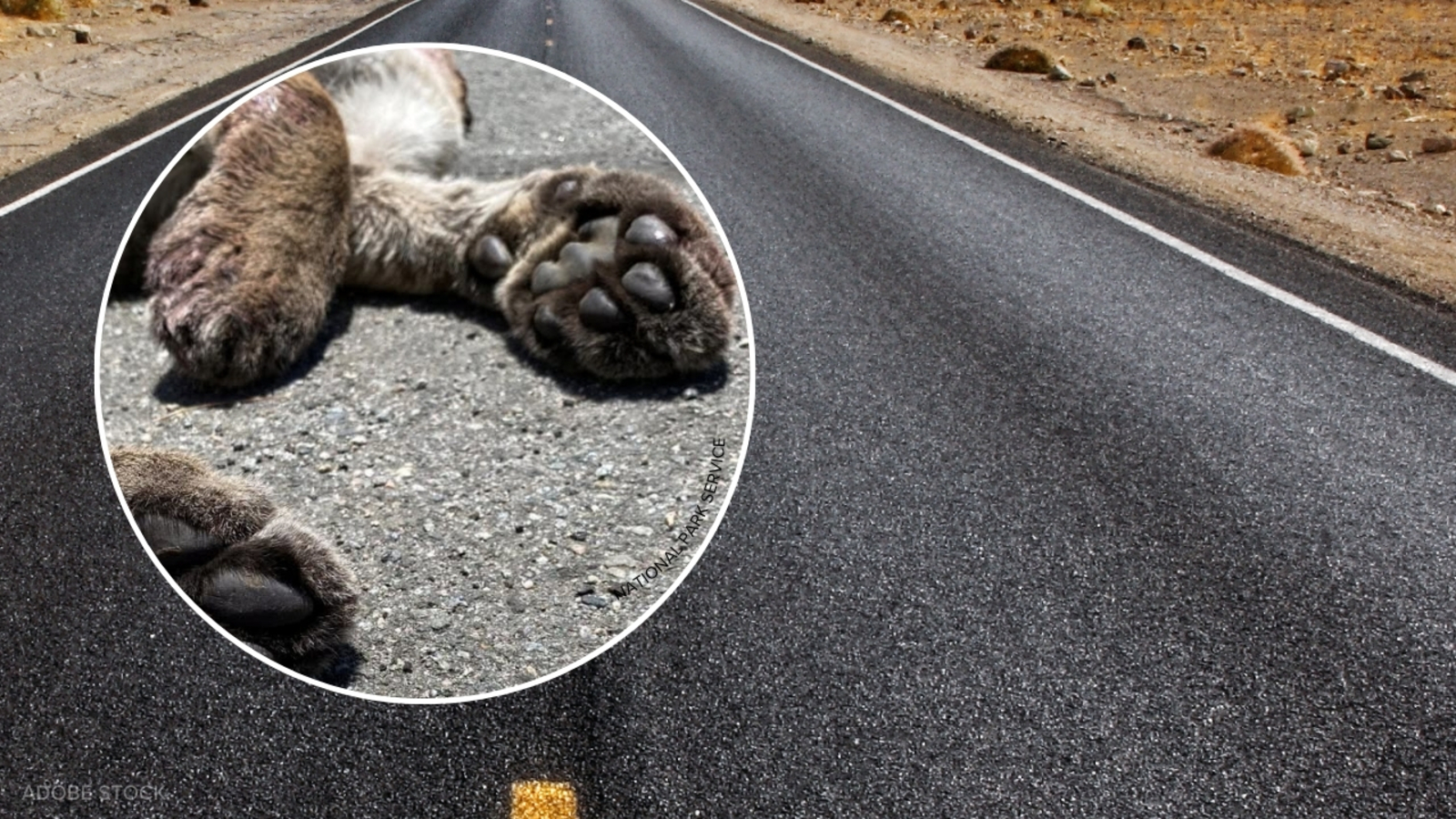
LOS ANGELES () — Two young mountain lions were killed by vehicles in Los Angeles within 48 hours, underscoring the dangers the animals face as development encroaches on their habitat.
“It was hard to get the news about two in two days,” said Beth Pratt, director of the National Wildlife Federation.
A nearly year-old female cougar was struck and killed May 18 on Mulholland Drive east of the 405 Freeway. She was among a small number of cougars documented by the National Park Service in the Hollywood Hills.
Just two days earlier, a 6-month-old male kitten was hit and killed on Las Virgenes Road near Lost Hills Road.
More details surrounding the deaths of the young animals remain unclear.
“It’s hard to say if it just got separated from it’s mom or if it’s mom got killed. We just don’t know yet,” Pratt said. “The year-old female could have been dispersing, much like P-22 had to do, find a new home.”
Since the National Park Service began studying Southern California cougars, nearly 60 mountain lions have died from vehicle strikes in the Simi Hills, Santa Monica Mountains and Santa Susana Mountains.
While many fatalities occur on freeways, recent deaths have also happened on surface streets, highlighting widespread risks across the region.
Despite the losses, wildlife advocates point to signs of hope.
Recently tagged cougar kittens in the area represent a new generation, and the upcoming Wallis Annenberg Wildlife Crossing is expected to improve safe passage for animals across the 101 Freeway.
“It’s not going to eliminate all the road kill in the region, but it is absolutely going to reduce road kill by almost to zero in that particular area, especially with the fencing cutting off their options and leading them to where there’s a safe passage way,” Pratt said.
The crossing is scheduled to open Dec. 2 and is designed to provide critical connectivity between habitats.
Officials believe animals are anxious to try the safe, new route.
“The deer are already approaching it,” Pratt said. “They’re going on the construction site, so I don’t think we’re going to have to wait very long when that ribbon’s cut for the first wildlife to use it.”
© 2026 Television,