










Thousands of Iranians rally in massive, state-choreographed display of unity
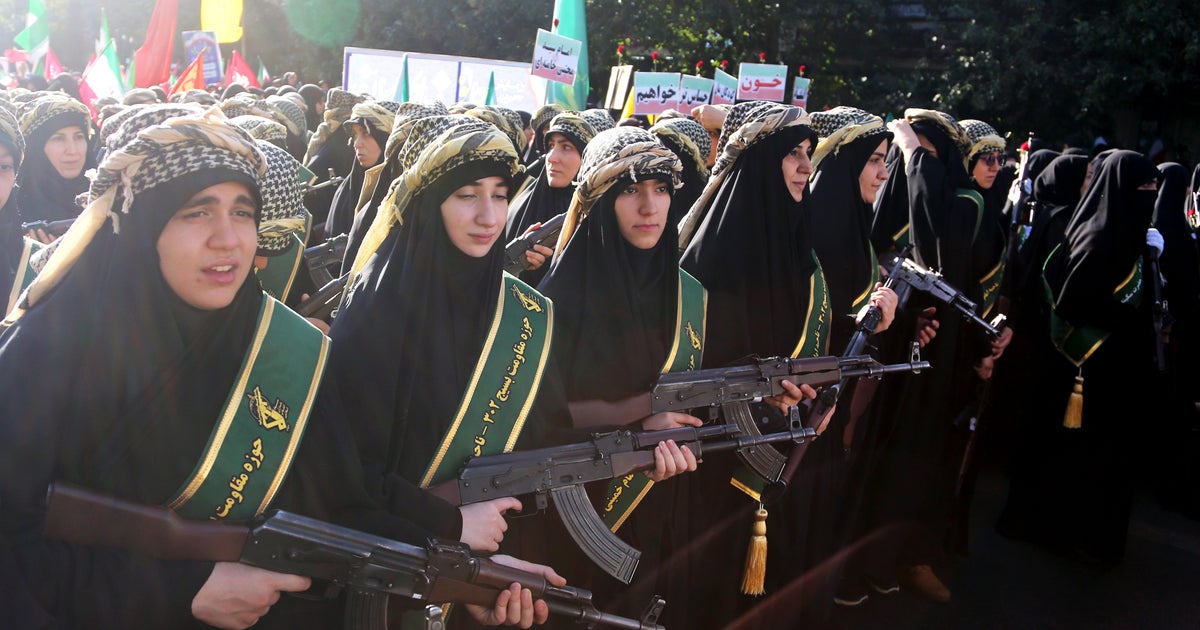
Hundreds of thousands of Iranians rallied Friday in a government-choreographed display of national unity and resistance after months of war, pledging their readiness to take up arms in the biggest such demonstration since the United States and Israel attacked in February.
Iran staged a large-scale nationwide mobilization, involving participants from military and civilian groups, as the country faces mounting economic and social pressure from the war, and the threat of a major new offensive by President Trump.
Estimates vary of the number of people who have pledged to receive limited military training and defend the country in an effort described as “Janfaday-e Iran,” or the “ones who sacrifice their lives for Iran.”
Islamic Revolutionary Guard commander Gen. Hassan Hassanzadeh told state broadcaster IRNA that more than 600,000 people had registered to participate, with over 1 million expected to eventually take part in the training. IRNA estimated that more than 300,000 people had taken to the streets on Friday.
Some participants trampled flags of the U.S. and Israel. Others chanted “Death to America” and “Death to Israel.”
State media have encouraged Iranians to join the campaign for weeks, saying training with assault rifles will begin soon.
CBS/AP
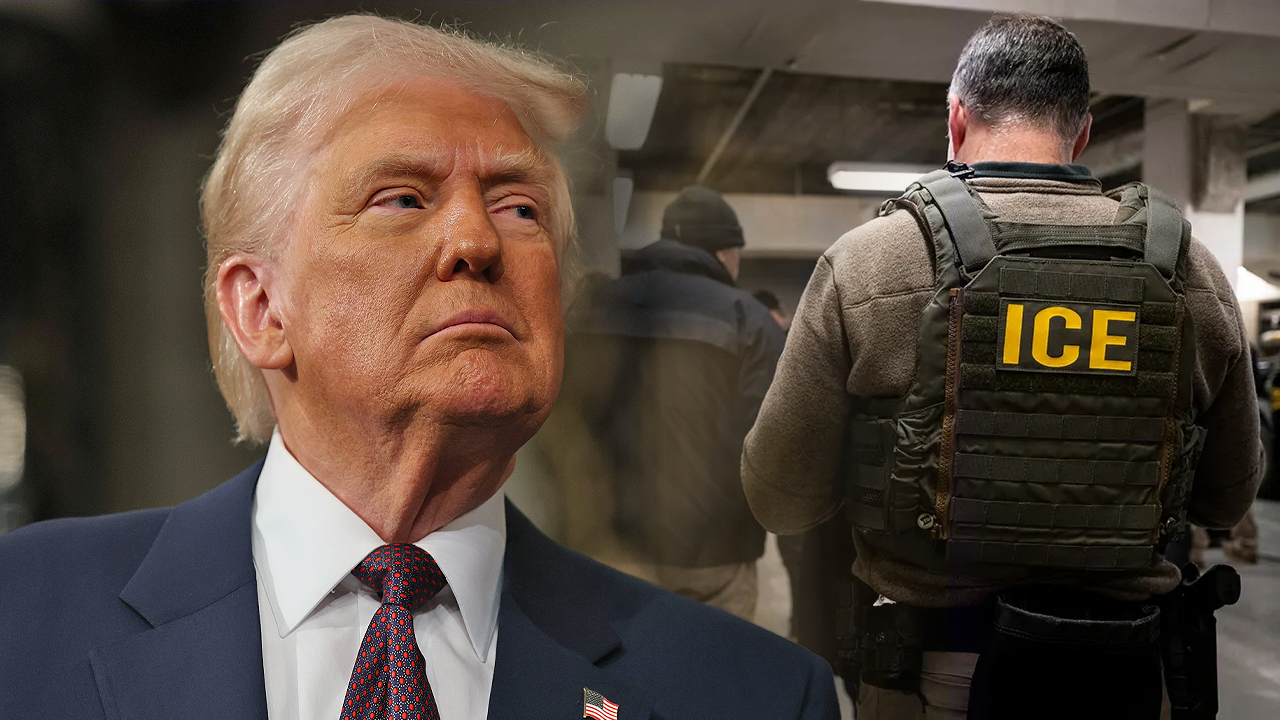
Trump says he has a “big decision coming up” on whether to “annihilate” Iran’s ruling regime
President Trump said Thursday that he is poised to make a “big decision” on whether to “annihilate” the Iranian regime.
“I have a big decision coming up,” Mr. Trump told Axios. “Do I want to go in and annihilate them or do I not? It’s a big decision. Anything could happen with me.”
His comments came ahead of a planned meeting between Mr. Trump and Persian Gulf leaders expected to take place next week on the sidelines of the U.N. General Assembly.
“I want to find out where they are and how they are doing. We have been very protective of them,” Mr. Trump said of the Gulf states, many of which host American military forces and were targeted by Iran in retaliation for the war launched jointly by the U.S. and Israel at the end of February.
Asked whether he would meet with Israeli Prime Minister Benjamin Netanyahu next week, too, Mr. Trump said, “I may.”
Tanker hit by “unknown projectile” in Strait of Hormuz, U.K. maritime agency says
A tanker was struck in the Strait of Hormuz on Friday, causing a fire that was extinguished, according to the United Kingdom Maritime Trade Operations center (UKMTO).
“The CSO (company security officer) of a vessel has reported a tanker being hit by an unknown projectile, causing a fire onboard which has since been extinguished,” the maritime monitor said, adding that the crew was safe, though the environmental impact of the attack was “unconfirmed.”
In a statement to Iran’s semi-official Mehr and Tasnim news agencies, the country’s Islamic Revolutionary Guard Corps claimed to strike a Togo-flagged ship that was making “illegal crossing” of the Strait of Hormuz. It’s unclear whether that incident is related to the one reported by UKMTO.
Iran has pushed commercial ships to ask for permission and use a regime-approved route before sailing through the Strait of Hormuz.
UKMTO later reported that it had learnt of another tanker being struck, this time on Wednesday, Sep. 16. It was hit by an “unknown projectile while transiting outbound of the Strait of Hormuz,” the group said Friday.
CBS/AFP
Attack reported on ship in Strait of Hormuz
An attack was reported late Thursday on a vessel in the Strait of Hormuz, northeast of Khasab, Oman, according to the U.K. Maritime Trade Operations center. The U.K. Royal Navy agency said the crew has been reported safe, and that it didn’t know the exact time or date of the incident.
Russia and China veto U.N. resolution for Iran sanctions monitoring
Russia and China vetoed a United Nations resolution Thursday that would have authorized U.N. experts to keep monitoring sanctions that were reimposed against Iran last year over its nuclear program.
The U.N. Security Council sanctions are still in effect, which freeze Iran’s assets abroad, halt arms deals with Tehran and penalize any development of Iran’s ballistic missile program, among other measures.
Using a provision in the 2015 nuclear deal between Iran and major powers France, Germany and the United Kingdom triggered the “snapback” mechanism, which reimposed the sanctions on Sept. 27, 2025. It restored the Security Council sanctions committee and authorized a panel of U.N. experts to monitor implementation.
The United States had drafted a resolution to extend the U.N. expert panel’s mandate for a year. The proposal was defeated by a vote of 11-2, with Somalia and Pakistan abstaining, because of the Russian and Chinese vetoes.
It comes as the Trump administration is pursuing a wider campaign to isolate Tehran from its remaining economic partners as the more than six-month-old war in Iran has hit a stalemate.
U.S. approves visas for Iranian representatives to attend U.N. General Assembly next week
The Trump administration has approved visas for top Iranian officials, including the president and foreign minister, to attend next week’s U.N. General Assembly high-level meeting in New York even as the two countries are locked in a stalemated war.
The State Department said Thursday it had approved visas for Iran’s “core delegation,” along with essential staffers to participate in the U.N. meetings. The core delegation includes President Masoud Pezeshkian and Foreign Minister Abbas Araghchi, according to U.S. officials, who spoke on condition of anonymity due to visa privacy laws.
“Consistent with our host country obligations, the core delegation from the Iranian regime will be able to attend UN General Assembly High Level week. The delegation will be under travel restrictions and will face prohibitions on the purchase of luxury and other goods per our policy. The delegation is smaller than last year,” the statement said.
The move is unusual due to the more than six-month-long conflict between Iran and the United States and no sign that agreements to reopen the Strait of Hormuz or return to talks on Iran’s nuclear program are close.
U.S. to sell 48 F-35 Lightning fighter jets to Saudi Arabia
Saudi Arabia will be getting a major upgrade to its air force with the purchase of 48 F-35 Lightning II Joint Strike Fighter aircraft from the United States, according to the U.S. State Department.
The jets will cost the Saudis about $24.3 billion, according to the State Department. The fighter jets are built by Lockheed Martin. The planes are in common use by many U.S. allies, including the U.K., Italy, Netherlands, Australia, Canada and more.
The jets will be of the F-35A variety, which means a conventional takeoff as opposed to the F-35B, which can take off vertically.
“The proposed sale will improve Saudi Arabia’s capability to deter current and future threats by strengthening its homeland defense, and improving interoperability with U.S. forces, and other regional and NATO forces,” the State Department said.
The F-35 Lightning II is one of the most common stealth fighters in the U.S. arsenal, with hundreds being used across the Air Force, Marines and Navy. There was a record 191 F-35 fighters delivered to the U.S. in 2025, according to Lockheed Martin.
Iran downed at least 2 unmanned American aircraft in recent days, U.S. officials say
Iranian forces in recent days have brought down at least two American MQ-1 unmanned aircraft, according to U.S. officials familiar with the matter who spoke to CBS News on condition of anonymity because they were not authorized to speak publicly.
It is unclear where in the region the remotely piloted aircraft were brought down or which MQ-1 variant was involved. The U.S. military has fielded two principal MQ-1 variants: the Predator, which became a fixture of U.S. operations in Iraq and Afghanistan before the Air Force retired it in 2018, and the Gray Eagle, a larger Predator-derived aircraft still operated by the Army, including its special operations forces.
Both the Predator and Gray Eagle were designed for intelligence, surveillance, and reconnaissance missions but they can also carry Hellfire missiles for striking targets. In the Strait of Hormuz, these unmanned aircraft can provide U.S. forces with persistent surveillance over the narrow waterway while also tracking Iranian military activity and monitoring threats to both American forces and commercial shipping.
Read more here.