










Published on •Updated
Several US lawmakers have called on the European Union to uphold its methane rules and avoid exempting American energy operators if US domestic standards lack sufficient accuracy or enforcement, according to a letter obtained by Euronews.
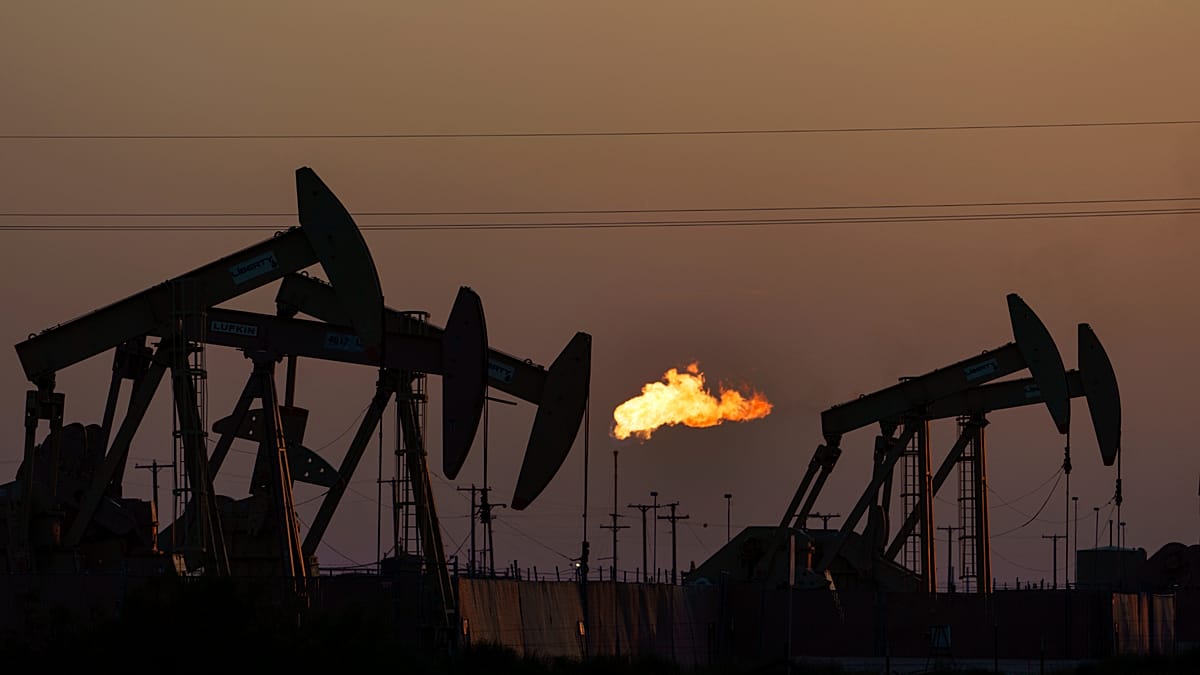
The 24 signatories argue that the EU’s regulation to reduce methane emissions – a short-lived air pollutant known to be up to 30 times more potent than carbon dioxide – is a “critical tool” to prevent the wasteful venting or flaring of natural gas.
They argue that setting clear, consistent rules for all suppliers is “essential to reduce trade barriers” between countries with higher environmental standards for oil and gas, and to reward producers that deploy readily available methane-reduction technologies.
“We encourage the European Commission to conduct necessary technical consultations with relevant experts across American federal and state governmental entities, industry, academia, and NGOs to support implementation of the methane law, in lieu of issuing sweeping exemptions that go far beyond the technical and methodological implementation questions at hand,” reads the letter dated February 4.
Among the signatories are Sheldon Whitehouse, Scott H. Peters, Dan Goldman, Mike Quigley, Jared Huffman, Kathy Castor and Laura Friedman.
The plea contrasts with previous remarks from US Energy Secretary Chris Wright, who publicly complained about the bloc’s methane law during an official visit to Brussels in October, saying it would disrupt trade. It also raises a red flag about the imminent EU-US trade deal under which the bloc is expected to buy roughly $250 billion (around €212 billion) in oil, gas, and nuclear annually through 2028, totaling $750 billion (around €700 billion).
Commission eases implementation
The European Commission circulated a letter to EU member states outlining two options to simplify implementation of the regulation, which has required energy importers to disclose the origin of oil and gas since May 2025.
One approach allows companies to use third-party certificates that verify emissions at the gas production site. Another approach uses a “trace and claim” system, in which each fuel volume is assigned a digital ID that tracks it through every sale and transfer until it reaches the final buyer.
But the EU executive’s simplification procedure doesn’t change the core aspects of the methane law. As of January 2027, importers will need to comply with monitoring, reporting, and verification requirements linked to methane emissions data from countries and companies that produce or export to the EU.
A Commission spokesperson suggested on Friday there are no plans to grant exemptions from the law. Instead, the Commission is “standing by the law’s ambition” while engaging “positively” with the US and helping economic operators adjust to its implementation.
“Our focus is now on its implementation. We are designing a pragmatic and simple implementation, taking security of supply aspects into account, confident it will work, and industry has engaged,” Commission spokesperson Anna-Kaisa Itkonen told Euronews.
Uncertainty for US industries
In 2024, the US Environmental Protection Agency (EPA) strengthened rules to better measure and reduce methane emissions from oil and gas, aligning them with EU standards. But in 2025, the EPA moved to delay and suspend these rules, proposing to pause reporting until 2034 and pushing back mitigation requirements, creating uncertainty for industry and international partners.
Jonathan Banks, global director of methane pollution prevention at the environmental organisation Clean Air Task Force, said the letter signed by US lawmakers reveals a growing “transatlantic and global consensus” to increase methane reductions.
“US companies that have already invested in methane measurement and emissions management have a competitive advantage that many are seeking to highlight,” said Banks. Strong, enforceable standards like the EU Methane Regulation reward that investment and provide the certainty serious producers need.”
Methane arises from fossil fuel production or livestock digestion and is a significant contributor to global warming. The International Energy Agency (IEA) says the gas is responsible for about 30% of the rise in global temperature since the industrial revolution.
Read the full article here