





 Weather
Do you have a burning Broadway question? Dying to know more about an obscure Broadway fact? Broadway historian and self-proclaimed theatre nerd Jennifer Ashley Tepper is here to help with Broadway Deep Dive. BroadwayWorld is accepting questions from theatre fans like you. If you’re lucky, your question might be selected as the topic of her next column!
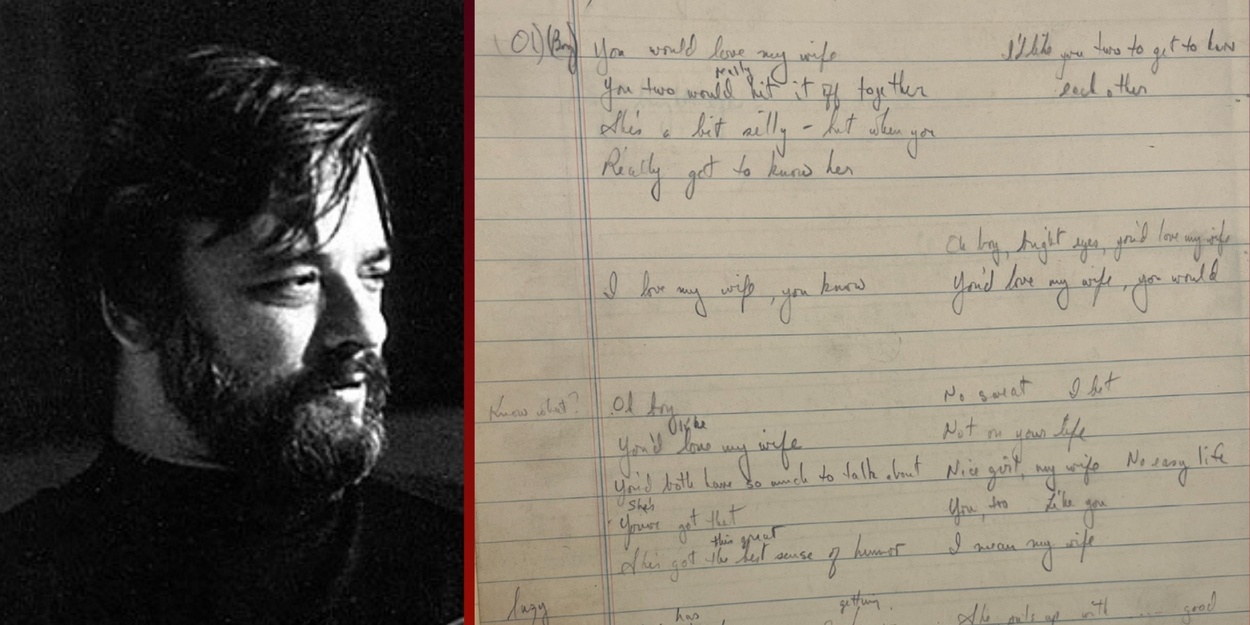
Earlier this year, it was announced that the Library of Congress had acquired the Stephen Sondheim collection. The legendary composer and lyricist passed away in 2021 at the age of 91 after a long and extraordinary career. His collection at the Library of Congress is in the midst of being catalogued, with the boxes that have been processed now available to the public for educational and scholarly purposes.
This summer, I traveled to Washington D.C. and spent several days poring over Sondheim’s lyric drafts, music manuscripts, rewrite notes, brainstorm pages, song list outlines, and more. The collection offers a historic and extensive look at the process of one of the greatest musical theatre writers of all time. For theatre fans who love Sondheim’s musicals or writers interested in seeing renowned technique up close, there is no greater pleasure than spending time in the Sondheim collection. The librarians at the Library of Congress, in particular Senior Music Specialist Mark Horowitz, have done an incredible job archiving the materials.
The collection documents songs that made it into Sondheim’s musicals, and it also documents cut or unused songs that were edited out of shows before they opened. Rarest of all, it documents songs that were never finished. These are not the rarities that made it into Marry Me a Little or a Sondheim compilation album. Rather, they are sketches of songs that give a window to Sondheim’s process creating a score and show him developing characters and determining the details of what are now iconic musicals.
Here are five of the incomplete songs in the Sondheim collection at the Library of Congress:
1. “Buddy and Francesca”- Follies
When Follies opened at the Winter Garden Theatre on Broadway in 1971, it had not only a brilliant, breathtaking score, but also many remarkable numbers that were cut from the show out of town in Boston. Over the years, cut numbers from Follies have made their way into films (“Can That Boy Foxtrot” in The Birdcage), Sondheim revues (“All Things Bright and Beautiful” and others, Marry Me a Little), and major concerts (“Uptown, Downtown”, Sondheim: A Celebration).
But devotees of Follies will be thrilled to know that the Sondheim collection also includes fragments of abandoned songs, sketches of the road you didn’t take… for the score of the musical.
One of these is titled “Buddy and Francesca”. In early drafts of Follies, Francesca was a waitress at the reunion. A cut scene early in the show finds her serving drinks to Ben and Sally as they see each other for the first time, and putting her foot in her mouth while wondering if Sally hadn’t once wanted to be a bigger Follies star.
Later in the show, Sondheim mused that Francesca might also interact with Buddy, becoming a pawn in the midst of the show’s love quadrangle. “Buddy and Francesca” was a placeholder title for the song he imagined Buddy might sing to the young waitress. Both music and lyrics exist in incomplete form for this lost song idea.
The main gist of the song revolves around Buddy telling Francesca how much she’d enjoy his wife. As Buddy sings about Sally, the lyrics reveal how he actually feels about her and about his marriage. “You would love my wife” is a frequent refrain in the song, pointing to a song Sondheim would write later for A Little Night Music: “You Must Meet My Wife”.
2. “Your Room”- A Little Night Music
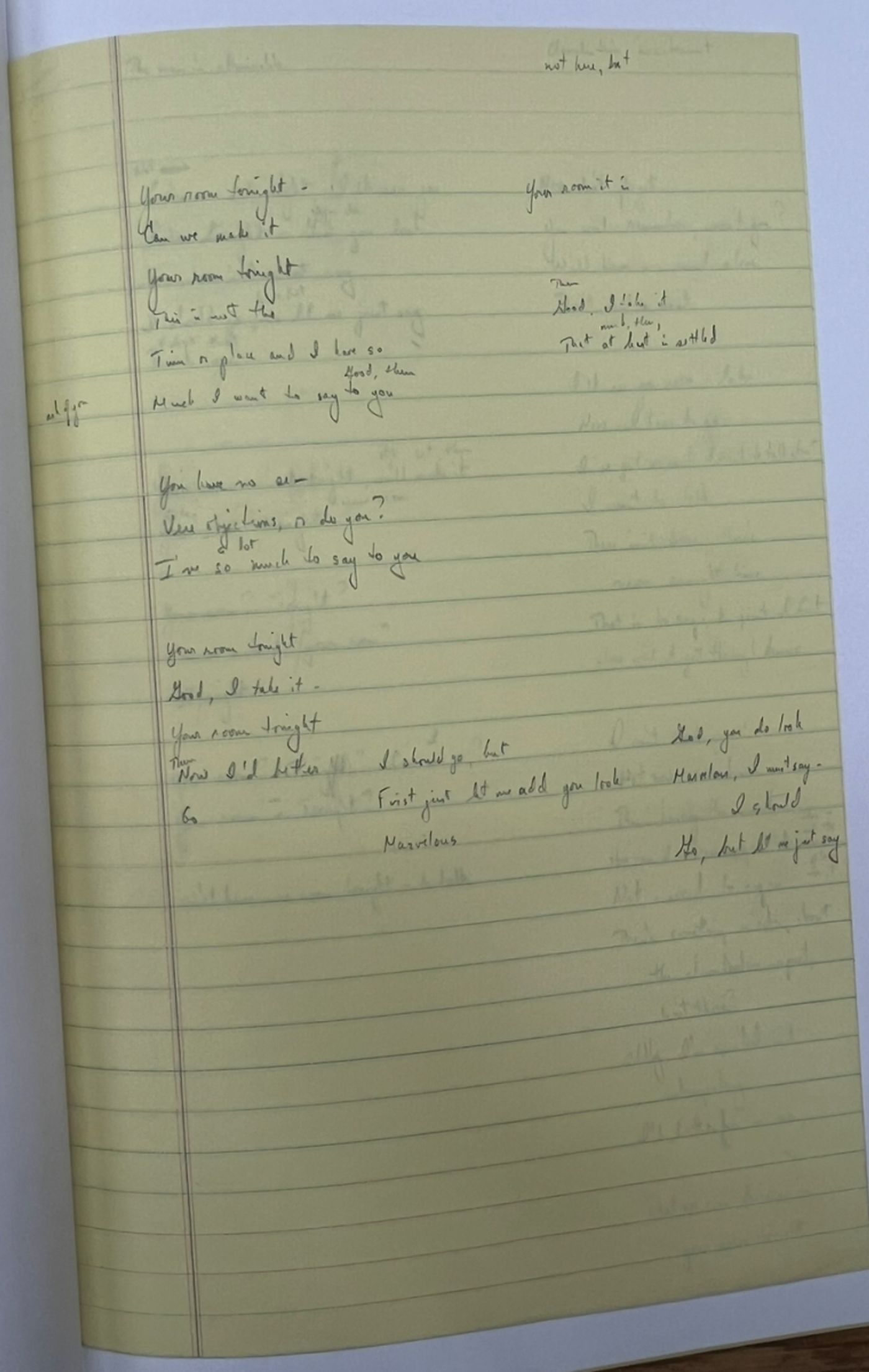
Speaking of A Little Night Music (1973), while Sondheim’s next Broadway show doesn’t have quite as many discarded or incomplete songs as Follies, it does have a few curiosities.
“Your Room” deliciously hints at a liaison between old lovers Fredrik and Desiree, utilizing the themes of time that define the show. They make plans to meet later in the evening and have a more private, real conversation, all the while subtly revealing that they are still attracted to each other.
3. “Waiting”- Assassins
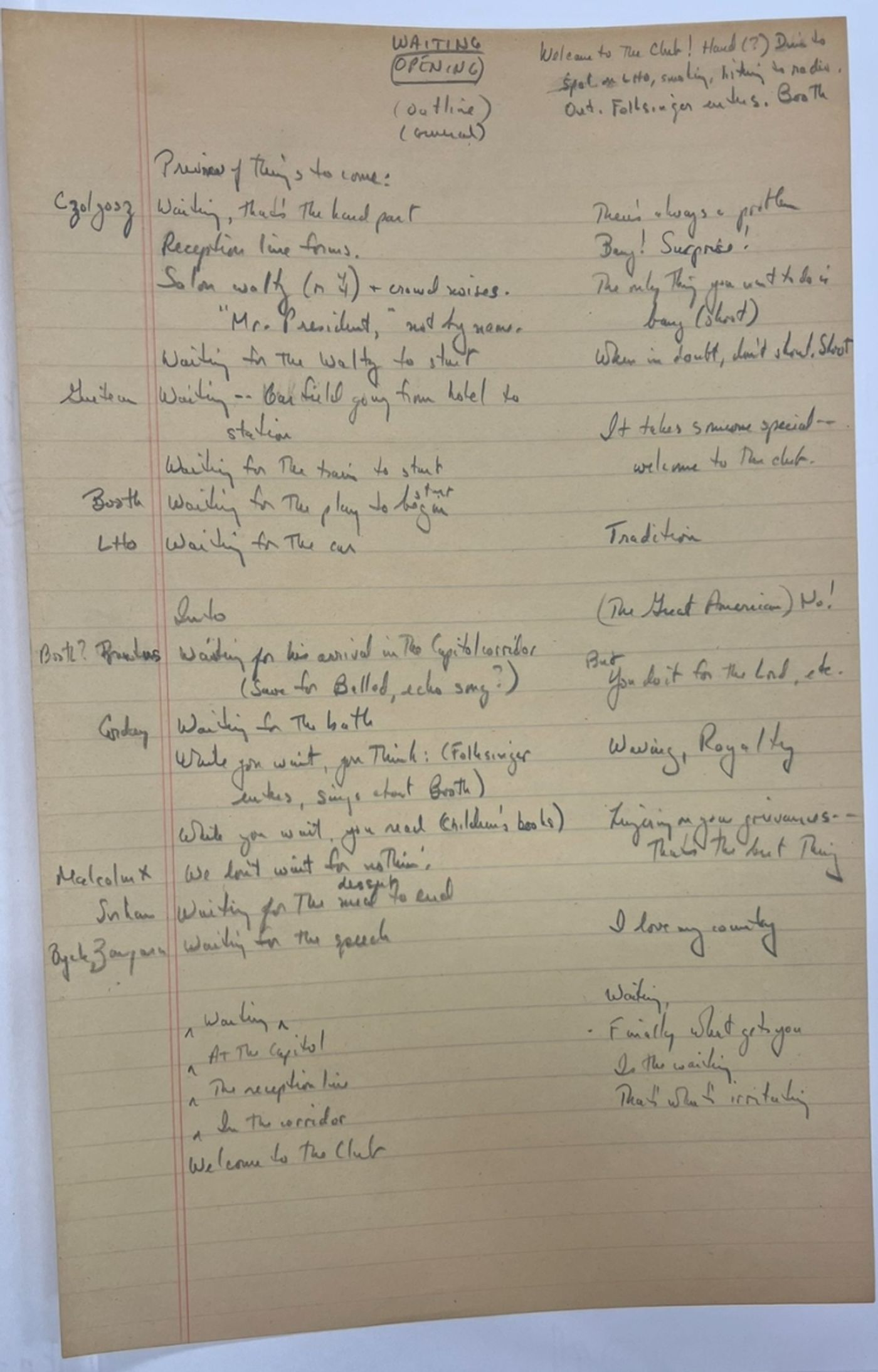
An early version of an opening number for Assassins (1990) was called “Waiting”. Sondheim’s lyric drafts for “Waiting” are chilling, displaying his piercing insight into the psyches of those who attempted to assassinate American presidents. Some of the ideas in “Waiting” did make it into the final opening number, “Everybody’s Got The Right”, and others transformed into different moments in the Assassins score.
The core idea behind “Waiting”—that these humans see themselves as ordinary and are restless for a moment when they can actually make a difference, which translates into violence— is a fascinating one. In the song, Sondheim presents the assassins pondering different types of weapons and their utility as well as each of their personal motives. A few moments demonstrate parallels between the assassins, such as when they share a unison lyric and then branch off to yell the names of their varied targets. “Waiting” explores the obstacles and frustrations that each character faces, and also zooms out to the universal image of the whole group waiting for their moment to assassinate.
4. “Judge and Johanna”- Sweeney Todd
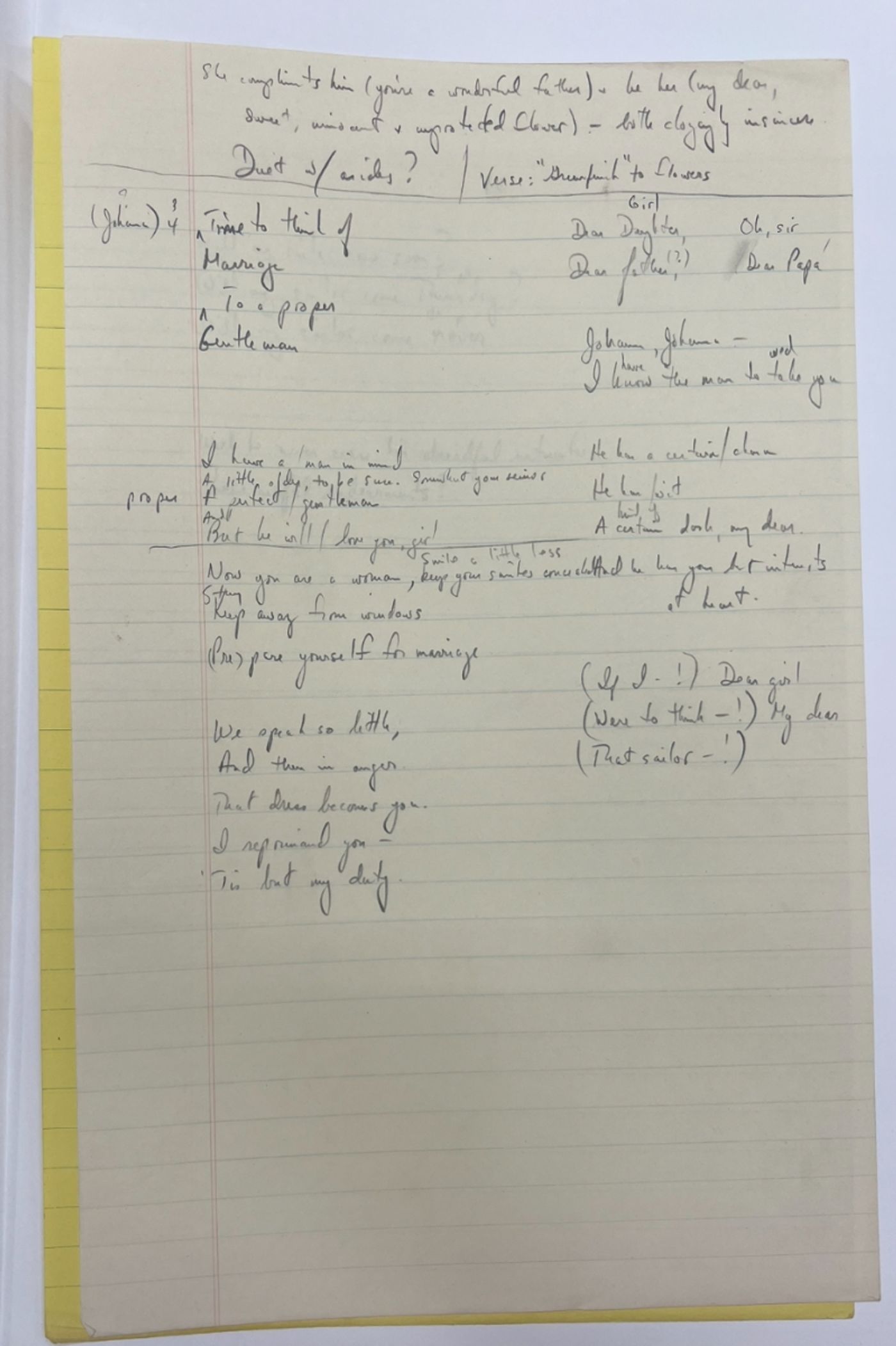
Like “Buddy and Francesca”, “Judge and Johanna” is a placeholder title for a song naming the two characters within. Judge Turpin and Johanna are two of the central characters of Sweeney Todd (1979). When we first meet them, Johanna, Sweeney Todd’s long lost daughter, is Turpin’s ward, an arrangement created due to the corrupt and evil machinations of the judge.
Well into act one, Judge Turpin reveals his romantic designs on his own adopted daughter. Sondheim’s notes reveal that at one point, he imagined the Judge and Johanna sharing a duet exhibiting the judge’s proclivities. Johanna would compliment the Judge on being a wonderful father and try to wriggle out of his endearments, as he gradually hinted at his plans to marry her himself. The song structure would allow the audience to at first think that perhaps the judge was suggesting Anthony as Johanna’s mate… then to imagine that perhaps the domineering judge merely wanted a more high class young man to marry his daughter. The song’s progression would slowly expose the judge’s horrifying plan to have Johanna for himself.
5. “Odyssey”- Company
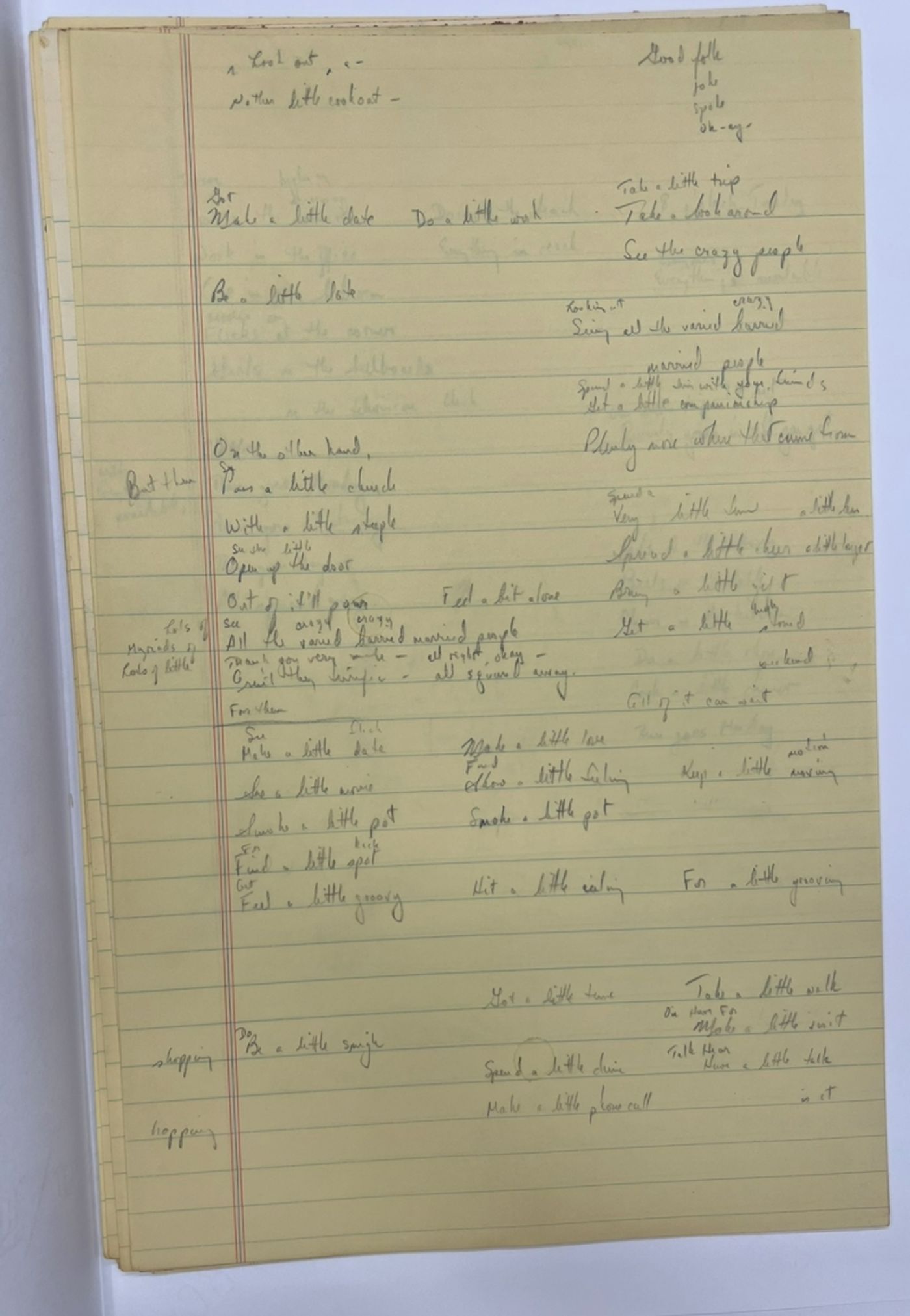
Sondheim originally labeled a song for Robert in Company as “Odyssey”. This incomplete sketch was an early version of a finale for the show that later became “Happily Ever After”—which was cut during the show’s Boston tryout.
The epic “Being Alive” that we all know as the conclusion of Company was Sondheim’s third complete song written for the final spot in the musical. First, he wrote “Multitudes of Amys”, which had Bobby proposing to Amy. In this version of the show, Amy actually did walk out on Paul on their wedding day at the end of act one, and in act two, Bobby decided he and Amy were compatible and that he would ask her to marry him. This version was discarded before the original rehearsal process for Company began, as it became clear that Amy should marry Paul at the end of act one.
Sondheim’s second full attempt at a Company finale was “Happily Ever After”, which appeared in the show during its Boston tryout. The song has a few lyrical similarities to “Being Alive”, but a different melody and a much less optimistic outlook about partnership and marriage.
Much like “Waiting” became “Everybody’s Got The Right”, but appears to be a sketch of a different song, “Odyssey” contains the seeds of “Happily Ever After”, written as Sondheim was pondering exactly what he wanted to say with Company. It revolves around figuring out ways to pass the time while married, highlighting the loneliness of married life.
Check back on November 16, 2025 for the final installment from the Library of Congress. Read Part 1 here!
With thanks to Rick Pappas, Mark Horowitz, and the Library of Congress.
All images (© 2025) and the music and lyrics of Stephen Sondheim are reproduced with the permission of the Stephen Sondheim Trust. All rights reserved.
Comments
To post a comment, you must register and login.


