











Two U.S. Navy destroyers had transited the Strait of Hormuz to begin mine-clearing operations in the vital waterway, U.S. Central Command said Saturday.
The destroyers crossed through the Strait and operated in the Arabian Gulf, CENTCOM said on social media. Additional U.S. forces, including underwater drones, will “join the clearance effort in the coming days,” CENTCOM said.
The operation came as President Trump said on Truth Social on Saturday that the U.S. was doing “a favor to Countries all over the world” by clearing mines from the strait. Mr. Trump also said Saturday that all of Iran’s mine-laying ships have been destroyed.
“They probably have a couple of mines in the water,” Mr. Trump later told reporters early Saturday evening as he was departing the White House for Florida. “We have minesweepers out there. We’re sweeping the strait.”
Meanwhile, Vice President JD Vance was in Islamabad for direct trilateral talks with Iran and Pakistan. Saturday marked the first time the U.S. and Iran have held face-to-face talks since the Islamic Revolution in 1979. Before Sunday’s talks, the highest-level direct contact had been when former President Barack Obama, in September 2013, called the then newly elected Iranian President Hassan Rouhani to discuss Iran’s nuclear program.
U.S. officials told CBS News in late March that at least a dozen underwater mines had been placed in the waterway. Their analysis was based on American intelligence assessments. The devices include the Maham 3, a moored naval mine that uses sensors to operate, and a “sticking mine” called the Maham 7 that rests along the seabed until a target passes within range. Both devices are manufactured in Iran. Drones and missiles were also used to stop ships from passing through the Strait.
About 20% of the world’s oil supply is shipped through the strait. Throughout the war, Mr. Trump issued strong threats against Iran, threatening to target power plants and warning that “a whole civilization will die” if the Strait was not reopened.
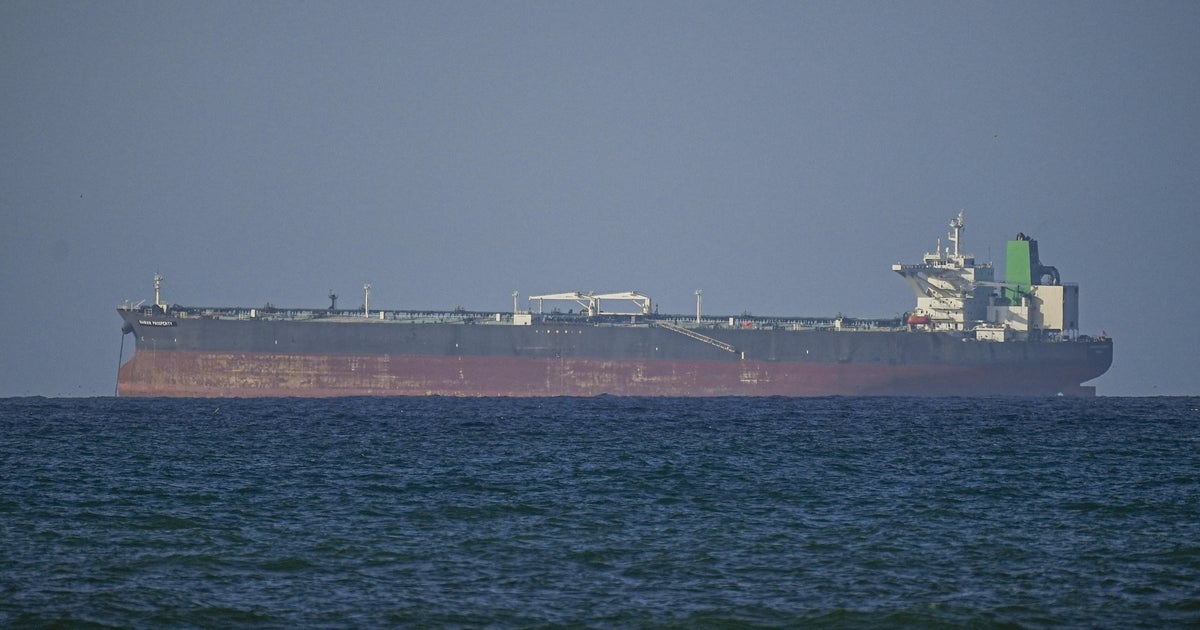
Passage of oil tankers and other commercial ships through the Strait of Hormuz was all but halted during the six weeks of war. Some maritime traffic has resumed since the U.S. and Iran established a two-week ceasefire on Tuesday, though it remains low, according to marine transit data reviewed by CBS News.
Analysts warned that the global oil supply will remain disrupted for several months, even if the ceasefire holds and marine traffic returns to normal levels. Henning Gloystein, managing director of energy, industry and resources at geopolitical risk consultancy Eurasia Group, said it would take time to repair oil refineries and other energy infrastructure that have been damaged during the war, and shipping companies that operate oil tankers in the region will need at least two months to resume operations, he said.