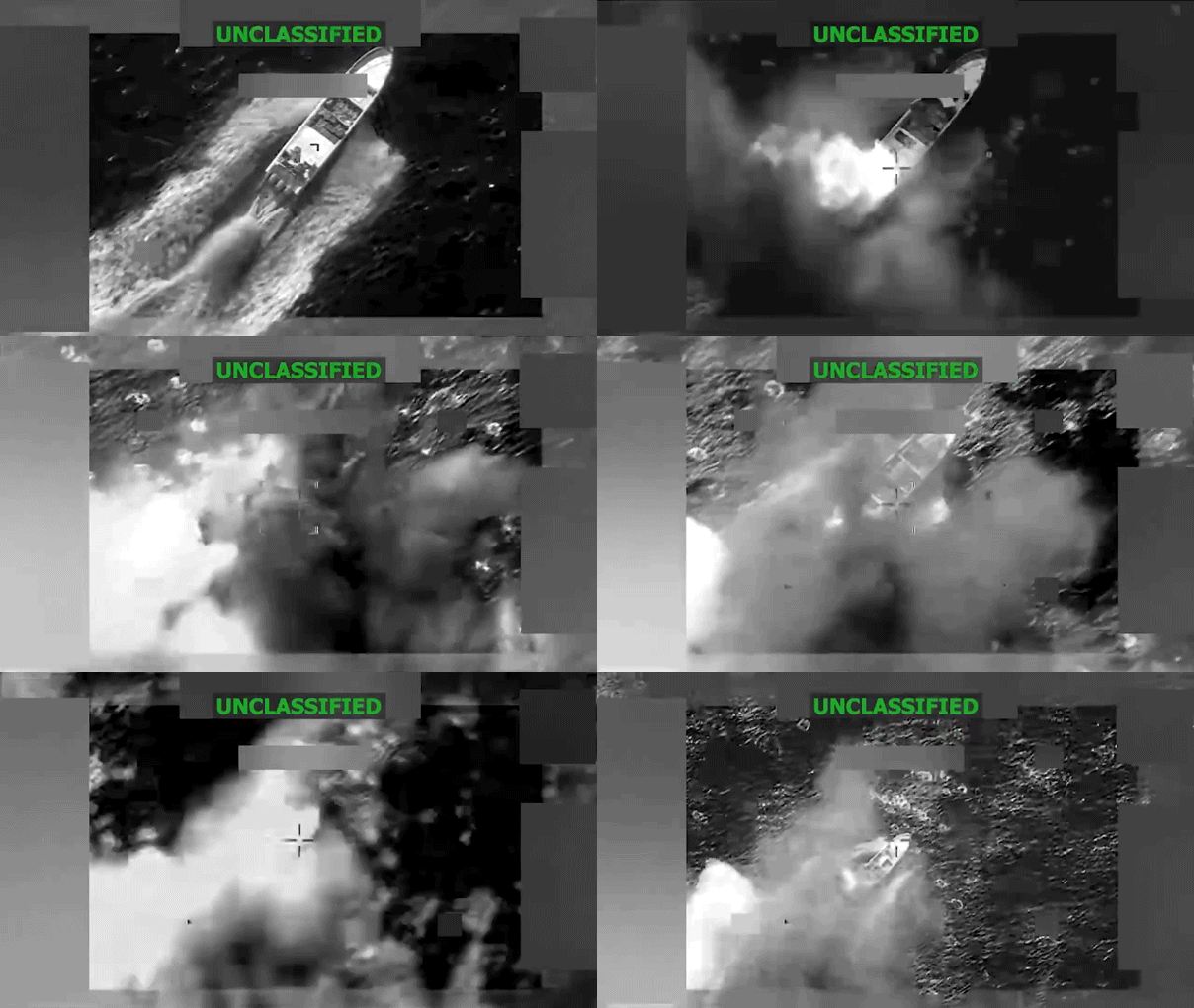










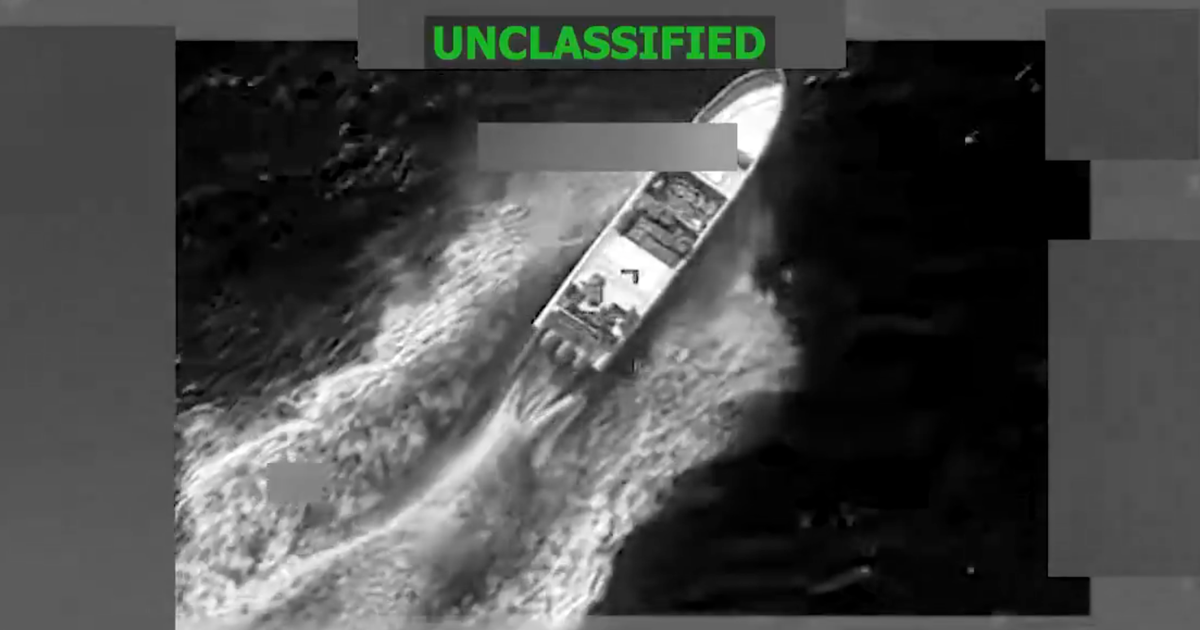
The U.S. military struck its 39th alleged drug-carrying boat on Monday, killing two people and leaving one survivor who is now the focus of a search-and-rescue effort.
The military’s Southern Command said in a post on X it struck a vessel that was “operated by Designated Terrorist Organizations” and “engaged in narco-trafficking operations.” It did not name the group that allegedly operated the boat, but the Trump administration has listed several Latin American drug cartels as foreign terrorist groups.
A U.S. Coast Guard spokesperson told CBS News that Southern Command notified it on Monday about a “person in distress,” and the Maritime Rescue Coordination Center Ecuador is organizing a search-and-rescue effort for the person.
Some 130 people have been killed since the U.S. military began striking alleged drug boats in the Caribbean Sea and Eastern Pacific Ocean last September. The pace of the strikes slowed somewhat after Jan. 3, when U.S. forces captured Venezuelan President Nicolás Maduro. Monday’s boat strike is the third known strike since then.
In at least five instances, people have survived the operations, spurring efforts to find and rescue them in most cases. Authorities have called off several of those searches, though in one October operation, two survivors were picked up by a Navy helicopter and repatriated to their home countries of Ecuador and Colombia.
The military’s handling of survivors has drawn intense scrutiny. During the first boat strike on Sept. 2, two people survived an initial strike but were killed in a follow-on attack, prompting accusations the second strike may have constituted a war crime. Democratic lawmakers who watched a video of the Sept. 2 operation were highly critical of the strike. The Defense Department and several congressional Republicans have insisted the survivors may have still been in the fight, warranting the follow-on strike.
The Trump administration has said the strikes are necessary to combat narcotics trafficking. It has labeled the alleged seaborne drug smugglers as “unlawful combatants,” and told Congress the U.S. is embroiled in a “non-international armed conflict” with cartels.
Most Democratic lawmakers have criticized the strikes, arguing the administration hasn’t provided enough evidence that the boats were trafficking drugs to the U.S. and has failed to get authorization from Congress for the military campaign. Several efforts by congressional Democrats to restrict the boat strikes have fallen short in the House and Senate.