









Good morning from Brussels. I’m Eleonora Vasques
ADVERTISEMENT


ADVERTISEMENT
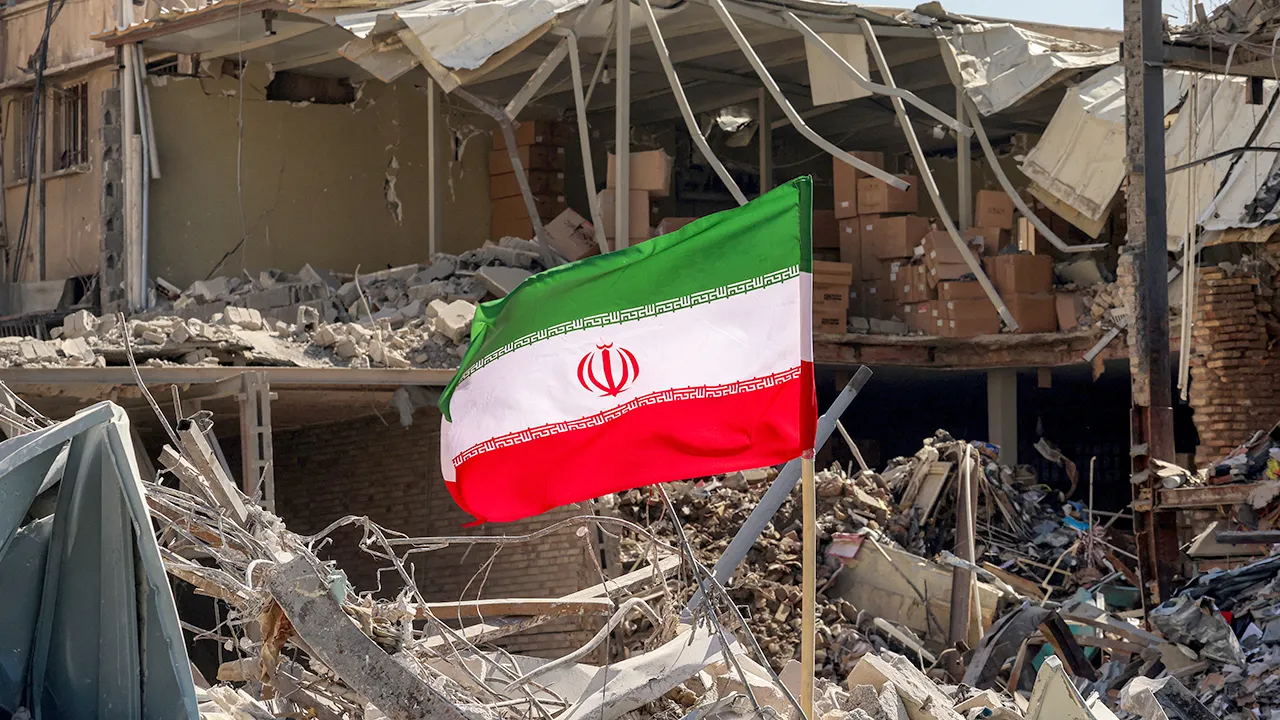
The situation in Iran may see an important development this evening, as the deadline set by US President Donald Trump to reopen the Strait of Hormuz expires at 8 pm in Washington (4 am CET)
Trump told a press conference at the White House on Monday that if the Strait is not reopened, the US military will strike Iran’s power plants, bridges and other infrastructure. The US President said he is “not at all” concerned about committing possible war crimes and refused to confirm whether civilian infrastructure will not be targeted.
For the moment, Tehran is hitting back against Trump’ threats.
On Monday, Iran rejected a 45-day ceasefire proposal by mediators, asking instead for an end to the war. “We only accept an end of the war with guarantees that we won’t be attacked again,” Mojtaba Ferdousi Pour, head of the Iranian diplomatic mission in Cairo, told the Associated Press.
On the same day, Israel struck a key petrochemical plant at Iran’s massive South Pars natural gas field. It also killed the paramilitary Revolutionary Guards’ head of intelligence and the leader of its undercover unit.
Israel is determined to maintain its attacks on Iran: it approved three weeks of battle plans in the absence of a ceasefire, military chief spokesperson Effie Defrin said on Monday.
Discover how the war is impacting the Gulf region from our Euronews correspondent Aadel Haleem in Doha. Watch.
Meanwhile, the situation in Hungary is heating up with parliamentary elections set to take place in less than a week. The election will determine whether current Hungarian Prime Minister Viktor Orbán, in power since 2010, will remain in office or leave the premiership to his opponent, Péter Magyar.
US Vice President JD Vance confirmed he will arrive in Hungary on Tuesday to support Orbán, a significant endorsement that follows US President Donald Trump’s backing at the end of March via a video message.
Vance will appear at a Fidesz rally, with the two leaders also expected to hold a bilateral meeting, our correspondent Gábor Tanács reports.
You can also follow the latest updates from today’s Europe Today show, featuring on-the-ground reports from our Budapest correspondent, Zoltan Siposhegyi.
In the meantime, Serbian intelligence services are investigating an attempt to sabotage a gas pipeline running from Russia to Serbia and Hungary, the head of military security agency VBA Đuro Jovanić said on Sunday.
The incident occurred on the Balkan Stream pipeline, an extension of TurkStream. “Two large packages of explosives with detonators” were found inside backpacks in northern Serbia’s Kanjiža, “a few hundred metres from the gas pipeline”, Serbian President Aleksandar Vučić announced on Sunday morning.
Orbán implied Ukraine’s involvement without making a formal accusation. “Ukraine has been working for years to cut Europe off from Russian energy”, Orbán said in a video published on X later that day, saying that Hungary is reinforcing security around the pipeline.
Kyiv “categorically” rejected the accusation. “Ukraine has nothing to do with this”, foreign ministry spokesperson Heorhii Tykhyi said on X.
Moscow also pointed the finger at Ukraine, with Kremlin spokesperson Dmitry Peskov telling reporters on Monday that it is “highly likely” that Kyiv is involved in a sabotage attempt.
On today’s show, you can also watch how the incident is affecting the electoral campaign with input from our Brussels-based reporter on Hungary Sandor Zsiros.
Meanwhile, Sudan is set to enter its fourth year of war in mid-April, and is currently experiencing one the worst humanitarian crises worldwide. UN Goodwill Ambassador and actress Kristin Davis sat down with Euronews to talk about her most recent visit to Sudan.
Davis stressed her surprise for the lack of media coverage for such a major crisis. “For some reason, the media does not seem to want to cover it, which I find really interesting and I can’t explain why” she said in the interview.
According to UN data, more than 30 million people are in need of humanitarian assistance in Sudan and roughly 12 million people are displaced.
You can watch the full interview here.
How can Ukraine help unlock the Strait of Hormuz?
For over a week, Ukrainian President Volodymyr Zelenskyy has repeatedly stated that Kyiv is ready to help unblock the Strait of Hormuz, which has been disrupted since the outbreak of the Iran war.
“Our signal to the United States and countries in the Middle East about the Strait of Hormuz was that we were open to discussing it,” he said on X.
Zelenskyy said no country can lift the blockade on its own at this stage, as he insisted that Kyiv has experience with launching the Grain Corridor in the Black Sea “despite Russia’s attempts to block the flow of food and other goods.”
“The situation now is similar, but it is about energy,” he said, adding that from Ukraine’s experience “the war and the negotiations on reopening the Hormuz Strait can go in parallel.”
“An alternative step would be to control the strait unilaterally, as Ukraine did with the Grain Corridor. Achieving this would require interceptors, military convoys to escort the vessels, a large integrated electronic warfare network, and other tools,” Zelenskyy added. Unblocking the Strait of Hormuz would most likely require clearing mines, suppressing threats from along the coast of Iran, and, most importantly, defending ships in real time.
This is where Kyiv has the knowledge and the know-how.
Sasha Vakulina has more.
Ukraine and Syria to cooperate on security in an unexpected military alliance
Ukraine and Syria pledged greater security cooperation in talks in Damascus on Sunday, as Kyiv pushes to deepen security ties across the Middle East amid Moscow’s ongoing full-scale invasion and the Iran war.
Ukrainian President Volodymyr Zelenskyy’s visit to Syria and the meeting with interim President Ahmad al-Sharaa marked Zelenskyy’s first trip to the country since Syria’s dictator Bashar al-Assad was ousted in 2024.
The visit follows Zelenskyy’s trip to Turkey on Saturday and a Gulf tour last week against the backdrop of the Iran war as he sought to clinch security deals and exchange Ukrainian drone expertise for air defence missiles.
Zelenskyy said Ukraine supported Syria after the fall of the al-Assad regime and is ready to continue working with Damascus on stability and development. He said Kyiv and Damascus would work more closely together so that the two countries and people “can become stronger,” and their “economies can grow”.
Sasha Vakulina has more details.
More from our newsrooms
Artemis II crew head back towards Earth after completing a record-breaking lunar flyby NASA’s four Artemis II astronauts are homeward bound after successfully completing a lunar flyby that saw them travel deeper into space than any other human in history. Emma De Ruiter has more.
Foreign investment in Spain fell by 22% to its lowest level since 2021 Foreign direct investment (FDI) in Spain fell to €30.76 billion in 2025 — down 21.8% from the previous year and the lowest figure since 2021, according to Spain’s Ministry of Economy. Rafael Salido has more.
We’re also keeping an eye on
- US Vice President JD Vance is visiting Hungary. He is set to offer his support to Prime Minister Viktor Orbán as the country goes to the polls on 12 April
- Nicolas Sarkozy appears in court for his appeal against his conviction over seeking financing from late Libyan dictator Muammar Gaddafi to secure his 2007 election victory
That’s it for today. Remember to sign up to receive Europe Today in your inbox every weekday morning at 08.30.
Read the full article here