









By Dianne Apen-Sadler
Published on
•Updated
While European countries made up the majority of the top 10 in this year’s Henley Passport Index, Singapore clung onto the number one spot for the second year in a row.
Two other Asian countries tied for second place – Japan and South Korea – with visa-free access to 188 destinations, compared to Singapore’s 192.
The index, which uses data from the International Air Transport Association (IATA) on how many destinations passport holders can visit without applying for a visa in advance, is now in its 20th year.
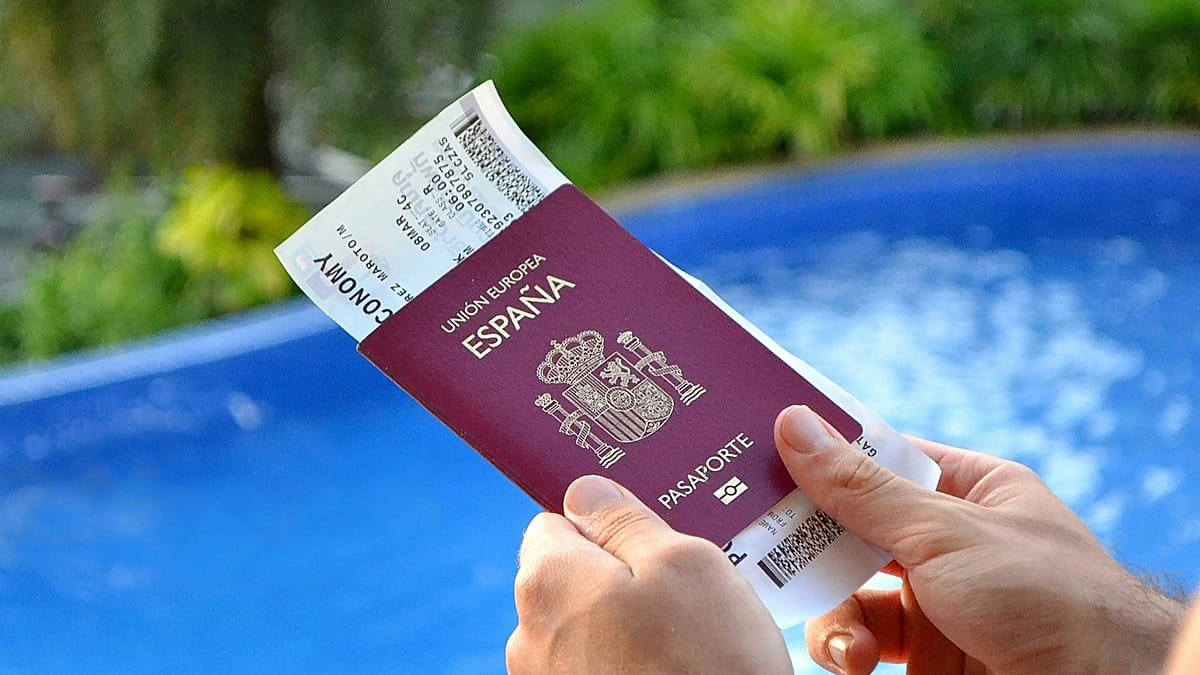
Five European countries came in third place, with access to 186 countries: Denmark, Luxembourg, Spain, Sweden and Switzerland.
Just below them, with access to 185 destinations, were Austria, Belgium, Finland, France, Germany, Greece, Ireland, Italy, the Netherlands and Norway.
Rounding out the top five were Hungary, Portugal, Slovakia, Slovenia and the United Arab Emirates.
Still a long way to go for some European nations
While 30 European countries are in the top 10, there are still some passports lagging behind the others.
Passport holders from Belarus have visa-free access to just 79 countries, placing them in 60th place, while those from Kosovo only fare slightly better with access to 81 countries, ranking them 59th alongside China and Botswana.
While there is still a long way to go before reaching the global average, Kosovo has made significant gains in recent years, rising 38 places in the rankings since 2016.
Changes for passport holders in the rest of the world
The biggest climber of the past 20 years is the United Arab Emirates, which now ranks fifth having climbed 57 places in that time.
Last year, the UAE was in 10th place, and the change means that the country has overtaken the UK, which is down in seventh.
The US is now 10th, with access to 179 countries. This is the same ranking as in 2025, when the country fell to its lowest-ever position in the index’s history.
Dr. Christian H. Kaelin, chairman at Henley & Partners, the Chicago-based citizenship by investment consultancy that creates the rankings, said, “Today, passport privilege plays a decisive role in shaping opportunity, security, and economic participation, with rising average access masking a reality in which mobility advantages are increasingly concentrated among the world’s most economically powerful and politically stable nations.”
Read the full article here