











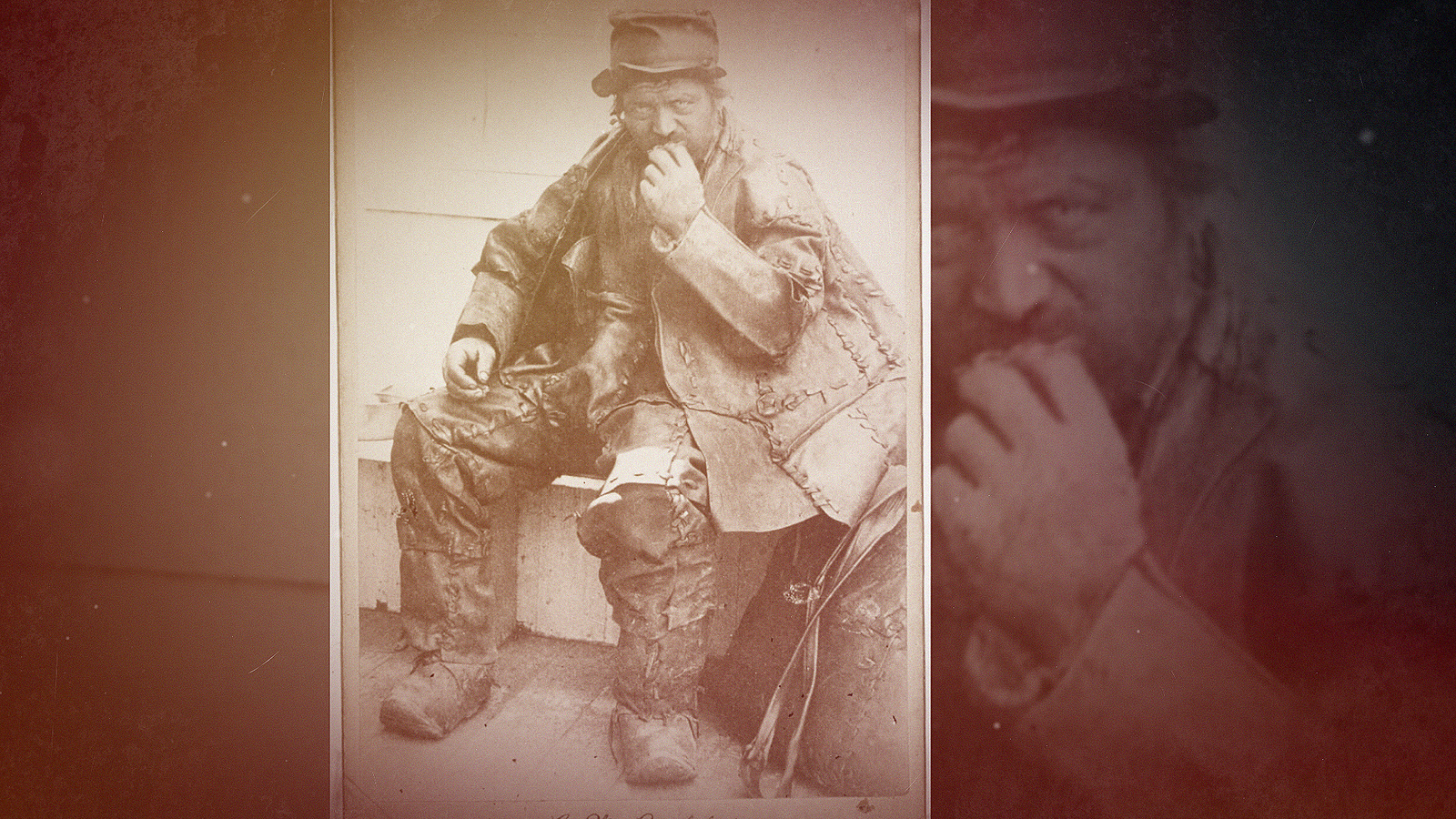
OSSINING, New York — Locals never knew his name or origins, but they’ve kept the Leatherman’s memory and legacy alive for generations.
In the mid-to-late 1800s, the so-called Leatherman walked in a 365-mile loop from town to town in New York and Connecticut, just north of New York City. He wore a suit and hat made entirely of leather and never spoke aside from occasional grunts or murmurs. The wanderer took precisely 34 days to make each roundtrip. Ossining, New York, was one of his regular stops, and village historian Joyce Sharrock Cole says reluctant townsfolk eventually formed a special bond with the vagrant.
“That fear turned to intrigue and they would give him food. He would never enter anyone’s house,” says Cole. The Leatherman’s reported favorites were coffee, cakes, meat and tobacco. Although communities were generous, the man only took what he needed before continuing on his way. He lived in a series of caves along the route.
The man also carried a French Bible and appeared engaged when people spoke French, leading to speculation that he was either French or French Canadian. Some newspapers suggested he was at least part indigenous. Those origins were never confirmed.
One young man managed to make a personal connection with the vagabond. He reported the man’s name sounded like “Ziek,” leading some to theorize it was “Isaac” or “Ezekiel.” The Humane Society, which for a time took in the Leatherman out of concern for his health, reported the same name.
People noticed the Leatherman’s health deteriorating and tried to help but the he escaped custody repeatedly and continued on his loop. He died with mouth cancer in one of the caves he used for shelter, in Ossining in 1889. Residents publicly displayed his leather suit, held a wake and gave the man a proper burial.
The search for the mysterious man’s origins captivated locals. One infamous reporter made up a story, “about a Frenchman named Jules Bourglay. He was in love with this French woman and her father was a rich man who worked in the leather factory business. He went to work for him and failed miserably,” and that “people held onto that story so long that there was a tombstone put on his resting place” with that name, explains Cole.
Cole says that story was eventually debunked but the fascination with the Leatherman’s origins remained. “So in 2011 they exhumed his body to find that he was not there,” says Cole. Experts concluded that the especially acidic soil had decomposed the remains to dust. All that was left were a few coffin nails, which were reburied at Ossining’s historic Sparta Cemetery; this time, with a new headstone that simply reads “The Leatherman.”
The curious, gentle wanderer who inspired Pearl Jam’s song “Leatherman” still holds a special place in the hearts of communities he visited more than a century ago. “He does have a story and it’s OK that we don’t know what it is,” says Cole.