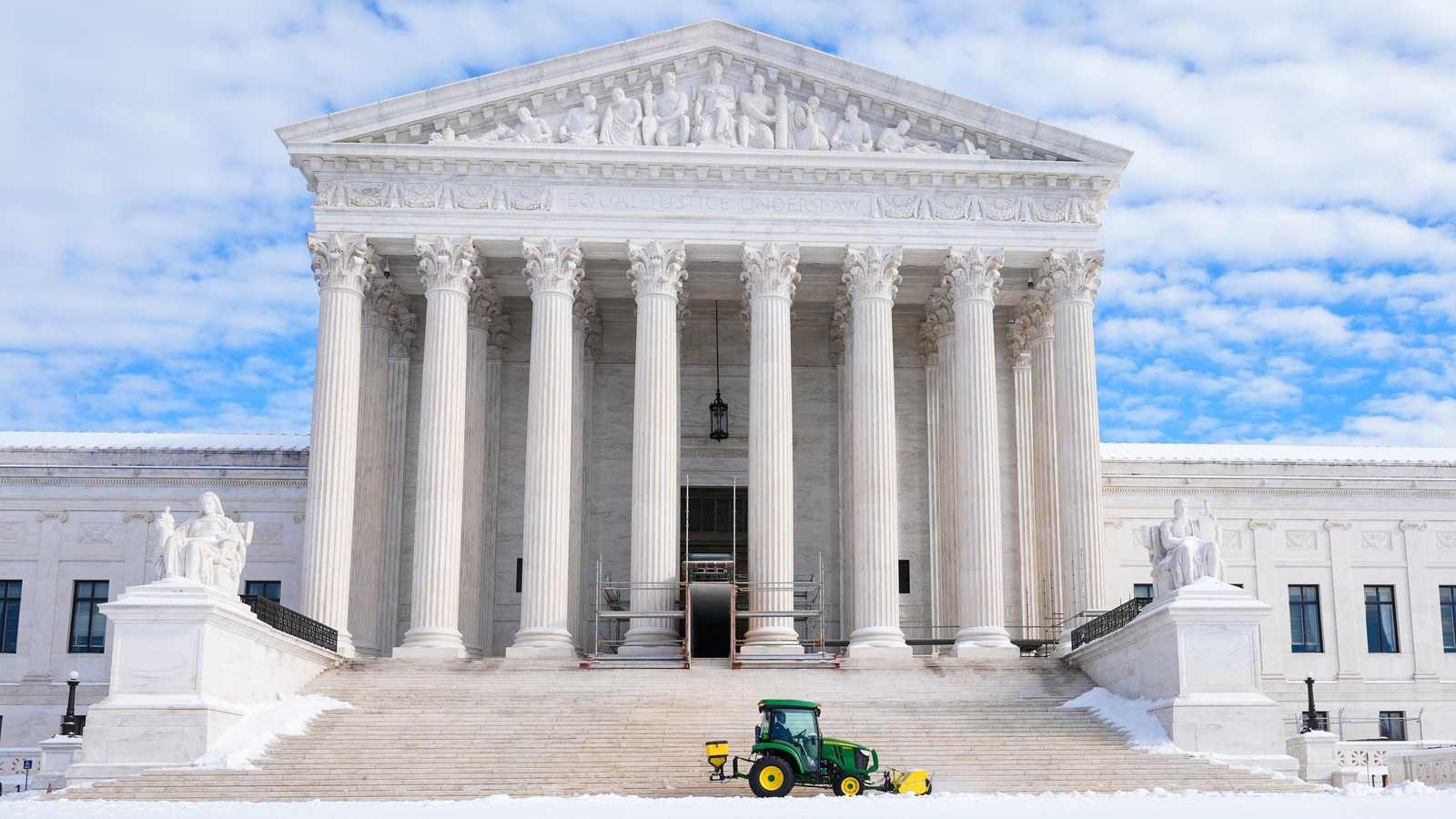











Washington — The Supreme Court on Wednesday declined to block California’s new congressional map that could net Democrats five seats in the upcoming midterm elections.
The decision from the high court clears the way for California to use for now the newly drawn lines for most of its 52 House districts in this year’s congressional elections. There were no noted dissents.
“Donald Trump said he was ‘entitled’ to five more congressional seats in Texas. He started this redistricting war. He lost, and he’ll lose again in November,” California Gov. Gavin Newsom, a Democrat, said in a statement.
The map was crafted in response to a rare mid-decade redistricting by Texas Republicans last year, which aimed to help the GOP maintain its control of the lower chamber in Congress. California officials sought to draw a map that would see Democrats pick up five seats in the House, which would offset the five seats that were newly crafted in Texas to favor Republicans.
California voters backed a ballot measure known as Proposition 50 in November, which enacted the new lines for many of the state’s congressional districts through the end of the decade.
But shortly after voters approved the map, a group of California Republicans filed a lawsuit alleging that the voting boundaries are unconstitutional. The plaintiffs alleged that the state legislature relied predominantly on race in the mapmaking process and drew several House district lines to favor Latino voters, which violated the 14th and 15th Amendments.
The Trump administration joined the lawsuit and claimed the map was an unconstitutional racial gerrymander.
But a divided panel of three federal judges upheld the map, finding that California lawmakers were motivated by politics, not race, when they drew new congressional districts.
“We find that the evidence presented reflects that Proposition 50 was exactly what it was billed as: a political gerrymander designed to flip five Republican-held seats to the Democrats,” Judge Josephine Staton wrote for the two-judge majority. “In other words, the ‘impetus for the adoption’ of the Proposition 50 Map was ‘partisan advantage pure and simple.'”
California Republicans sought emergency relief from the Supreme Court last month and asked the justices to stop the state from using the new districts during the 2026 election cycle and instead require it to use congressional lines adopted in 2021 by an independent redistricting commission.
They asked the high court to issue a decision by Feb. 9, when congressional candidates can begin submitting paperwork to run.
“The public has a paramount interest in elections conducted under constitutionally valid district lines,” lawyers for California Republicans wrote in their request for relief. “The integrity of representative government is undermined when the State sorts voters by race in constructing the very units of representation.”
The Trump administration backed the GOP voters and urged the Supreme Court to block California from using the new map. Solicitor General D. John Sauer argued in a filing that race was used as a proxy for politics, and said California’s recent redistricting is “tainted by an unconstitutional racial gerrymander.”
“Of course, California’s motivation in adopting the Prop 50 map as a whole was undoubtedly to counteract Texas’s political gerrymander,” he wrote. “But that overarching political goal is not a license for district-level racial gerrymandering.”
In urging the Supreme Court to leave the new House district lines in place, California officials said Republicans only brought their suit challenging the state’s map — while also defending Texas’ new voting boundaries — to ensure Republicans hold onto the House.
“That is a natural political objective, just as it was natural for Governor Newsom and California Democrats to want to counteract Republicans’ strategy,” they wrote in a filing. “But what is deeply unnatural — indeed, contrary to fundamental principles of democracy and judicial impartiality — is plaintiffs’ request for this Court to step into the political fray, granting one political party a sizeable advantage by enjoining California’s partisan gerrymander after having allowed Texas’s to take effect.”
Lawyers for the League of United Latin American Citizens, which is backing the new lines, argued that California’s map was approved by more than 7 million voters and said there is “overwhelming evidence” that the House district lines were redrawn for partisan purposes.
“It would be extremely disruptive to election officials, voters, and political parties, in addition to candidates, to change California’s entire redistricting map now, during an active primary campaign,” they wrote in a filing urging the Supreme Court to leave the new voting lines in place.
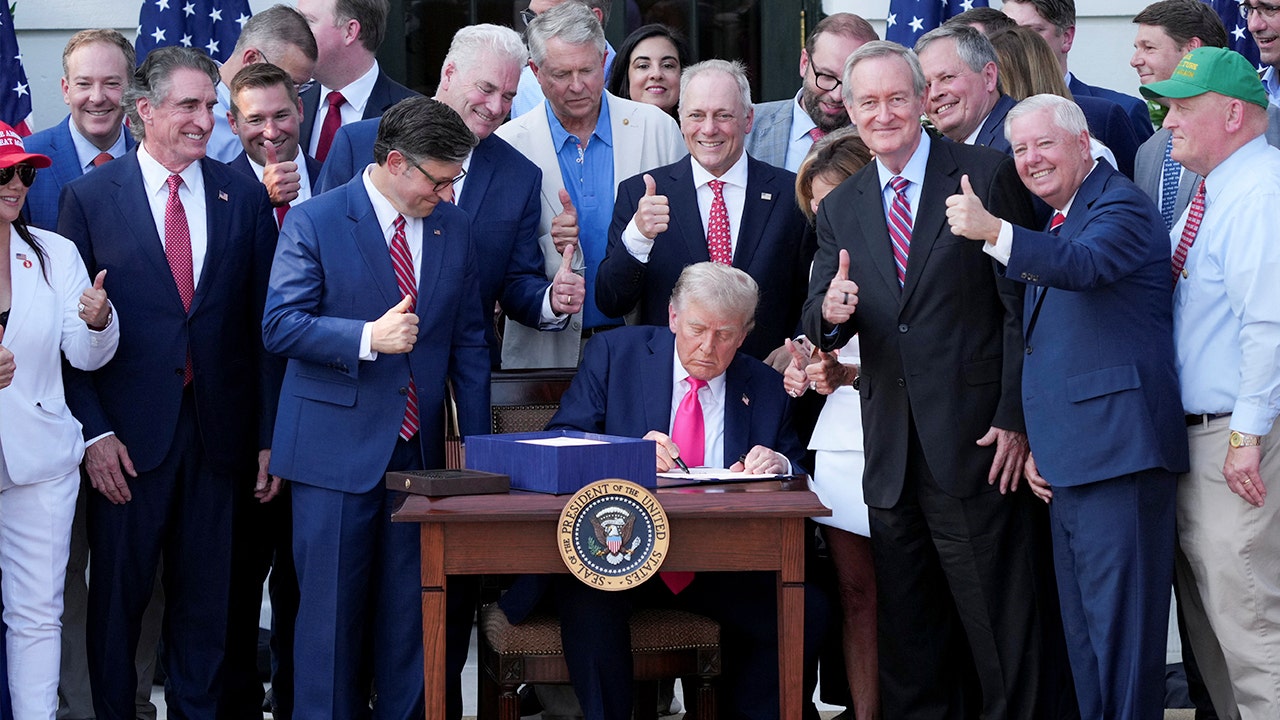
Texas Republicans moved to draw new House district lines last summer after President Trump and White House aides pushed them to create a new map that would help Republicans hold onto their majority in the House. But the decision by Texas GOP lawmakers set off a race for other states to redraw their own congressional maps for the 2026 election cycle.
Democrats in California went to work crafting new voting lines that would counter the new GOP-favored seats in Texas, and redistricting efforts spearheaded by Democrats are underway in Maryland and Virginia. A state judge in Virginia, however, ruled a proposed constitutional amendment allowing Democrats to redraw its congressional map was illegal. On the other side of the aisle, Republicans in North Carolina and Missouri approved plans that each sought to shift a single Democrat-held seat to the right.
A divided three-judge panel in Texas blocked the state from using its redrawn House districts for the midterm elections and found the map was racially gerrymandered. But state Republicans asked the Supreme Court to intervene, and the high court restored Texas’ new congressional voting lines in December.
In a concurring opinion, Justice Samuel Alito indicated that he believed politics was the predominant factor driving state lawmakers in Texas and California in the redistricting process. Joined by Justices Clarence Thomas and Neil Gorsuch, Alito wrote “it is indisputable” that the “impetus for the adoption of the Texas map (like the map subsequently adopted in California) was partisan advantage pure and simple.”