









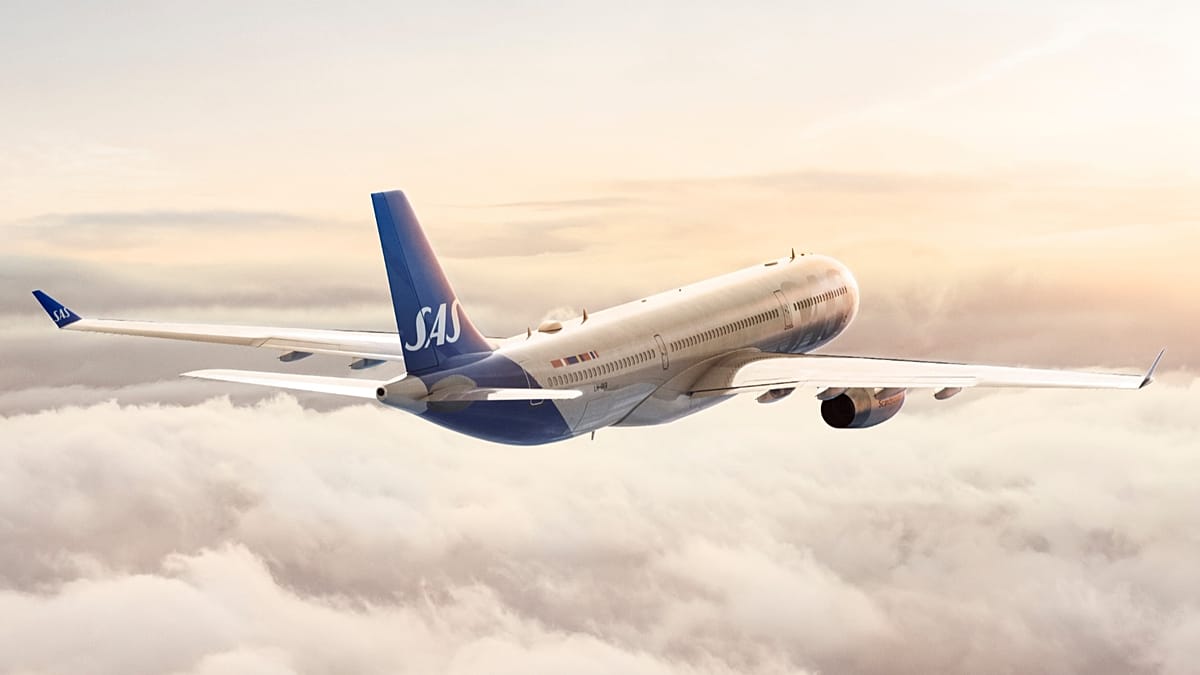
Scandinavian airline SAS has said that it will cancel at least a thousand flights in April after the conflict in the Middle East sent fuel prices surging.
ADVERTISEMENT


ADVERTISEMENT
“The price of jet fuel has doubled in ten days,” CEO Anko van der Werff told Swedish business daily Dagens Industri. “Even if we try to absorb cost increases as much as possible, this is a shock that directly hits the airline industry.”
SAS had been one of the first carriers to announce fare increases to account for soaring jet fuel prices.
“We are cancelling a few hundred flights in March, but trying to protect our traffic as much as possible,” said the SAS chief, who added that more cancellations were expected after Easter, when traffic normally dips.
The measures will affect “at least a thousand” flights, though he stressed this remained limited in scale given SAS operates around 800 flights a day.
Most of the cancelled flights in March were domestic routes in Norway, with only a few affecting Sweden and Denmark, according to a SAS statement sent to AFP.
“Given the ongoing situation in the Middle East, including the sharp and sudden increase in global fuel prices, we are taking measures to strengthen our resilience,” the statement said.
“One such measure is a limited number of short-term flight cancellations.”
A barrel of Brent oil, the benchmark reference for energy markets, has risen to around $100 since the United States and Israel attacked Iran in late February, leading Iran to retaliate against oil installations in several Gulf states.
The Strait of Hormuz, through which a fifth of the world’s hydrocarbon demand normally passes, is effectively closed.
Several airlines, including Air France-KLM, Cathay Pacific, Air India, Qantas, and SAS, have raised their fares to reflect the increase in jet fuel prices, while many airlines have stopped serving destinations in the Middle East over security concerns.
Experts predict ticket prices could remain elevated for months even if the war de-escalates. Increased demand on flight routes that avoid Middle East and Gulf stopovers also means flyers are having to pay more.
Read the full article here