







Oil prices and stocks swung sharply ahead of President Trump’s 8 p.m. ET deadline for Iran to reopen the Strait of Hormuz to avoid sweeping airstrikes on infrastructure targets, including power plants and bridges.
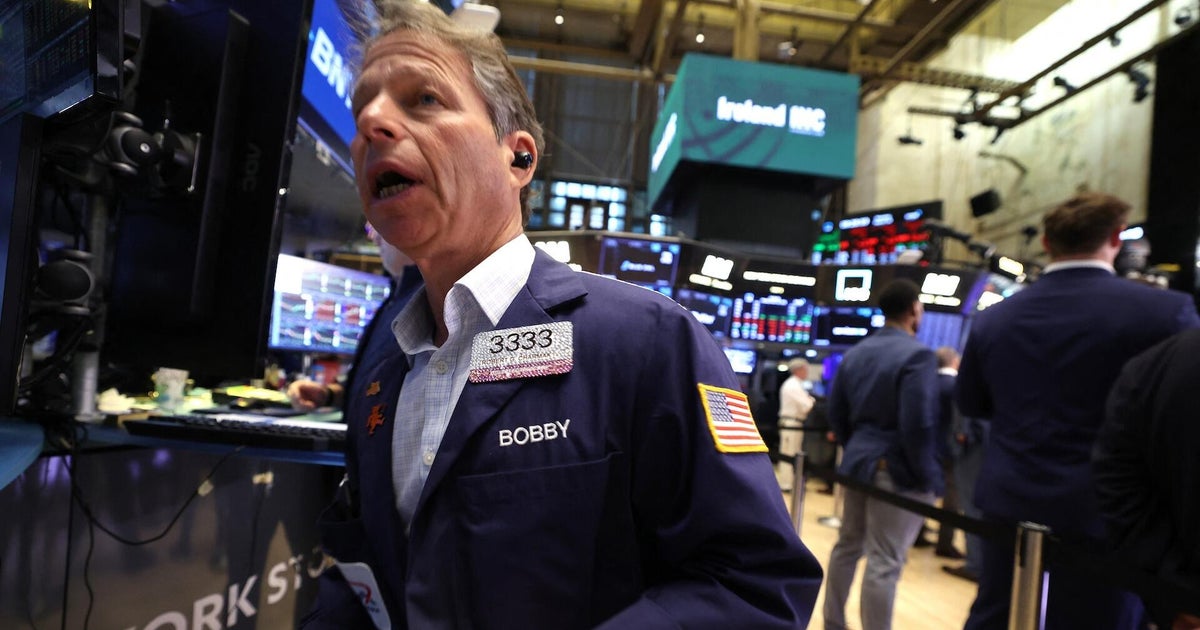
After falling for most of Tuesday’s session on Wall Street, the S&P 500 index recovered to close essentially flat, while the Dow Jones Industrial Average lost 85 points, or 0.2%. The tech-heavy Nasdaq also rebounded from earlier losses to end the day up 0.1%.
The price for a barrel of Brent crude, the international standard, fell 0.5% to $109.27. It’s still well above its roughly $70 level from before the war began in late February. The price for a barrel of benchmark U.S. crude to be delivered in May briefly climbed above $117 before settling at $112.95, up 0.5%.
Surging oil costs have driven up U.S. gasoline prices to their highest level since 2022. The average national price for a gallon of regular gas climbed on Tuesday to $4.14, up from $2.98 just before the outbreak of hostilities, according to data from AAA.
In a Truth Social post on Tuesday morning, Mr. Trump said a “whole civilization will die tonight” unless a deal is reached with Iran by his Tuesday night deadline.
“I don’t want that to happen, but it probably will,” the president said in his post.
The stock market has gyrated for weeks amid uncertainty over the war in the Middle East, which has strangled the global flow of oil and liquified natural gas, with the Strait of Hormuz remaining effectively shut to oil tankers. Oil prices have climbed more than 50% since the war began at the end of February, prompting economists to warn of rising inflation risks.
The reaction on Tuesday from investors is relatively muted given the economic risks that could be in store if the war escalates, said Nigel Green, the CEO of investment firm de Vere Group.
“Markets are behaving as if this is background noise,” Green said in an email. “A fixed, public deadline from the U.S. president creates a binary outcome within hours — either de-escalation or direct strikes on Iranian infrastructure.”
He added, “This is a potentially huge market event like no other. It’s a known unknown with a clock.”
Analysts with Mizuho Bank noted that Mr. Trump’s latest actions mark “an escalation cycle that has now been extended several times since his first ultimatum in late March.”
“Given the differing perspectives, hopes of a complete resolution to the conflict remain elusive while countries continue to work on bilateral solutions,” they said.
Investors are banking on the Trump administration holding off on a “scorched earth campaign” later today because the U.S. has achieved many of its strategic objectives and Iran made some small concessions in recent days, said Wall Street analyst Adam Crisafulli of Vital Knowledge in a research note.
“Notwithstanding his increasingly bellicose rhetoric, none of the escalatory options available to Trump (civilian infrastructure bombing campaign, militarily reopening Hormuz, and/or seizing the enriched uranium) are good ones,” he wrote.
Because of the potentially high costs of escalating the conflict, Mr. Trump may “be forced to pursue an offramp of some sort,” Crisafulli added.