









Good morning from Brussels. I’m Mared Gwyn.
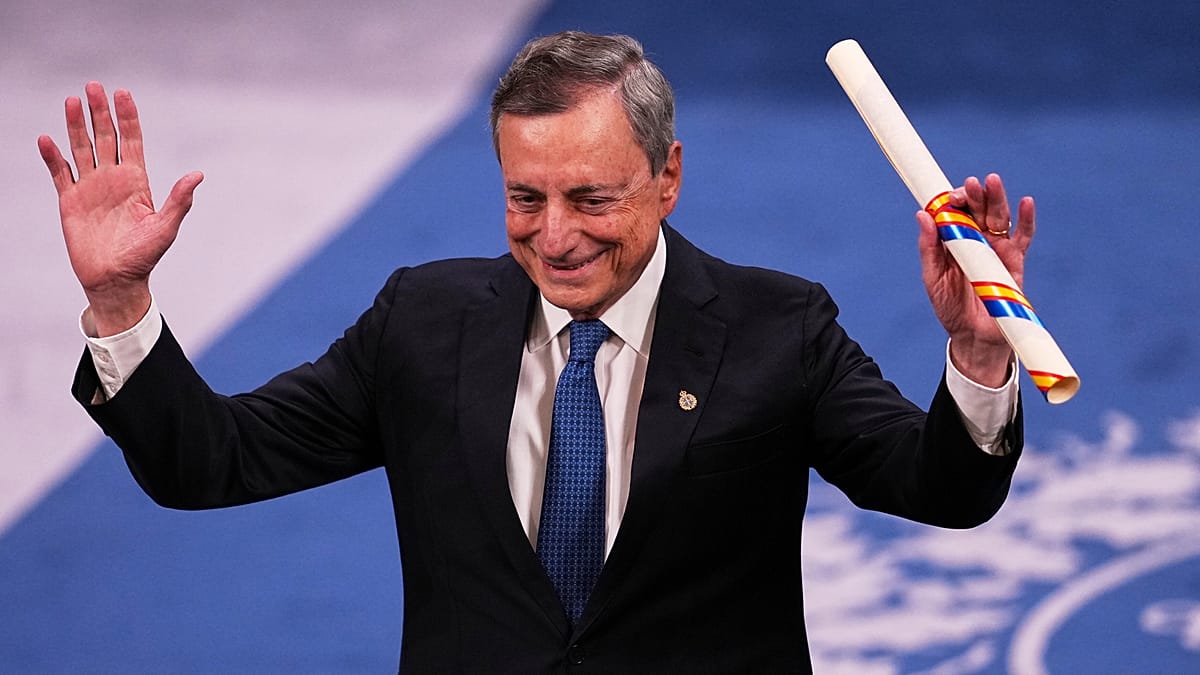
Mario Draghi provided a taster on Monday of the message he’s set to deliver to EU leaders during an informal summit next week: make the EU a “genuine federation” to avoid becoming “subordinated, divided and deindustrialised.”
The former Italian Prime Minister and European Central Bank chief has long argued for more EU integration on defence, trade and monetary policy, as well as for the joint financing of common priorities.
But on Monday, Draghi clearly laid out the stakes in what he described as a “now defunct” global order, arguing that Europe has to move faster to meet a moment of historic economic reckoning. EU countries don’t have to move all at once – those willing to do so can embrace integration before others, he explained.
“Power requires Europe to move from confederation to federation,” he said bluntly, adding that in the areas where Europe has “federated”, it is “respected as a power.”
And on the rare occasions when Draghi speaks publicly, top officials in Brussels and European capitals are usually listening intently.
His comments come as the bloc lags behind global giants such as the US and China, and grapples with the greatest threat to its security architecture in decades with the war in Ukraine.
It looks like “Super Mario” with his “whatever it takes approach” could again be re-emerging as the unexpected hero that jolts the bloc into action at a potentially significant informal gathering of EU leaders next Thursday at Belgium’s Alden Biesen castle.
European Council President António Costa told our EU editor Maria Tadeo last week he hopes the 12 February talks will lead to the full implementation of Draghi’s 2024 report, in which he diagnosed Europe’s waning competitiveness and set out a range of recommendations for it to regain its footing.
Enrico Letta, another former Italian Prime Minister and the author of another blueprint on the EU single market, is also due to attend the informal summit.
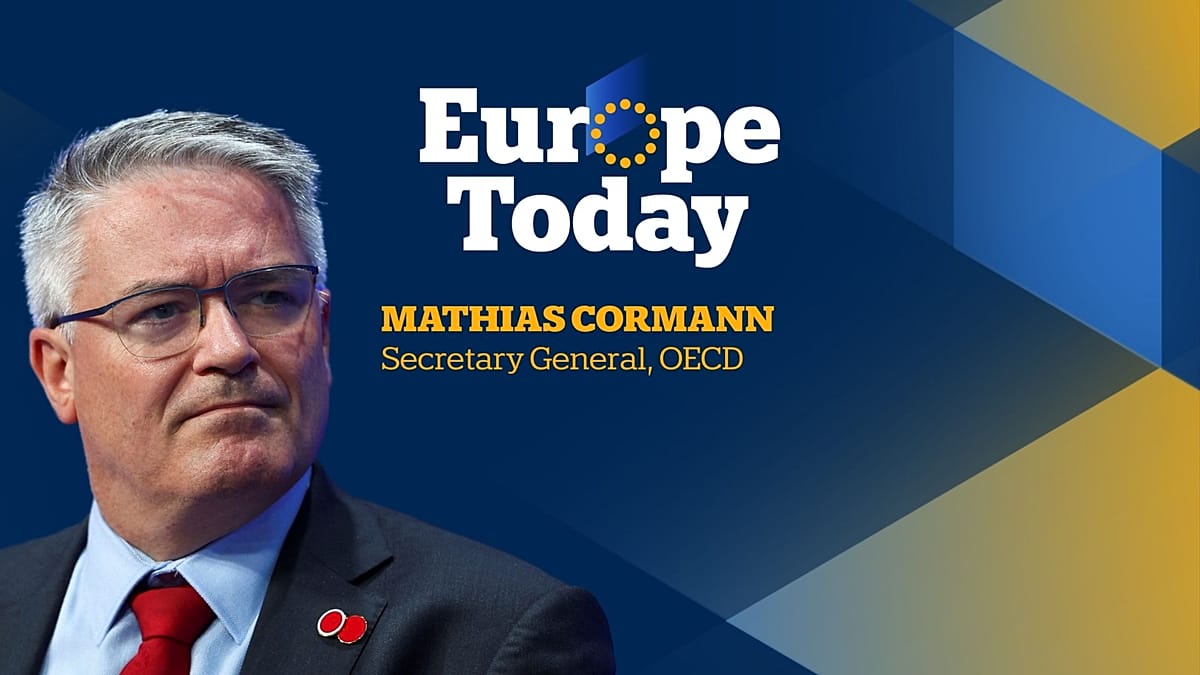
“I think that everybody would be well advised to listen very carefully to what he (Mario Draghi) has to say,” Mathias Cormann, Secretary-General of the Organisation for Economic Co-operation and Development (OECD), told our EU editor Maria Tadeo earlier today from the World Governments Summit in Dubai.
Yet Cormann also urged the EU to focus on the positives, saying that the bloc has been an “unequivocal success story” in terms of “stability, peace and prosperity.”
“I think Europe fundamentally is a great place to live. It’s overwhelmingly a successful continent and I think we need to put things into perspective,” Cormann explained, but acknowledged that there are “things Europe needs to reconsider” in order to ensure it “remains internationally competitive.” Watch.
Further down in today’s newsletter: why European leaders are flocking to Beijing amid transatlantic tensions, the latest on Ukraine peace efforts, and the French budget is adopted after months of political gridlock.
EU-China relations enter ‘do no harm’ phase under Trump’s looming shadow
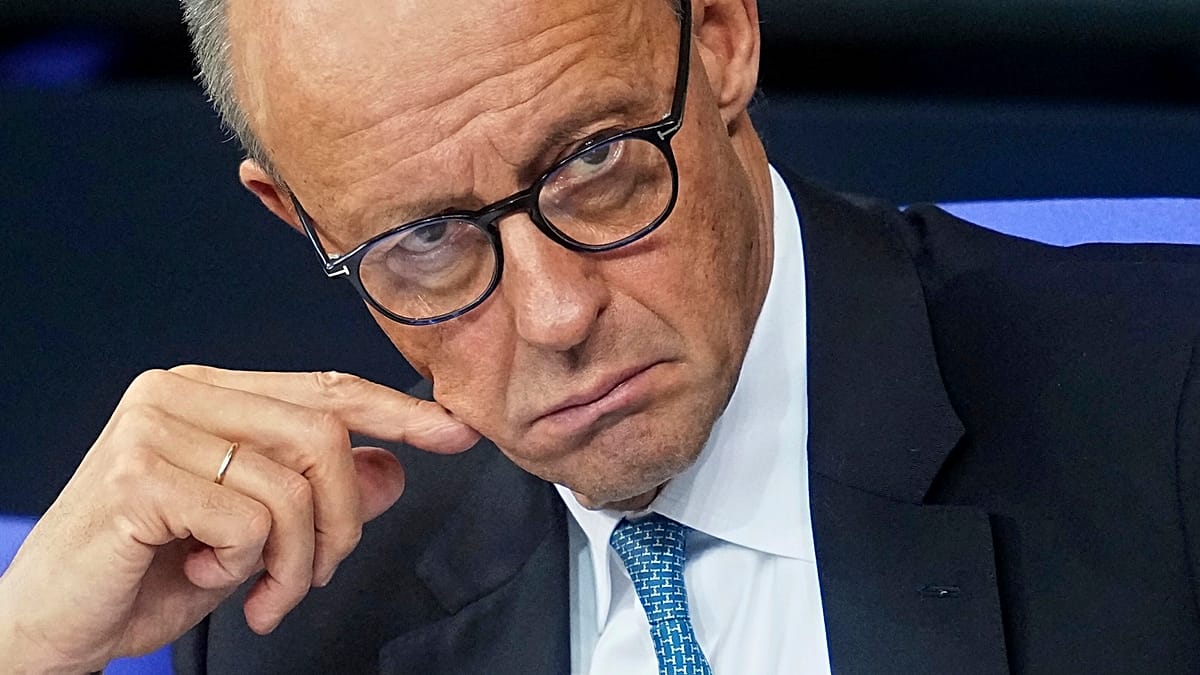
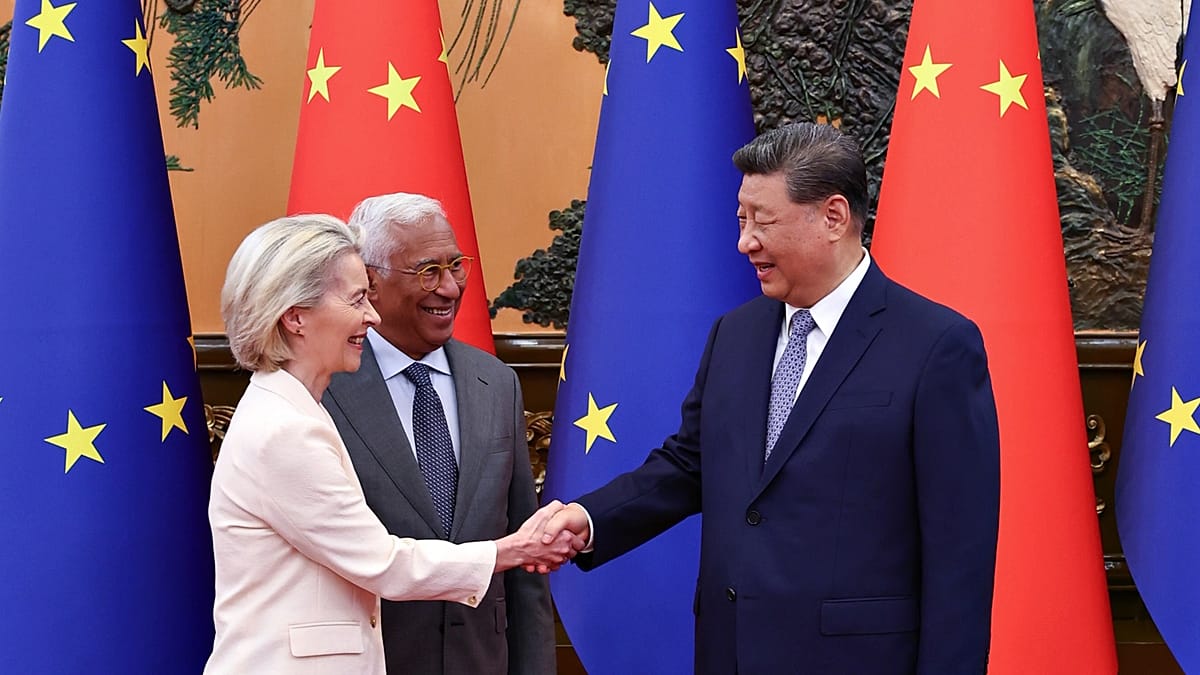
If you’re a European leader worried about the state of your country’s economy, chances are you are considering a trip to Beijing. Jorge Liboreiro writes that the past weeks have seen France’s Emmanuel Macron, Ireland’s Micheál Martin and Finland’s Petteri Orpo make the journey to the city, flanked by business representatives. Germany’s Friederich Merz is expected later this month.
Jorge Liboreiro writes that the official visits, largely focused on securing greater access to the Chinese market, coincide with a steady rise in transatlantic tensions caused by Donald Trump’s ever-expansive foreign policy. The fracture in the transatlantic alliance has not gone unnoticed by Chinese President Xi Jinping, who takes every opportunity to chastise Trump and portray his country as a defender of multilateralism.
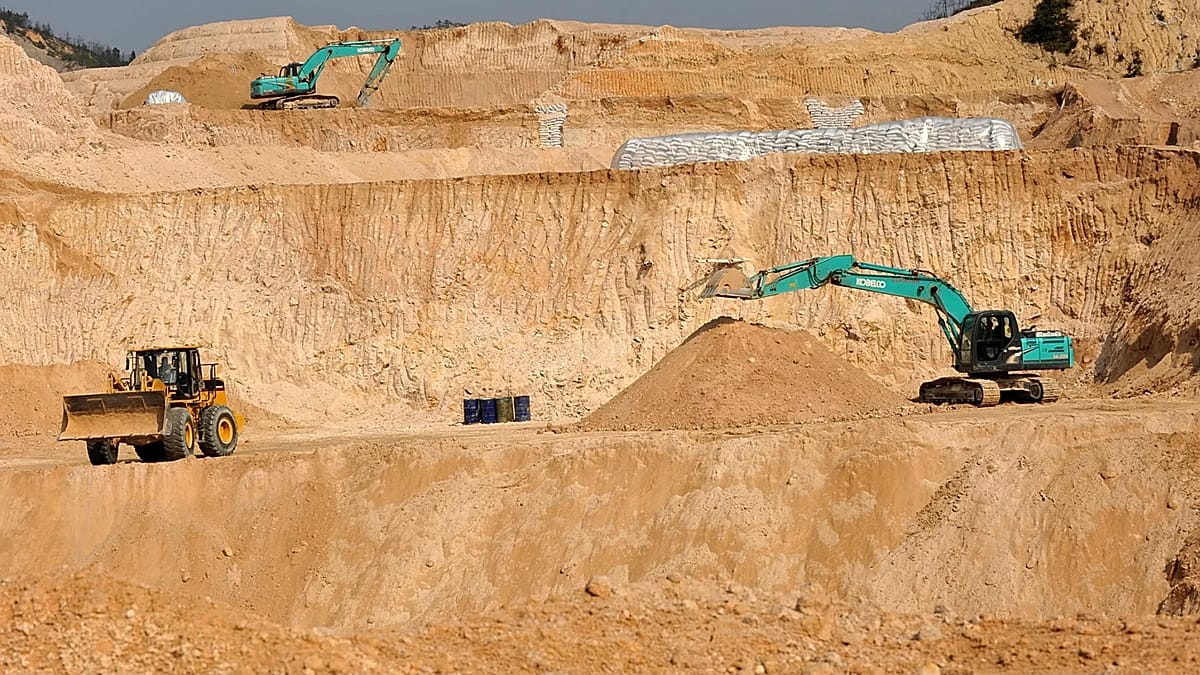
What does this mean for EU-China relations? Last year, both sides openly flirted with the idea of a diplomatic reset, which fell apart when China slapped restrictions on its rare earths. Brussels accused Beijing of blackmail and coercion but refrained from hitting back. It wasn’t until Trump cut a deal with Xi that the export controls were eased.
The dispute over rare earths left Europeans with the bitter realisation that, for all their talk of “de-risking,” they will remain vulnerable to the chokepoint for the foreseeable future. Despite ample concerns over China’s industrial overcapacity and material support for Russia, European leaders are wary of picking new fights at a time when their energy is spent on managing Trump.
Jorge takes a deeper lookat this new phase of EU-China relations.
NATO chief Mark Rutte in Ukraine; Russia attacks Kyiv ahead of Wednesday’s peace talks
NATO Secretary-General Mark Rutte is in Ukraine’s capital of Kyiv this morning to address the Rada, Ukraine’s parliament, according to Ukrainian media citing MPs.
It comes one day before the planned second round of trilateral talks between Ukrainian, Russian and US representatives in Abu Dhabi. The first round of talks were hailed as productive but stalled on the most contentious issue of territorial concessions.
Progress has reportedly been made recently on US security guarantees for Ukraine as part of a future peace deal. European allies have also committed to providing boots on the ground as part of a potential ceasefire.
But Russia’s Foreign Minister Sergei Lavrov said last night that foreign soldiers in Ukraine would be considered “legitimate targets.”
The second round comes at a delicate moment for Ukraine, which has faced mass energy blackouts amid plummeting temperatures. Russia had agreed to temporarily halt attacks on Ukraine’s energy infrastructure, but truce looks increasingly uncertain, with some verified reports emerging of attacks on energy sites on Monday.
Russian bombardments also hit Ukraine’s capital of Kyiv and its second-largest city of Kharkiv overnight. Hours earlier, US President Donald Trump had signalled that “good news” may be coming, adding that Putin had agreed “not to shoot” for one week.
Polish Prime Minister Donald Tusk also said on Monday that he planned to travel to Ukraine “in the next few days,” saying that “at this critical time, Ukraine cannot be left alone.”
France adopts 2026 budget after government survives no-confidence votes
After months of political gridlock, France’s 2026 state budget was definitively adopted on Monday evening, following the rejection of two no-confidence motions in parliament, our France correspondent Sophia Khatsenkova reports.
The motions were tabled in response to Prime Minister Sébastien Lecornu’s decision on Friday to invoke Article 49.3 of the constitution, which allows the government to pass legislation without a vote from MPs.
One motion was tabled by the far-right National Rally, the other by left-wing parties excluding the Socialists. Since both failed, the budget has automatically been adopted.
The vote marks the final chapter of a long and turbulent process that has highlighted deep divisions within France’s fragmented parliament.
Since snap elections in 2024 produced a hung parliament, lawmakers have repeatedly failed to reach a compromise on how to tackle the country’s deteriorating public finances. The budget debacle had already cost two of Lecornu’s predecessors their jobs.
With no stable majority, Lecornu ultimately chose to force the bill through without a vote.
Read Sophia’s full report.
More from our European newsrooms
EU’s climate goals at risk without China’s critical raw materials, EU auditors warn. The bloc is struggling to diversify its supply of critical raw materials by the end of the decade, risking continued high dependence on China, according to a European Court of Auditors (ECA) report published on Monday, Marta Pacheco reports.
Kallas denies rift between NATO and EU, rejects calls for a European army. The EU’s foreign policy chief warned on Monday that creating a separate EU army alongside NATO would be “extremely dangerous”, arguing it would blur chains of command in a crisis. Sertac Aktan has the details.
Germany opposes direct talks with Russia due to Putin’s ‘maximalist demands’. As Paris and Rome push for reopening diplomatic channels with Moscow, Berlin is taking the opposite position. Jorge Liboreiro has more.
We’re also keeping an eye on
- European Parliament President Roberta Metsola to address the Spanish Senate
- The right-wing European Conservatives and Reformists (ECR) group will host a conference on the freedom of speech in the European Parliament. Chilean president-elect José Antonio Kast to deliver a keynote speech.
- EU foreign policy chief Kaja Kallas speaks at the Arctic Frontiers Conference 2026
That’s it for today, Tuesday. Maria Tadeo, Jorge Liboreiro, Sasha Vakulina and Sophia Khatsenkova contributed to this newsletter. Remember to sign up to receive Europe Today in your inbox every weekday morning at 08.30.
Read the full article here