










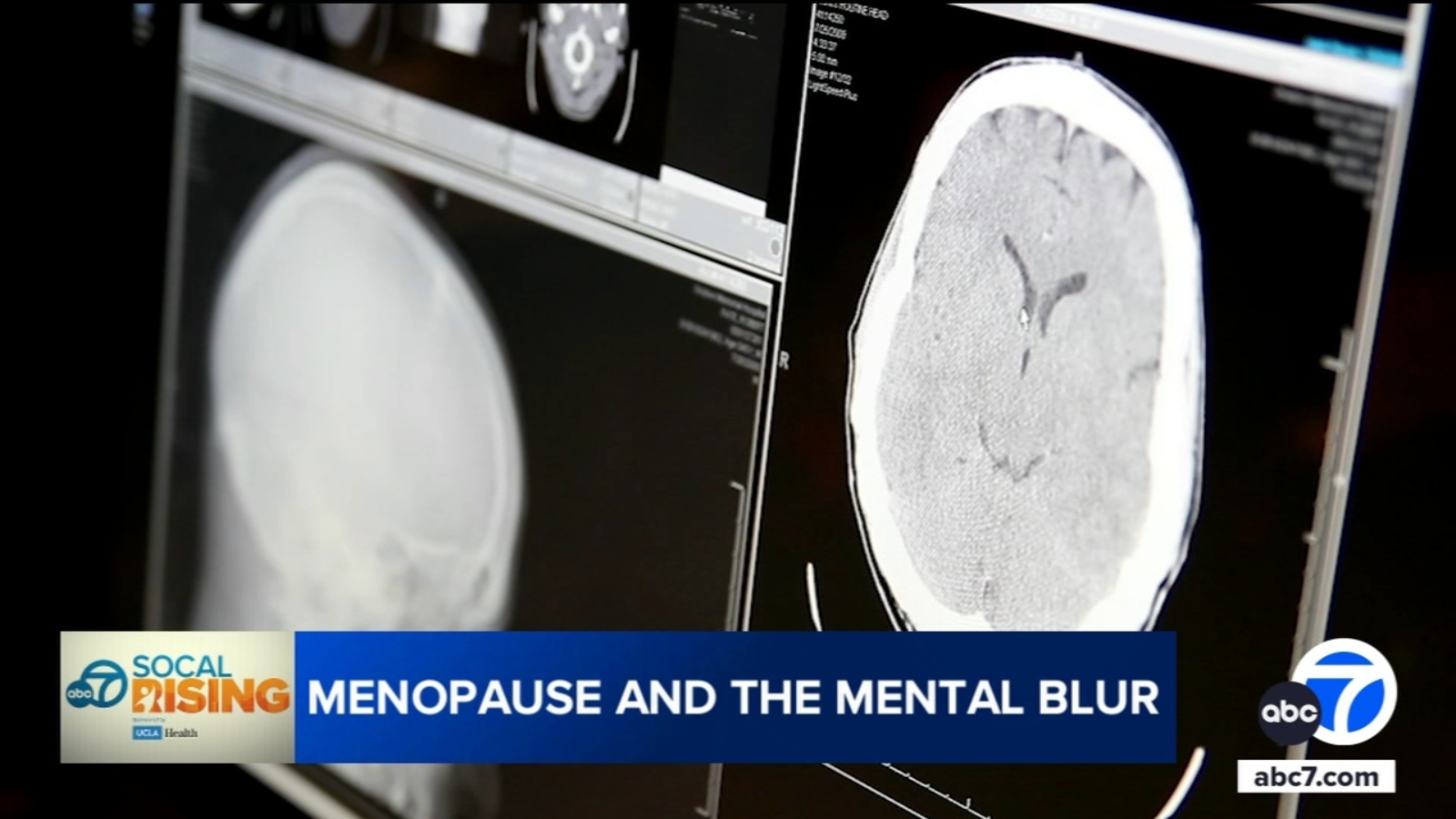
WESTWOOD, LOS ANGELES () — New UCLA research underscores the importance of hormone replacement therapy (HRT) when it comes to women’s brains as they age.
Last month, the Food and Drug Administration lifted the black box warning on HRT signaling to women that the treatment offers more benefits than risks.
What kind of changes occur in the female brain during menopause?
Lauren Frick owns a boutique in Studio City. Brain fog impaired her ability to function.
“Feeling the effects of not being able to find words, remember where my keys were and that kind of stuff. In my company I wear lots of different hats, so it can be really challenging to stay on top of tasks and focus,” she said.
UCLA neurologist Dr. Rhonda Voskuhl studies the cognitive issues of menopause.
“It undermines their confidence at work and at home. That’s not acceptable,” Voskuhl says.
Her research found a gene on the X chromosome triggers excess brain inflammation as women age. Men have one X chromosome; women have two.
“The XX factor is what makes women more susceptible to getting multiple sclerosis, Alzheimer’s disease and cognitive issues during menopause,” Voskhul said.
She says inflammation occurs when estrogen drops.
“They’re known to be neuroprotective, and so it’s bad because when you lose estrogen during menopause, now you’ve lost the balance,” said Voskuhl.
She said hormone replacement can help address brain fog.
Voskuhl has been researching a form of estrogen called estriol.
She says it’s different from the traditional estradiol more commonly used in the U.S. because it doesn’t increase the risk of breast cancer.
“The way is to give a different estrogen that can bind strongly to an estrogen receptor in the brain to cause this protection and not bind strongly to the receptor in the breast,” she said.
She and her team developed CleopatraRX, a customized hormone replacement therapy Frick says gives her more focus.
“Now after a year, I’m super confident in sort of advocating and sharing my experience with people because I think that it really helps,” said Frick.
These findings further the promise of targeted estrogen treatments, transforming the care for millions of women by reducing brain inflammation and preserving cognitive function.
“There are solutions that can be tailored for them, specifically for them to be very effective, and now we’re doing that. Women are doing it for each other,” said Voskuhl.
© 2025 Television,