








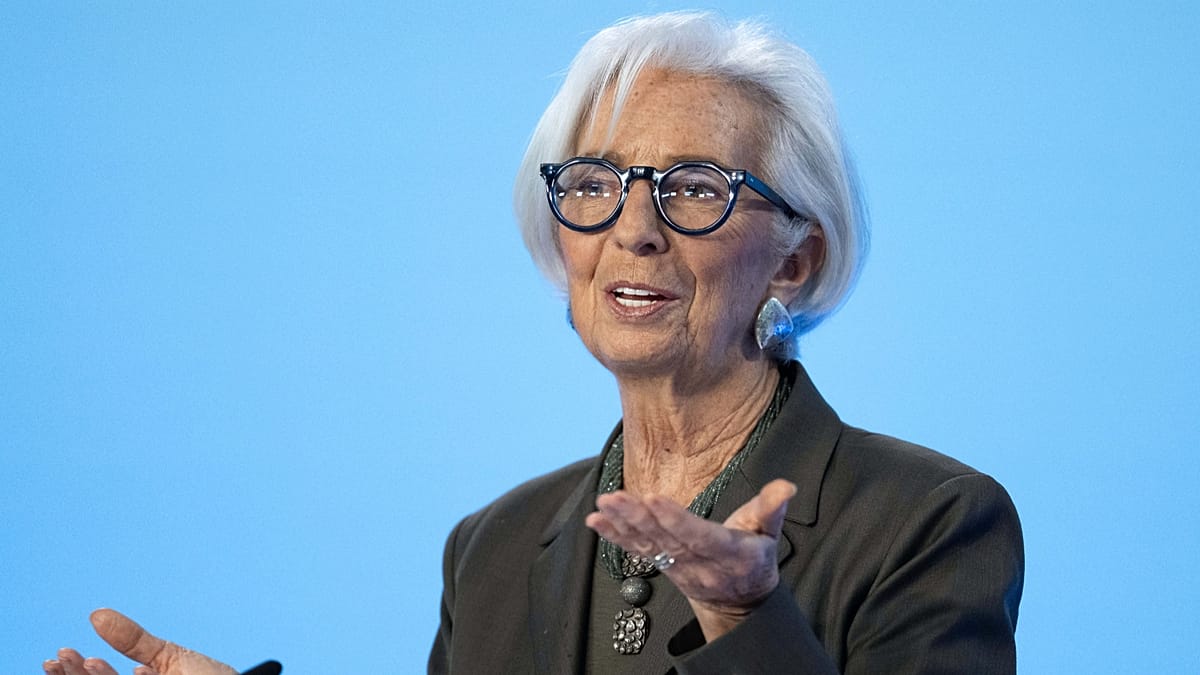
Reducing the gap between perceived and actual inflation could significantly benefit the euro area economy, European Central Bank President (ECB) Christine Lagarde said during a debate with EU lawmakers at the European Parliament on Thursday.
ADVERTISEMENT


ADVERTISEMENT
“We pay close attention to households’ inflation perceptions, not only because these have an impact on economic activity and expectations, but also to ensure that we continue to earn the trust of the people we serve,” Lagarde said during her speech.
The eurozone bank chief dodged questions about speculation into her early departure.
In her first address to the Parliament in 2026, Lagarde held a debate with EU lawmakers on the state of the EU economy, the importance of the sovereign and the global role of the euro due to geopolitical uncertainties.
A central theme of her remarks was the gap between perceived and measured inflation and why closing it matters for trust in the ECB’s policies.
Lagarde told MEPs they have a key role in voicing voters’ concerns and helping explain central bank decisions to the public.
The ECB, she said, must not only deliver its mandate but also communicate its choices in plain language, including the “why” and the “how” and not just the “what”.
On inflation itself, Lagarde struck a more upbeat tone, saying the ECB’s efforts had worked and pointing to a sharp fall from the peak, dropping from 10.6% in October 2022 and hovering close to the ECB’s target since then, fluctuating around 2% in the second half of last year.
The latest reading, she added, came in at 1.7% in January.
Perceived inflation
The fall in inflation might not have always felt like a fall, according to ECB consumer expectation surveys running since April 2020. Many people still think prices are rising faster than the official figures suggest, something Christine Lagarde called an “historical global regularity”.
“Inflation perceptions describe people’s beliefs about recent price changes. While these perceptions tend to move with measured inflation, they are typically higher,” she said.
“This is not a phenomenon that is specific to the euro area, it’s a global phenomenon that is observed around the world”, she continued.
ECB data show perceived inflation in the euro area has averaged 1.2 percentage points above the measured rate.
Perceptions surged in 2021 and 2022 alongside the official numbers, but have since eased markedly as inflation has fallen.
Lagarde said perceptions still matter because they shape spending and saving decisions, wage demands and confidence in institutions.
“Trust is a valuable good in its own right but it also helps to anchor inflation expectations”, the central bank chief highlighted.
She also pointed to simple reasons the gap persists: people tend to notice price rises more than price cuts, and big shocks ranging from recent spikes to geopolitical and trade uncertainty tend to linger in the public perception for longer.
What households buy most often matters too, she argued, with essentials such as food and fuel weighing heavily on how inflation is felt.
Food prices, which have risen faster than Harmonised Indices of Consumper Prices (HICP) inflation since 2022, are expected to ease but remain slightly above 2% by late 2026.
Wage growth and the economy
Lagarde said there were fresh signs that underlying inflation pressures are cooling in the eurozone, even as households continue to feel the squeeze from higher living costs.
Pointing to the ECB’s preferred measure of underlying price trends, she noted that “core inflation, which excludes energy and food, eased to 2.2% after 2.3% in December”.
She argued that the fall in inflation is also starting to show up in pay packets.
“With inflation lower than nominal wage growth, real wages, wages that are adjusted for inflation, have not only recovered, but have on average risen above level seen back in 2019,” Lagarde said.
On the broader economy, Lagarde said the eurozone is still growing, though modestly.
“Our economy is estimated to have grown by 0.3% in the fourth quarter of last year and by 1.5% for 2025 as a whole,” she said.
She told lawmakers that the latest growth was driven mainly by domestic demand, rather than industry. Manufacturing has been weaker, Lagarde said, but has remained broadly resilient despite higher tariffs and geopolitical uncertainty.
Within the economy, services did most of the heavy lifting.
“Services activity, especially in the information and communication sector” played a major role, she said, while the “construction sector is gradually gaining momentum”.
Trade, however, remains a drag. Imports and exports are having a “negative impact on our growth”, Lagarde said, describing the global trade backdrop as “challenging”.
Early departure topic avoided
German MEP Damian Boeselager of Volt used the Parliament session to press Lagarde on the swirl of speculation about her future after reports in mid-February that she could leave the ECB before her term ends in October 2027.
Lagarde did not respond to the question.
The stakes are high because an early exit at the ECB would not just trigger a succession race in Frankfurt but could also set off a broader reshuffle of top EU jobs in the run-up to 2027, with capitals jockeying for influence.
After Lagarde’s exchange with lawmakers, the Parliament’s economics committee moved on to another key personnel file, voting on the nomination of Croatian central bank governor Boris Vujčić as the ECB’s next vice-president, following his endorsement by the Eurogroup in January
Read the full article here