









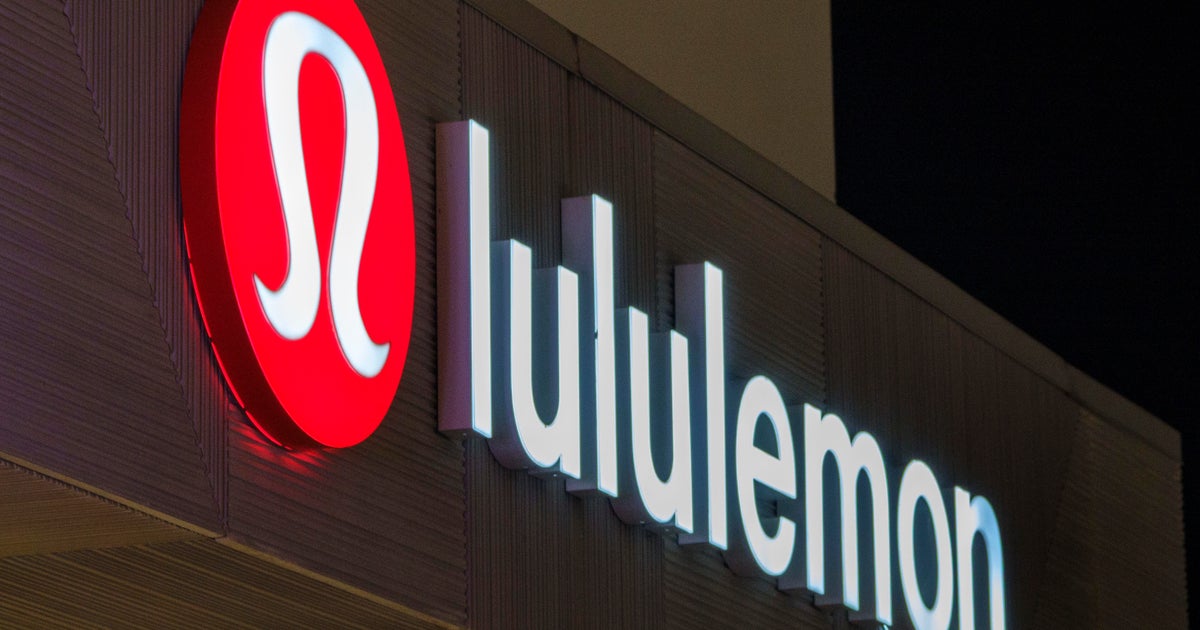
Lululemon has long been a dominant force in the world of athleisure. But a series of headwinds, including a recent blunder over see-through leggings, is threatening the company’s path forward.
The Vancouver-based business, founded in 1998, has thrived over the last decade because of its innovative designs, quality materials and comfort. But lately, it has struggled to find its footing in an increasingly saturated market, where competitors like Vuori and Alo are gaining traction with customers, according to Neil Saunders, a retail analyst and managing director at GlobalData Retail.
The company hasn’t done enough to stay relevant and keep its customers coming back, Saunders told CBS News.
“If the competitive environment tightens and your organic growth is not quite as good, you should really be doubling down on things like innovation, keeping your customers loyal, looking for opportunities as to how to expand the share of wallet, even if that’s challenging,” he said. “But Lululemon actually did the opposite. It really took its foot off the gas.”
To be sure, Lululemon still boasts solid financials: The company reported $11.07 billion in revenue in the 12 months ended Nov. 2, 2025, up nearly 9% from the year prior.
Sales, however, have plateaued in recent quarters. International revenue is growing, but the company is struggling to woo buyers in North America, with its most recent quarterly report showing same-store sales in the U.S., Canada and Mexico fell 5%.
At the same time, some investors are souring on the company. Over the last year, Lululemon’s stock price has plunged nearly 53%, while the S&P 500 gained about 12% over the same period.
Lululemon did not respond to a request for comment on its recent performance or its plans to revitalize U.S. sales.
During the most recent earnings call in December 2025, former Lululemon CEO Calvin McDonald touted a new performance fabric the company designed for weight training, and promised Lululemon would continue to innovate across its performance wear portfolio, which includes running, yoga, golf and tennis apparel.
McDonald stepped down as Lululemon CEO at the end of January. The company has yet to announce a permanent replacement.
See-through leggings
Lululemon has faced complaints in recent weeks that one of the fabrics for one of its pairs of leggings — called “Get Low” — is see-through.
Lululemon founder Chip Wilson, who parted ways with the company over a decade ago, called the situation a “total operational failure” on LinkedIn. He also blamed the company’s board for “destroying the brand and the stock price,” alleging that its board members are uninterested in product development.
After temporarily pulling the leggings from its website, Lululemon returned them. They now bear new guidance for customers: size up and pair the product with “skin-tone, seamless underwear,” according to Bloomberg. The publication last week reported a second snafu over a separate line of leggings in the company’s “heart scatter” pattern, which customers said were see-through when bending and squatting.
While the leggings blunder certainly hasn’t helped the company, it’s not the root cause of Lululemon’s problems, Saunders told CBS News.
“The woes set in a long time before this latest legging problem had reared its head,” he said. “But the leggings problem, it encapsulates some of the issues at Lulu.”
For a company charging somewhere in the range of $88 to $198 for a pair of leggings at full retail price, customers expect top-notch quality, Saunders said.
“What it suggests is that there’s kind of a lack of quality control, there’s a lack of care, there’s a lack of attention to detail,” he said.
Saunders said he believes the company’s products have become “junkified,” with Lululemon straying from its trademarks of technical innovation and high quality to heavily branded attire that holds less appeal for its customer base.
Another headwind is heightened competition from rivals such as Vuori, which some customers may feel offers slightly edgier and more interesting designs, according to Saunders. Other competitors include Athleta, owned by Gap, and Alo.
Lululemon is seeking to maintain its foothold in a more crowded athleisure market. In July 2025, the company sued Costco, accusing the retailer of selling “confusingly similar” replicas of its jackets, sweatshirts and pants.
With the former CEO stepping down at the end of January, there’s room for a new leader to take stock and rejuvenate the brand, but the company will have to pull multiple levers to level up, according to Saunders.
“They need to get the product mix right. They need to get the brand presentation right,” he said. “They need to come back to where they were before, being innovative, because they used to be the leader.”