
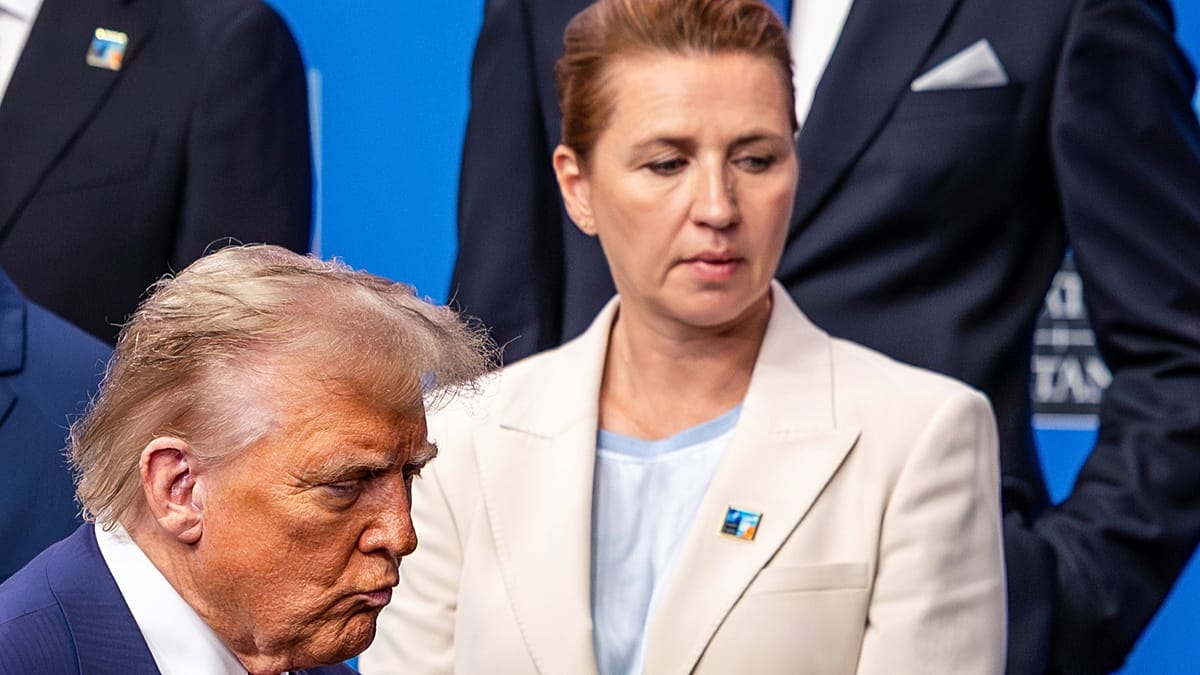







US takeover of Greenland would be ‘death knell’ of NATO: Pedro Sánchez
Spanish Prime Minister Pedro Sánchez warned on Sunday that a US invasion of Greenland would be the “death knell” of the NATO military alliance.
Reminder: Both the US and Denmark are NATO allies.
“Greenland is not a real estate whim. It is a territory that has its sovereignty, that has its rights, and if anyone has to decide the future of Greenland, it will have to be its people, and in this case, Denmark,” Sánchez told Spanish media outlet La Vanguardia in an interview.
He also said such an action by the US would make Russian President Vladimir Putin “the happiest man in the world” because “it would somehow legitimise his invasion and unilateral action and questioning of Ukraine’s territory”.
“Europe is naturally interested in constructive transatlantic relations, but not on the basis of vassalage, but rather on an equal footing. Europe is interested in ensuring that the national sovereignty and territorial integrity of nations are respected,” Sánchez also said.
Watch Sánchez speak below:
Video. US invasion of Greenland would be ‘death knell for NATO,’ warns Spain’s Sánchez
Video. US President Donald Trump is threatening several European countries that oppose his plan to seize the Danish territory with tariffs. “An invasion of Gre…
What is the anti-coercion instrument?
Often dubbed the EU’s trade “bazooka,” the anti-coercion instrument was adopted in 2023 to counter economic pressure from third countries, with the US and China in mind. Activating it requires a qualified majority of member states.
The tool allows the EU to go beyond traditional retaliatory tariffs, including by restricting licenses, intellectual property rights or access to public procurement tenders.
Targeting US services has been raised repeatedly over the past year as Washington stepped up tariff threats against the bloc before a trade deal was reached last summer. The US runs a services trade surplus with the EU, making the bloc’s 500 million consumers a key market for American companies.
The anti-coercion instrument is designed as a last-resort measure, with any steps taken required to be “proportionate” to the damage suffered by the EU or an individual member state.
Read more on Euronews.

What is the EU’s anti-coercion instrument, and how does it work?
Calls grow for the EU to deploy its ultimate trade bazooka as Trump threatens fresh tariffs to force the sale of Greenland. The anti-coercion instrument would…
Rutte to meet with Danish, Greenland ministers this afternoon
Here’s an important meeting to monitor today: NATO chief Mark Rutte will receive Danish Defence Minister Troels Lund Poulsen and the Minister for Foreign Affairs and Research of Greenland, Vivian Motzfeldt.
The meeting, which was announced on Friday before Trump revealed his plan to levy an additional 10% tariffs on eight European countries over Greenland, is set to start at 16.30 CET.
No media opportunity is foreseen.
Rutte last week rejected claims the military alliance he leads is in crisis over Washington’s bid to acquire Greenland, telling reporters instead that allies were evaluating the “next steps” in order to boost security in the High North and Arctic.
Europeans bet on diplomacy to avoid the worst-case scenario
European leaders are poised to continue working the phones on Monday to intensify diplomatic efforts and prevent Donald Trump’s 10% tariff threat from becoming a reality.
British Prime Minister Keir Starmer, Italian Prime Minister Giorgia Meloni and NATO Secretary General Mark Rutte were among the first ones to speak direclty with Trump in a bid to contain the spiralling crisis over Greenland’s future. We can expect other leaders to attempt a similar outreach in the coming hours and days. Meanwhile, António Costa, decided to convene an extraordinary EU summit for later this week after spending the weekend calling presidents and prime ministers across the bloc.
Diplomats in Brussels underscore the extreme gravity of the challenge posed by Trump’s annexationist agenda but say hope is not all lost and diplomacy still has a role to play. Many European leaders will be present at the World Economic Forum in Davos, Switzerland, where Trump is expected to make a much-talked-about appearance. We will keep an eye out for any possible bilateral or multilateral meetings.
What can the EU do to retaliate?
EU countries on Sunday night reviewed their options to respond to threats by US President Donald Trump to impose 10% tariffs on several member states from 1 February unless they allowed him to acquire Greenland.
Diplomacy was agreed to take precedence over immediate countermeasures, though a decision on whether to revive the €93 billion retaliation package – suspended last year – is to be taken after Trump’s deadline.
Among the tools discussed was also the EU’s anti-coercion instrument, often dubbed as its trade “bazooka,” though no vote was held on whether to deploy it.
More in our story on Euronews.
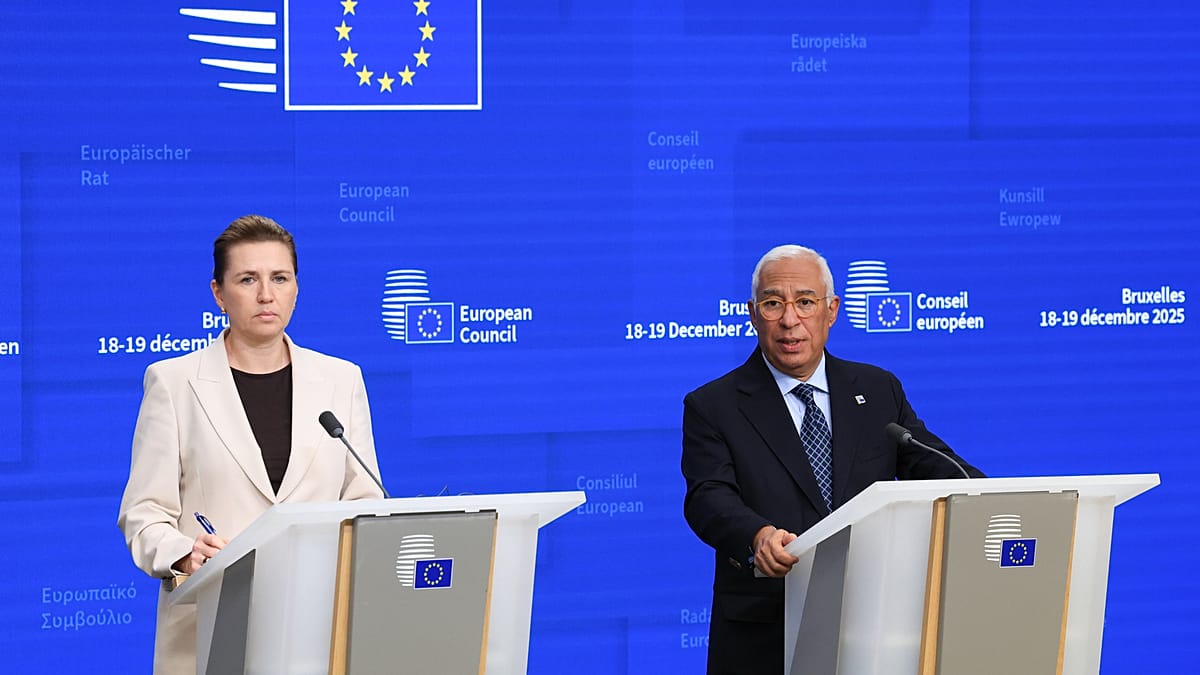
EU holds back trade ‘bazooka’ to defuse Greenland tensions with US
European Union countries will not yet deploy the anti-coercion instrument (ACI) in response to Trump’s Greenland tariff threats, people familiar with the matte…
UK PM to address nation at 10.15 CET
British Prime Minister Keir Starmer is to address the nation at 10.15 CET on the issue.
The speech from Downing Street comes after Starmer spoke with multiple of his counterparts on Sunday including Danish Prime Minister Mette Frederiksen, European Commission President Ursula von der Leyen, and NATO Secretary-General Mark Rutte.
According to the British read-out of the calls, Starmer said that applying tariffs on allies for pursuing the collective security of NATO allies is “wrong” and that security in the High North is “a priority for all NATO allies in order to protect Euro-Atlantic interests.”
We will, of course, live blog his speech later this morning.
Analysis: With one post, Trump brings the transatlantic alliance to the brink
With just one single post on his social media account, US President Donald Trump has brought the transatlantic alliance, and the security order that was forged at the end of World War II and has endured countless political shifts, to the brink of collapse. Trump has openly threatened eight allied countries with a 10% tariff to force them into giving up Greenland, a semi-autonomous territory that belongs to the Kingdom of Denmark and that refuses to be sold to the highest bidder.
“This Tariff will be due and payable until such time as a Deal is reached for the Complete and Total purchase of Greenland,” Trump wrote on Saturday.
Though we are still days away from knowing whether the tariff threat materialises or vanishes, the mere fact that it has been made cuts through the foundations that underpin the transatlantic alliance, most notably the principle of collective defence, which, until now, has acted as a powerful deterrent against foreign attacks. If the US is able, and willing, to threaten another NATO member with outright annexation, can the other allies expect the US to abide by its obligation in a future conflict? After all, collective defence is based on trust and reliability, so if the expectation disappears, what is the point of the alliance? Can NATO deter Russia’s expansionism in the East while it counters Trump’s expansionism in the West?
It cannot be understated that this is a situation of extraordinary gravity that will compel Europeans to reckon with their long-standing dependency on America’s security umbrella and take painful decisions that, until Trump’s re-election, would have seemed unthinkable. The days ahead could very well become a watershed chapter that structurally redefines the 80-year-old bond between the two sides of the Atlantic. That is, if that bond manages to survive.
Read the full article here