










SAN FRANCISCO — A father in Palo Alto, California, who has filed multiple lawsuits against major university systems over his son’s college rejections, says artificial intelligence has become the key to pursuing the cases after no law firm agreed to represent them.
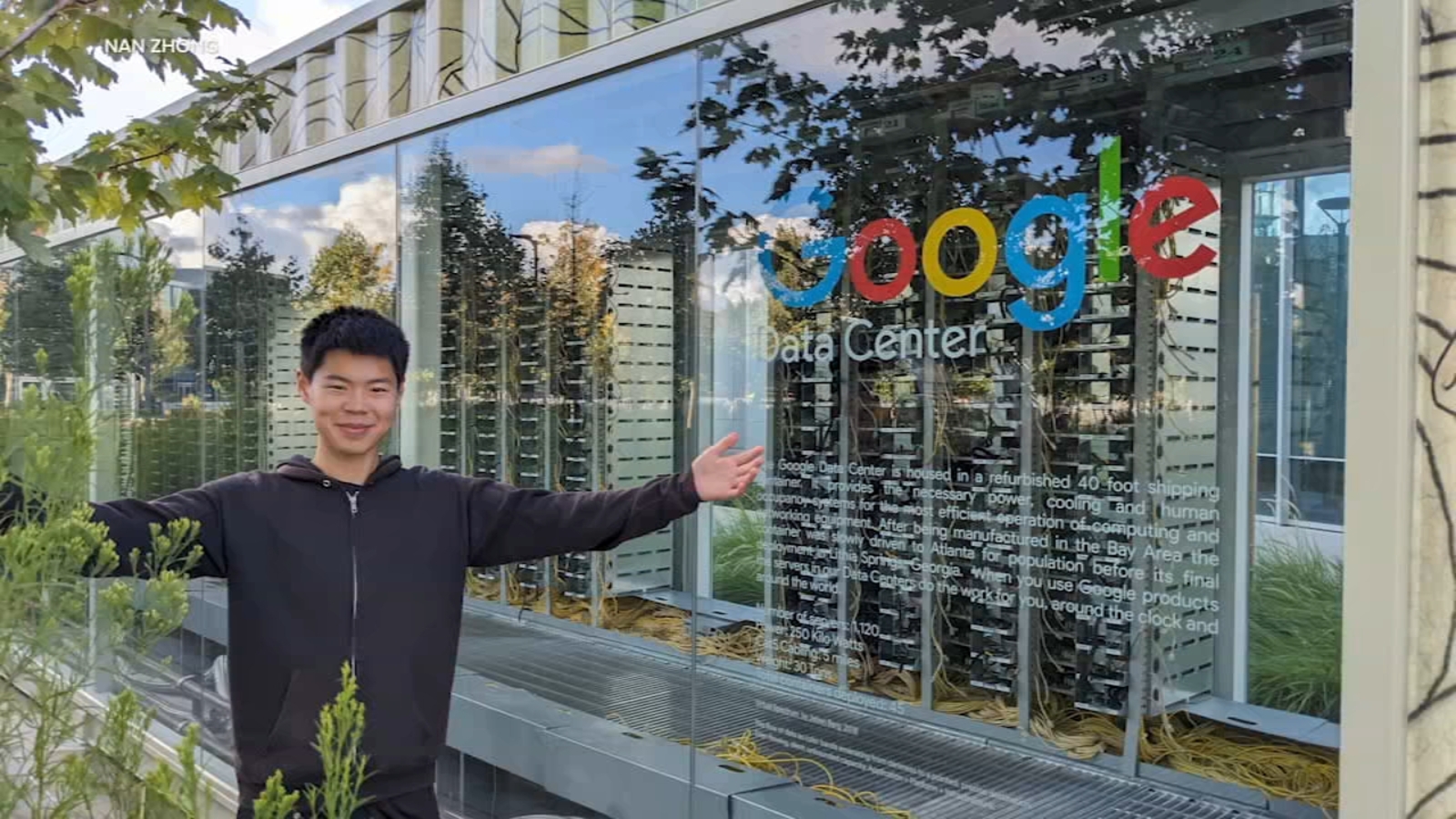
The legal fight stems from a 2023 story by our sister station 7 News in San Francisco about Stanley Zhong, a then 18-year-old Gunn High School student with a 4.4 GPA and a near-perfect 1590 SAT score who was rejected by 16 out of the 18 colleges he applied to. Despite the rejections, he was later hired as a software engineer at Google.
Two and a half years later, his father, Nan Zhong, says the family remains convinced racial discrimination played a role in those decisions. He spoke exclusively with 7 News anchor Kristen Sze.
Zhong said Stanley, now 21, is happy and doing well in his job at Google. “In 2025, he received an outstanding impact performance rating, which is higher than majority of the Google engineers,” he said.
Zhong said the family spent a year in discussions with University of California officials after Stanley’s rejections, but nothing changed. He said the turning point came when a UC admissions director emailed him, writing that his allegation of racial discrimination was unfounded because California law bans the practice.
“When I got that line, I kept scratching my head,” Zhong said. “They’re saying there cannot be any noncompliance if there’s a law banning it, but we’re exactly accusing them of breaking the law secretly. So that is the point where I realized there’s nothing we can achieve by having a conversation with them.”
Zhong said conversations with state lawmakers and Gov. Gavin Newsom also went nowhere, prompting the family to sue the University of California, the University of Washington, the University of Michigan and Cornell University.
He said they struggled to find legal representation. “We’ve been talking to local law firms, national law firms. By my account, we probably talked to dozens of legal organizations and law firms. None of them took it,” Zhong said. With statutes of limitation approaching, he said the family decided to represent themselves.
“Of course, being somebody with no legal experience at all, we naturally turned to AI,” he said. “It turned out to be a boon that we never anticipated to be so effective.”
Zhong said they use multiple AI models simultaneously to analyze legal questions, compare answers and prevent errors. “It’s like having a team of deep lawyers, top lawyers, all working for you,” he said.
He pointed to a recent ruling in the University of Washington case, where a judge rejected the university’s motion to stay the case. Zhong said the decision underscored a challenge in bringing admissions lawsuits: students often lose legal standing once they reach their junior year of college.
“Here, Stanley has a unique advantage. He’s not going to college yet. He may go at any time,” Zhong said. “So, in some ways, he has evergreen legal standing that allows us to bring the lawsuit.”
Zhong said the broader admissions landscape has shifted since Stanley’s rejections, citing the Supreme Court’s ruling banning affirmative action in the Harvard case and increased scrutiny of elite universities. He said the family has spent significant personal funds and continues to pursue the cases because they believe the issues extend beyond their son. They have launched a nonprofit, SWORD, Students Who Oppose Racial Discrimination, to advance their cause. And they have received some financial support through GoFundMe.
“We think we have a unique advantage, and we don’t want to let that go,” he said.
© 2026 KGO-TV. All Rights Reserved.