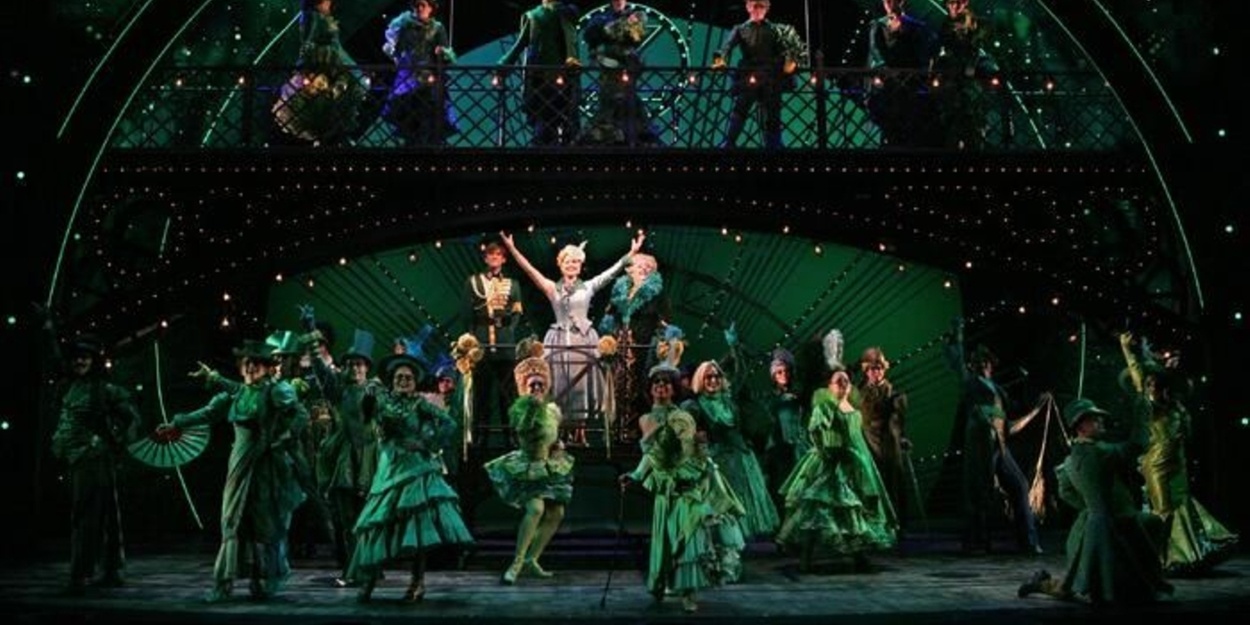









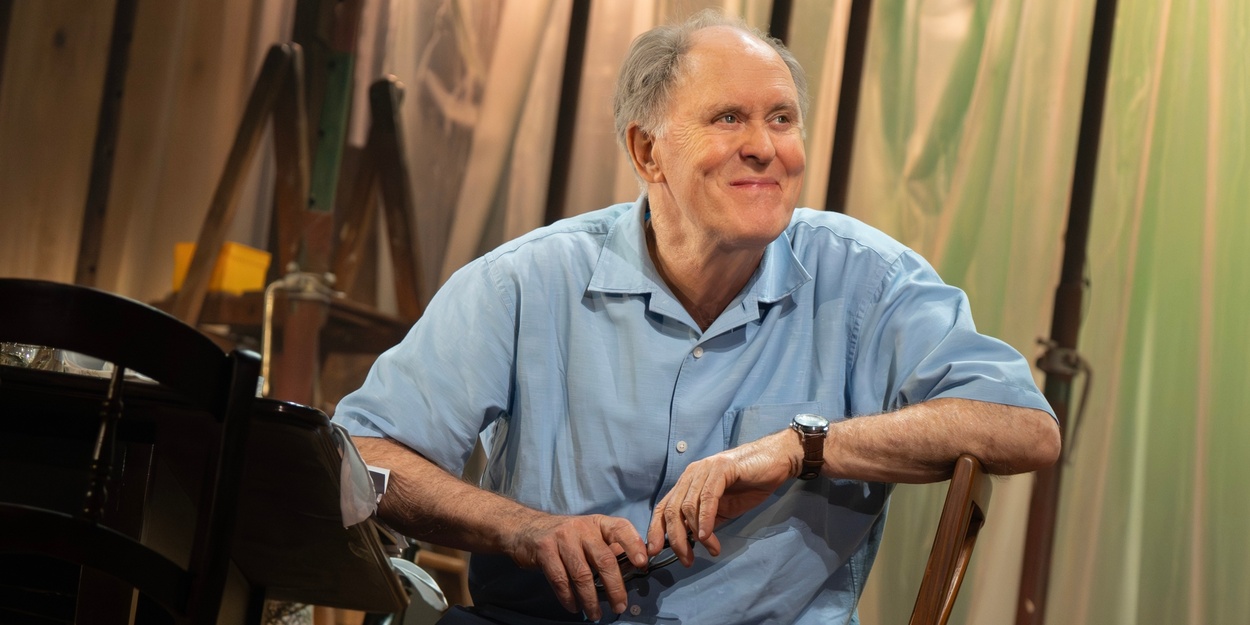
Reviews are in for GIANT, the Olivier Award-winning play by Mark Rosenblatt, now on Broadway starring John Lithgow as Roald Dahl. Directed by Nicholas Hytner, the production is playing a limited 16-week engagement following its award-winning West End run, where it received three Olivier Awards.
The play centers on Dahl in the wake of controversy, examining questions of legacy, accountability, and public image through a dramatized portrait of the author during a pivotal moment in his life.
The Broadway company features John Lithgow, Aya Cash, Elliot Levey, Rachael Stirling, Stella Everett, and David Manis.
Helen Shaw, The New York Times: *CRITIC’S PICK* In Rosenblatt’s play, he is a BFG (Big Fractious Giant): The real man was 6-foot-6, while Lithgow is 6-foot-3. The director Nicholas Hytner keeps Dahl’s height in reserve, almost as if it’s a special effect. When the curtain rises, Lithgow is seated. He stands only after an eight-page scene at his dining-room work table, in which Dahl banters tetchily with his British publisher Tom Maschler (Elliot Levey) and fiancée, Liccy (Rachael Stirling), about contractual this and unimportant that.

Sara Holdren, Vulture : There was a moment late in Giant when I realized I could feel my own heartbeat, cranked up with anxiety. The waters the real Dahl waded into were boiling then and haven’t dropped a degree since. “Roald has spent years, long before I knew him, supporting desperate people, children especially, around the world,” Liccy protests to Jessie in a moment alone together. “Lebanon broke his heart.” Part of what gives Giant such voltage in a present context has to do not simply with what’s still happening in Gaza, but also with the phenomenon, much on display these days, of how a thinking person can break morally bad. Any trajectory away from humanity includes multiple moments of doubling down — forks in the road where the uglier path was taken. We dig our heels in; then, before we know it, we’ve dug our own grave.

Adam Feldman, Time Out New York: Nicholas Hytner’s bracing production ran in the West End in 2024 with the same four actors in the main roles, and they mostly work together as a smooth machine. Lithgow’s Dahl can be the soul of charm and playful wit when he’s being indulged, but the judgmental mean streak that enlivens his kids’ books (and especially his macabre short stories) can also make itself felt in real life when he feels challenged. The characters in his orbit know how to flatter and deflect when required, including his good-natured Kiwi housekeeper, Hallie (Stella Everett), and his hearty groundskeeper, Wally (David Manis). Cash’s performance is a somewhat different register—it feels more strained—and this hint of formal discontinuity works to the production’s advantage. Jessie is the outsider here, ill at ease from the beginning, and Dahl treats her with annoyed contempt, homing in on her points of vulnerability (as a young person, as a woman, as an American and especially as a Jew). The marvelous nastiness in his work, Giant suggests, extends from the fact that he can be a nasty piece of work himself.

Johnny Oleksinki, The New York Post: First off, the towering 80-year-old Tony winner bears a striking resemblance to the man, right out the box. But it’s Lithgow’s ability to be quiet and sweet and seconds later booming and scary that makes us squirm in our seats over our own feelings toward the writer. At times, we really do like him. The actor’s well-rounded, seismic Roald will be on the defensive, weaponizing his over-6-foot frame, massive intellect and huge temper. All giant, indeed. And right away he’ll snap into a kindhearted old man — the nurturing papa who Dahl readers dream is behind the prose. A camouflage, perhaps.
Daniel D’Addario, Variety: “Giant” is not without flaws; I would note without spoiling that, after a barnburning next-to-last sequence, it did not entirely stick its landing. (We’re meant to think that the bill is coming due for Dahl and his reputation is about to be torched, but his antisemitism, while known to this day, has seemed not to stick much to his legacy, and a few years after the events of this play, he did get offered an OBE by the Queen — which he turned down.) Rosenblatt, too, nails the back-and-forth of dialogue but, in his first attempt, can land, for fleeting but unwelcome moments, in a schematic place. The audience, for instance, will realize that Dahl is, yes, a child in an adult’s body about an hour before Cash’s character announces it. But its working through a series of debates that many potential viewers likely will have grown weary of — “separating the art from the artist” being only the first — is by and large done elegantly. “Giant” was conceived of years before the events of Oct. 7, 2023, a recent salvo in an age-old conflict, and yet its approach to geopolitical conversations feels up to the minute.
Juan A. Ramirez, Theatrely: Still, Giant spends some two hours playing is-he-or-isn’t-he before a mic drop finale that conclusively proves (by dramatizing an actual interview he gave to The New Statesman) that he is. Or, in the most undeservedly graceful reading, that his stubbornness so blinds him to consequence that he’d be willing to sound like he is. It’s a terrific character study. The issue is that Giant also spends those two hours playing cat and mouse with the broader question of whether anti-zionism equals antisemitism; Dahl being the only character to firmly decry the invasion and take issue with Israel’s governance. He dodges the main accusation by bringing up valid concerns over war, displacement and colonialism, which erroneously and irresponsibly intertwines the two thoughts as the play goes on. Closing the play on a confirmation of Dahl’s antisemitism, Rosenblatt bangs the gavel on the conflation: if Dahl was lying about the roots of his anti-zionism, surely so must others be guilty of that masquerade. For all its dramatic pleasures and gestures towards nuance, Giant winds up feeling like the latest example of a type of weaponized censorship that deems any criticism of governments as human-scale hate speech.
Robert Hofler, The Wrap: Only the gardener appears to have ever met Dahl before “Giant” begins. Bette Davis in “Dinner” delivers her only faceless performance. She knew that to create a character who could deal with a nutcase-boss she needed to ignore the tantrums, brush off the arrogance, be almost invisible. Davis should have given acting lessons to Levey and Stirling who react in outrage and horror to every mal mot delivered by Lithgow.
Average Rating:
74.3%
.