








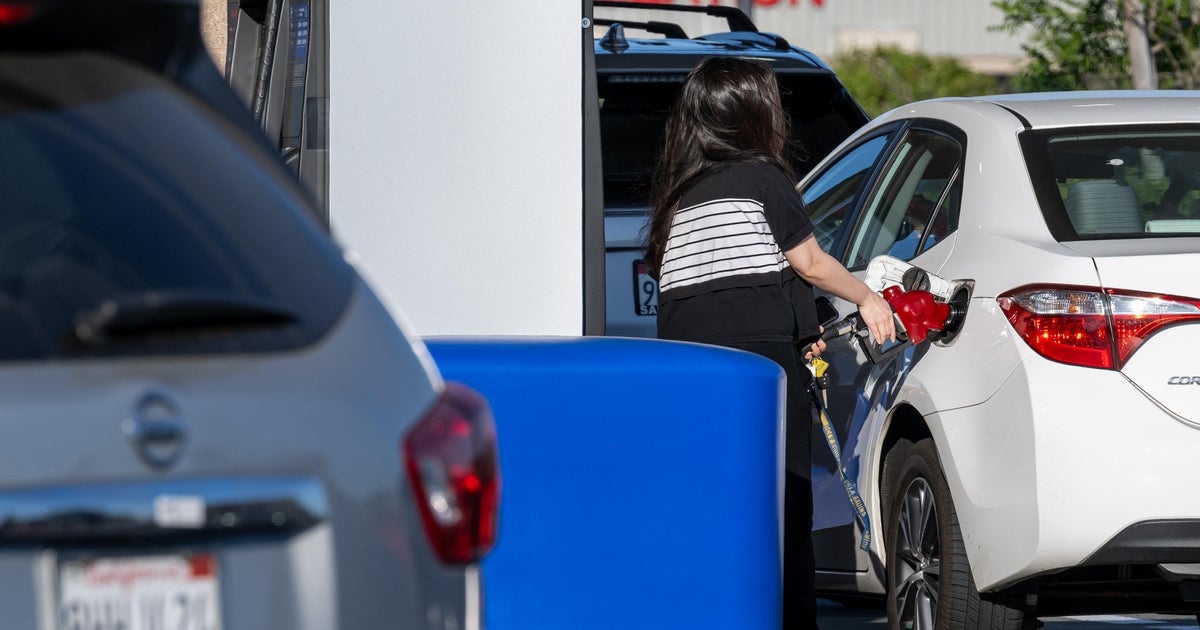
The average U.S. price of a gallon of gasoline rose above $4 a gallon Tuesday for the first time in more than three years, according to AAA, the latest sign of how the Iran war is driving up fuel costs for U.S. motorists. The average price was $4.018 a gallon, AAA said, up from $3.990 on Monday.
Gas prices have surged since the U.S. and Israel attacked Iran on February 28, jumping more than a dollar per gallon over the last month, data from the auto club shows.
President Trump has suggested the war could end soon. In a potential sign of progress, Pakistan indicated it would host talks between the U.S. and Iran in the “coming days.”
At the same time, the U.S. has expanded its special operations forces in the Middle East and Mr. Trump is now renewing threats to strike Iranian power plants and other civilian infrastructure if a deal is not reached. The Trump administration said it presented a 15-point peace proposal to Iran last week.
Amid that uncertain backdrop, U.S. gas prices finally broke past $4 after remaining just below that threshold for several days straight.
The last time gas was above $4 per gallon was in August 2022. Prices briefly topped $5 per gallon in June of that year after Russia’s invasion of Ukraine sent crude oil prices surging.
“It’s not the shock of $5, but motorists are really going to start to see those digits go up on the dollar price on the pump relatively quickly,” Patrick De Haan, a petroleum expert at GasBuddy, told CBS News.
Since 2009, gasoline has only spent 157 days — all in the year 2022 — above $4 a gallon, according to De Haan.
A CBS News poll released on March 22 found that rising gas prices are heightening concerns about the U.S. economy. In the short term, 90% of respondents expect the Iran war to drive up oil and gas prices, while 58% said fuel costs were likely to increase over the long term.
Drivers are also noticing the local impact, with 85% reporting higher prices in their area, according to the poll of 3,335 U.S. adults interviewed from March 17-20.

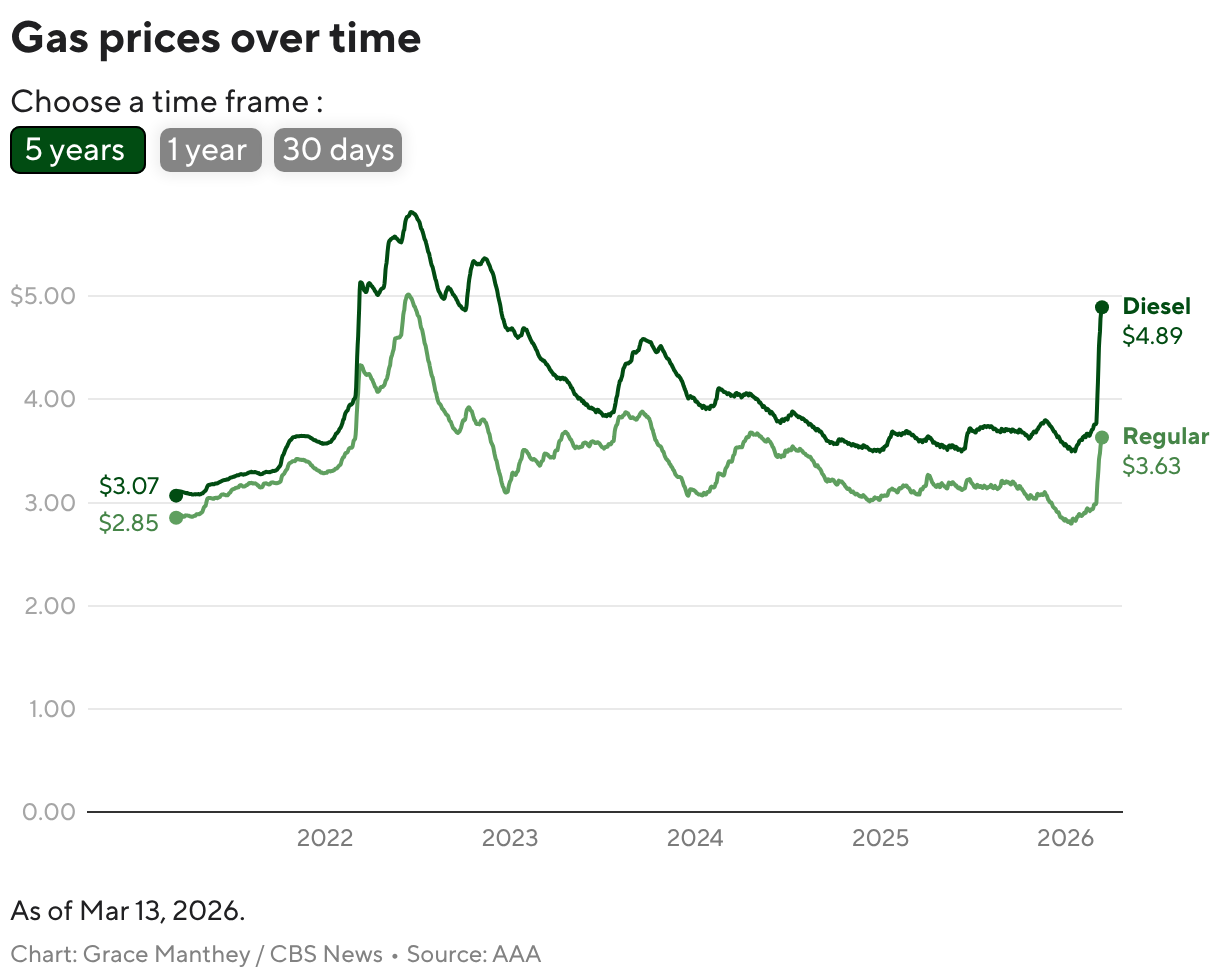
Diesel prices also rose again, reaching $5.454 a gallon Tuesday, compared to Monday’s $5.416. The fuel is commonly used in farming and construction, as well as in trucks, trains and boats that transport American goods.
As transportation costs increase due to higher energy prices, companies could eventually shift part of the burden onto customers, Diane Swonk, chief economist at KPMG, recently told CBS News.
The Trump administration has pulled multiple levers in an effort to tame energy prices, such as releasing oil from its strategic reserve and relaxing government regulations that can push up the cost of petroleum products.
Analysts, however, told CBS News those measures alone aren’t enough to fill the energy supply gap or ease prices for Americans.