









Published on
The European Commission has dismissed as “speculative” and groundless a lawsuit launched by the Russian Central Bank against Euroclear, the Brussels-based central securities depository that holds €185 billion in immobilised assets.
In a short statement published on Friday morning, the Russian Central Bank announced the start of legal proceedings for the “recovery of damages” and blamed Euroclear for preventing the release of the assets, which are subject to EU law.
The lawsuit was submitted to the Arbitration Court in Moscow.
The development comes with the EU still hammering out a plan to channel Russia’s sovereign assets into a zero-interest reparations loan to Ukraine, a process with Euroclear at its centre. EU leaders are meant to make a final decision when they meet on 18 December.
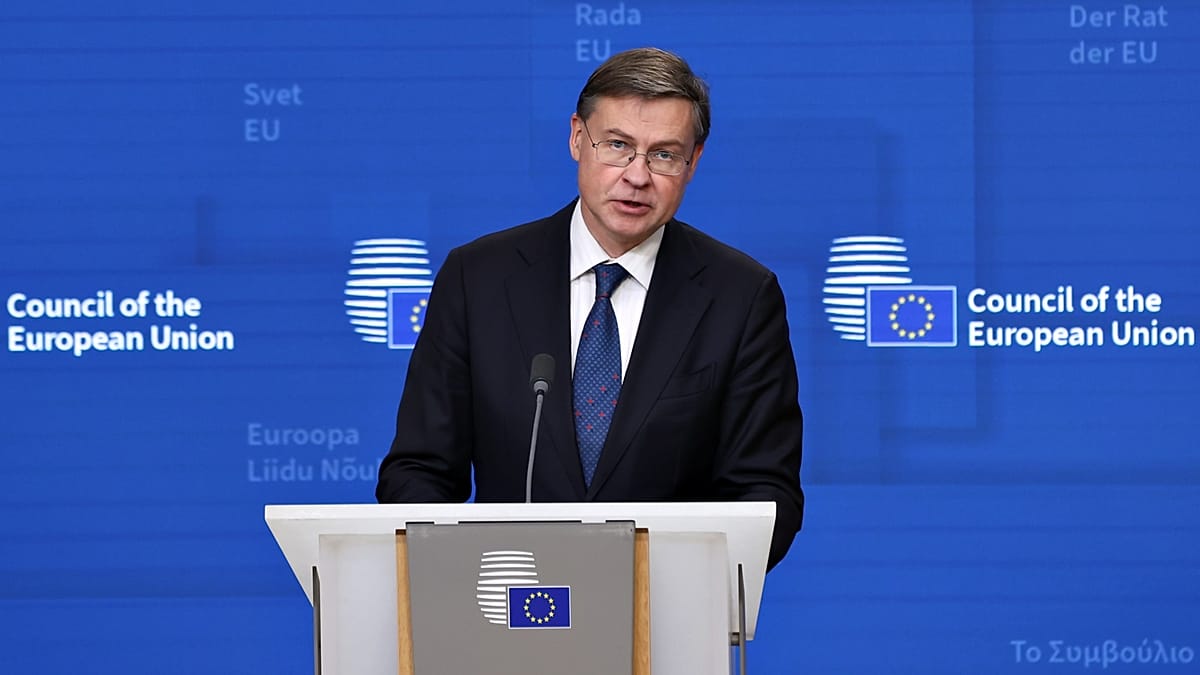
“Our proposal is legally robust and fully in line with EU and international law. The assets are not seized, and the principle of sovereign immunity is respected,” Valdis Dombrovskis, the European Commissioner for the Economy, said on Friday afternoon.
“We kind of expect that Russia will continue to launch speculative legal proceedings to prevent the EU from upholding international law and to pursue the legal obligation for Russia to compensate Ukraine for the damages it has caused.”
According to Dombrovskis, all European institutions that have Russian assets, from Euroclear to private banks, will be “fully protected” against Moscow’s retaliation. The EU has controlled €210 billion in assets of the Russian Central Bank since February 2022.
The sanctions regime already allows Euroclear to “offset” any potential loss, he added.
For example, if a Russian court orders the seizure of the €17 billion that Euroclear has on Russian soil, Euroclear will be allowed offset the loss by tapping into the €30 billion that its Russian counterpart, the National Settlement Depository, has stored within the EU.
Additionally, the reparations loan, if approved, will introduce a new mechanism to deal with state-to-state disputes. If Russia seizes the sovereign assets of Belgium in retaliation, Belgium will be allowed to “offset” the lossagainst the €210 billion, while Russia will not recover the amount it has seized when the assets are freed.
The Belgian factor
The legal safeguards are meant to allay the concerns of Belgium, which remains the chief opponent of the reparations loan. Belgian Prime Minister Bart De Wever has repeatedly warned of the risk a successful legal challenge could pose.
“We put forward a proposal. We are confident in its legality and its court-proof character,” a Commission spokesperson said.
Euroclear, which declined to comment, has previously criticised the reparations loan as “very fragile”, legally risky and overtly experimental.
The lawsuit comes a day after EU countries agreed to trigger an emergency clause to immobilise the Russian Central Bank assets for the foreseeable future.
Under the new law, the €210 billion will be released only when Russia’s actions “have objectively ceased to pose substantial risks” for the European economy and Moscow has paid reparations to Kyiv “without economic and financial consequences” for the bloc – a high bar that is unlikely to be cleared any time soon, if ever.
The indefinite immobilisation is meant to further placate Belgium and Euroclear in order to facilitate the approval of the reparations loan next week.
In a separate statement, the Russian Central Bank said it “reserves the right, without further notice, to apply all available remedies and protections if the proposed initiatives of the European Union are upheld or implemented”.
Read the full article here