









Published on
The simplification of rules in the upcoming EU budget in the field of research may put undermine the bloc’s ability to control how allocated funds are spent, the European Court of Auditors said in a report published on Monday.
The court, which is responsible for auditing how EU funds are collected and spent, has conducted an assessment of the next EU budget for competitiveness and research, which as written totals €409 billion – about one-fifth of the overall €2 trillion EU budget for 2028-2034.
The auditors’ report stresses that the field of research is particularly exposed to errors such as overcompensation, and that simplification measures such as lump-sum funding therefore need safeguards to keep funds from being misused.
“The Commission’s intention to simplify the EU’s financial management should not come at the expense of accountability, effectiveness, efficiency, and economy”, the court concludes.
The simplification agenda
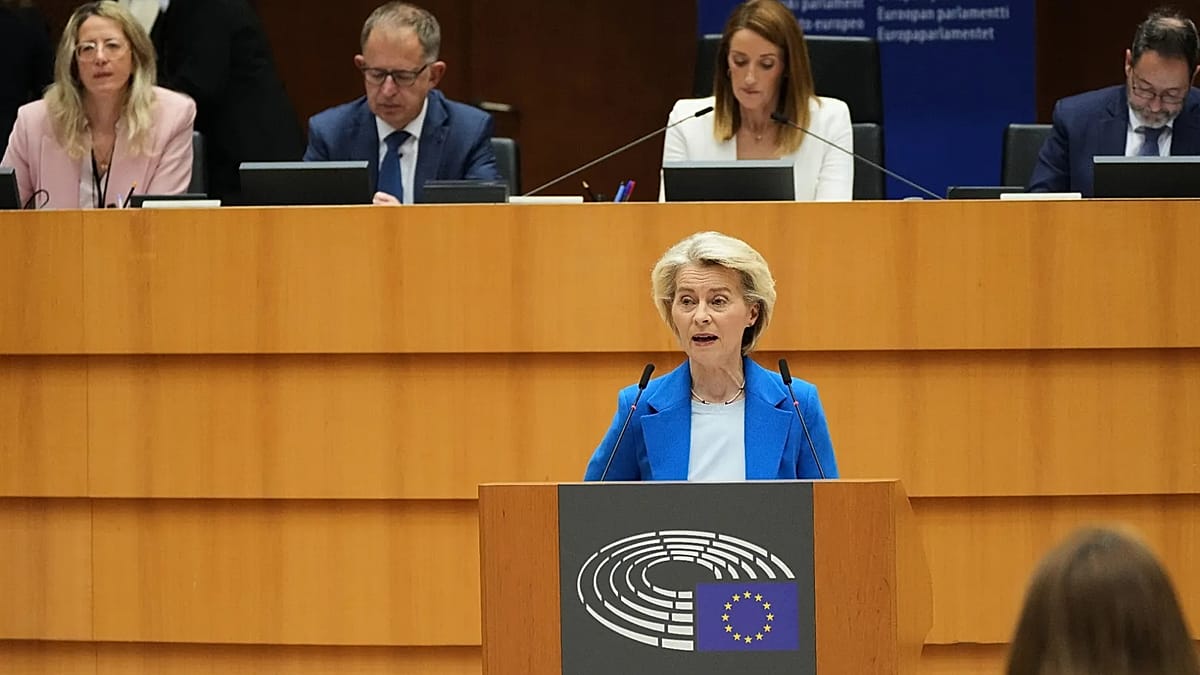
Since beginning her second term as European Commission President, Ursula von der Leyen has pursued a project of “simplification”, an effort to cut red tape and deregulate the EU rulebook to make the bloc more economically competitive.
In that spirit, the Commission put forward a series of new legislative proposals called “omnibuses” with the aim to simplify major EU legislative proposals, for instance those covering digital and green policies.
This approach was recently challenged by European Commission vice-president Teresa Ribera. In a speech in early December at the think tank Bruegel, she insisted that simplification cannot be allowed to go too far.
“Deregulation eliminates safeguards, it puts costs onto citizens and taxpayers, creates uncertainty, discourages investment”, she said.
Similar concerns have been expressed in the European Parliament, which is currently debating the architecture of the Commission’s omnibus proposals.
Among other things, EU lawmakers have warned that the use of “approximations” in the omnibus legislation tendency might diminish the bloc’s oversight capacity and make it harder to establish how money is being spent.
Read the full article here