









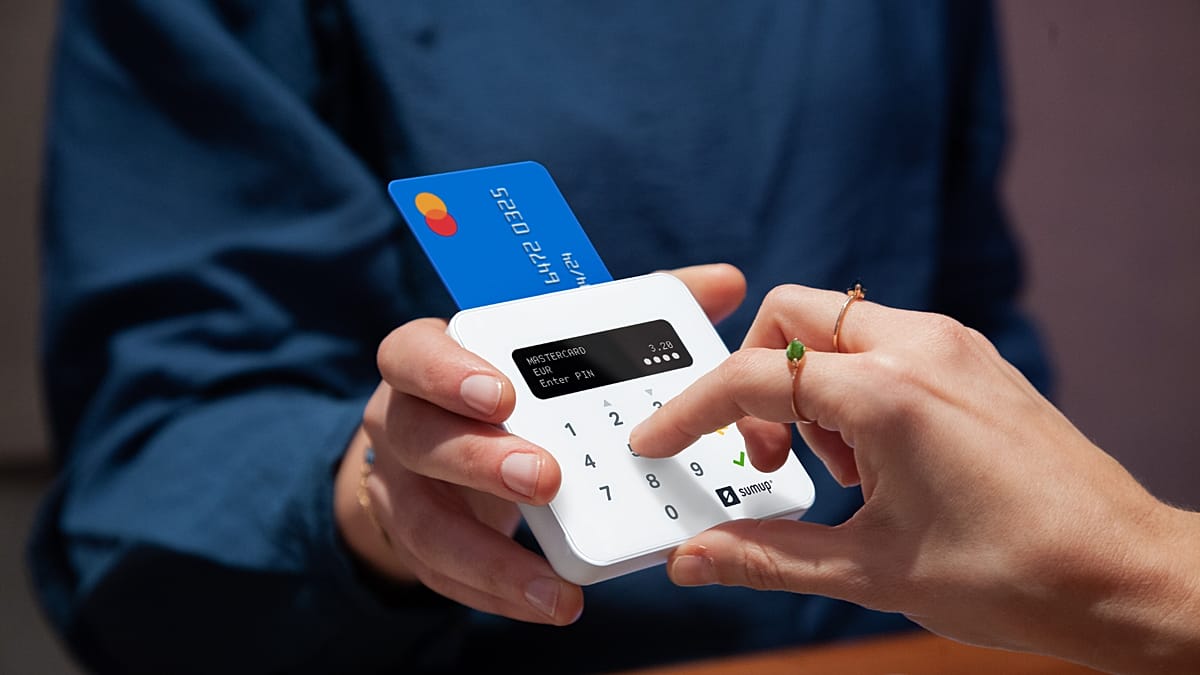
The EU’s reliance on foreign payment schemes has become intolerable in an era of trade wars, sanctions, and geopolitical fragmentation.
ADVERTISEMENT


ADVERTISEMENT
Europe is pursuing a two-track strategy: a public initiative, the digital euro, a central bank digital currency issued by the European Central Bank (ECB), and a private initiative, account-to-account payment networks such as Wero, supported by major European banks.
The ECB plans to issue digital cash that is a direct claim on the central bank, rather than on a commercial bank. It will not fluctuate like Bitcoin, will not be processed through the US like a debit card, and will be legal tender, unlike stablecoins.
The Eurosystem will invite European payment service providers to express interest in 2026 for participation in a digital euro pilot scheduled for the second half of 2027. This initiative follows the European Central Bank Governing Council’s decision to move the project forward, with the final decision on issuing a digital euro pending adoption of relevant EU legislation. The 12-month pilot will assess technical and operational readiness through controlled transactions that mirror the design but will not have legal tender status.
The legislative hold-up
The European Commission tabled its digital euro regulation in June 2023. Nearly three years later, the EU Parliament hasn’t adopted a negotiating position. The Committee on Economic and Monetary Affairs (ECON) has repeatedly blocked key amendments, including provisions mandating full online functionality alongside an offline mode.
The EPP, the political group of this file’s rapporteur, Fernando Navarrete Rojas, has pushed for a narrower “offline-first” design under pressure from banking lobbyists worried about disintermediation.
A plenary override is being considered for May 2026. If the ECON committee remains stuck, Members of the European Parliament could vote directly on a mandate, skipping the committee process.
The stakes are high. Without a mandate from Parliament, trilogue negotiations cannot happen. Without those talks, there will be no law, and the ECB Governing Council will not be able to issue any digital euros.
Bad diagnosis leads to ineffective solutions
Judith Arnal, a senior research fellow at CEPS and Real Instituto Elcano, is concerned about how Brussels is framing the problem.
“I’m a bit afraid of the current narrative I’m hearing at the European Parliament,” she says. They are “mixing up some things, basically putting on the same basket Visa, Mastercard, Apple Pay, Google Pay, Microsoft.”
The retail payments ecosystem, she explains, has distinct layers. Visa and Mastercard dominate the scheme layer, the rules and rails. But in processing and acquiring, “we rely exclusively on EU-native companies. So, there’s no dependence there.” Apple Pay and Google Pay, meanwhile, are digital containers: convenient, yes, but not a threat to sovereignty. “What Apple Pay creates is possible competition issues. These are issues of a different nature, and we should not mix them up, because a bad diagnosis will lead to bad medicine.”
Her deeper concern is “becoming like an anti-US company rhetoric, conflating the Trump administration with private companies.” One thing is the geopolitical dispute; she argues, quite another is “simply cutting off 27 member states from Visa and Mastercard schemes.”
The private sector is already moving
Wero, the pan-European wallet supported by the European Payments Initiative (EPI), is operational in France, Germany, and Belgium, with interoperability agreements expanding across Europe. EPI’s Chief Strategy Officer, Ludovic Francesconi, has outlined both the ambition and its limitations.
“Europe is an open economy, and international schemes today represent six out of ten transactions, particularly for international payments,” he says. “The objective is rebalancing and offering an alternative. A strong European solution increases competition, strengthens resilience and gives banks and merchants more choice.”
On the digital euro specifically, Francesconi is cautiously constructive: “We believe that cooperation is key, though the finality of the digital euro, beyond its monetary purpose, is yet to be determined. We will be able to discuss the best ways to include the digital euro in our wallet.”
The vision he sketches is a public-private partnership: “Europe will be strongest if public and private initiatives are designed to reinforce each other rather than operate in parallel or overlapping.”
The conditions for success are steep
Arnal identifies four hurdles for any European payment alternative: merchants must find it more cost-effective than cards; consumers must experience a seamless process comparable to one-click checkout; fraud, which increases with instant payments because “once it’s instant, it’s done, full stop,” must be effectively managed; and strong dispute resolution mechanisms must be established.
“These initiatives can go very far,” she says. “But they still need to fulfil some additional conditions, and it’s not so cheap to meet these requirements.”
There is, however, an unintended benefit. The political momentum behind the digital euro has accelerated private-sector initiatives. “I’m not so sure that if the digital euro had not been on the table, whether the banking sector would be moving so swiftly in these interoperability agreements,” Arnal says. “The political impulse for the digital euro has also made the banking sector move more strictly in advancing what before was technically more difficult.”
Europe’s payment sovereignty drive is real, necessary, and overdue. But the digital euro is not a silver bullet. It will not function internationally, could destabilise bank deposits if poorly designed, and remains entangled in legislative challenges.
A more effective approach may be emerging: a layered ecosystem in which Wero manages domestic and European transactions, Visa and Mastercard handle international payments, and the digital euro provides a public backstop supported by the ECB’s balance sheet.
Read the full article here