


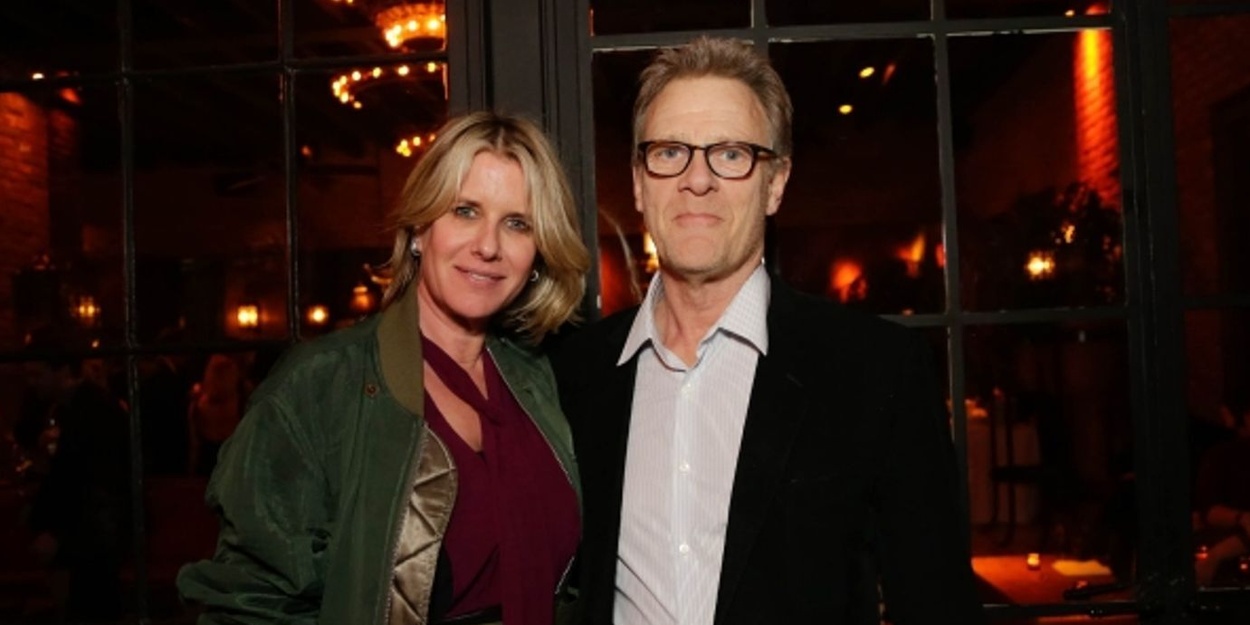








A few years back, Andrew McCarthy was having a conversation with his then 20-year-old son, Sam, who was telling him a funny story about a buddy’s dating life. Then the boy made a comment that struck a nerve.
“You don’t really have any friends, do you, Dad?”
In the days that followed, McCarthy — who rose to fame in the 1980s as a key member of the Brat Pack, starring in films such as “Pretty in Pink” and “St. Elmo’s Fire” — couldn’t stop thinking about the “slightly embarrassing” comment.
“I kind of felt exposed in a certain way,” the 63-year-old told The Post. “Kids will just say what they perceive to be the truth, and attention must be paid, you know?”
He realized that, amidst work and family, he’d let many close friends fall by the wayside and hadn’t modeled relationships well for his son.
The conversation led him to reach out to an old friend near Baltimore he hadn’t spoken with in years, rent a car and drive to see the guy. When McCarthy arrived, he found his once extroverted buddy holed up his apartment, isolated by severe back problems and surrounded by Amazon packages.
“[I] just sort of realized instantly, ‘Wow, you’ve really been struggling with something,’” McCarthy said. “If I had been doing my friendly duty, I would have known and he would have felt he could open up to me.”
The encounter ended up being just the beginning of a 10,000-mile, 22-state road trip to visit long lost pals and converse with strangers about their own friendships.
McCarthy chronicles the journey in his new book, “Who Needs Friends: An Unscientific Examination of Male Friendship Across America.” Here, he talks to The Post about the journey.
Would your son ever have asked your wife about not having any friends?
No, my wife’s the most social person you’ve ever met.
Why do you think this has become such a thing for men in midlife — to not have friends or to not keep in touch with people?
Women know the value of friendship, I think, more than men do. We’re afraid of the easy intimacy that women are sort of willing to go to right away … And I think he notion of intimacy for men is, you know, they equate that with some kind of sexuality, and that can be a frightening thing for heterosexual guys. And I think the vulnerability, which is required to be a friend, can be equated with weakness — and the one thing a man can’t be is weak. All the cliches I think are absolutely true … and the idea of being an American man has changed so much over time. In the 19th century, Abraham Lincoln and Joshua Speed, these men were really intimate. You look at old letters between men, and they were very affectionate and loving and effusive. Even physically, there was a lot of intimacy between men. And then somehow, by the time John Wayne and the Second World War happened, being an American man had become, ‘You carry your own water, you pull your hat down, you don’t talk about it. You’re stoic and, you know, suck it up.’
Which of your conversations with strangers stuck in your mind the most?
These two old cops I met in Ohio were really incredible to me. I met them in an Arby’s or something, some fast-food joint connected to a gas station. They were the kind of guys that I would have, in my arrogance or whatever, just dismissed as a couple of geezers sitting around having a coffee. And I went up to them and started talking to them, and they were very welcoming right away. The level of unapologetic intimacy that they had with each other was almost alien to me, and so touching and generous … They said, “You know, we started telling each other, ‘I love you.’ Like I tell my wife and my kids, I love them. Why can’t I tell my best bud of 60 years [that] I love them? It’s not a sexual thing.” It was just that kind of tenderness and openness and willing to acknowledge how important their friends are.
Do you have many close friendships that you’ve maintained with people that you’ve been in movies with?
There’s lots of people I’ve known for a long, long time, and I’m very friendly with them, and I consider them friends, but they are not intimate friends. Most of my friends are [outside of Hollywood]. Anyone who is working on a job, you have a work relationship and you develop a friendship, and most of them don’t, you know, don’t continue on after that.
It’s such a vulnerable book in some ways — admitting you’ve lost contact with friends and maybe you haven’t been a great friend. Did you struggle at all with opening up like this?
You know, I think if you’re not going to show up on the page, how can you ask someone else to show up for you? All you want is for someone to start reading and nodding and identify.


