








ANAHEIM, Calif. () — A woman who was homeless for years in Anaheim is sharing her story of survival after she was able to avoid jail time and seek treatment instead. It required assistance from the Anaheim Police Department, Anaheim City Attorney’s Office and local treatment facility, but thanks to a court program in the city, it was possible.
The program is called ACCESS, the Anaheim Collaborative Court Evaluating Strategies and Solutions. It’s led by the Anaheim City Attorney’s Prosecution Office and it was created in January 2023 to address the issue of low-level, high-need misdemeanor offenders cycling through the criminal justice system over and over again.
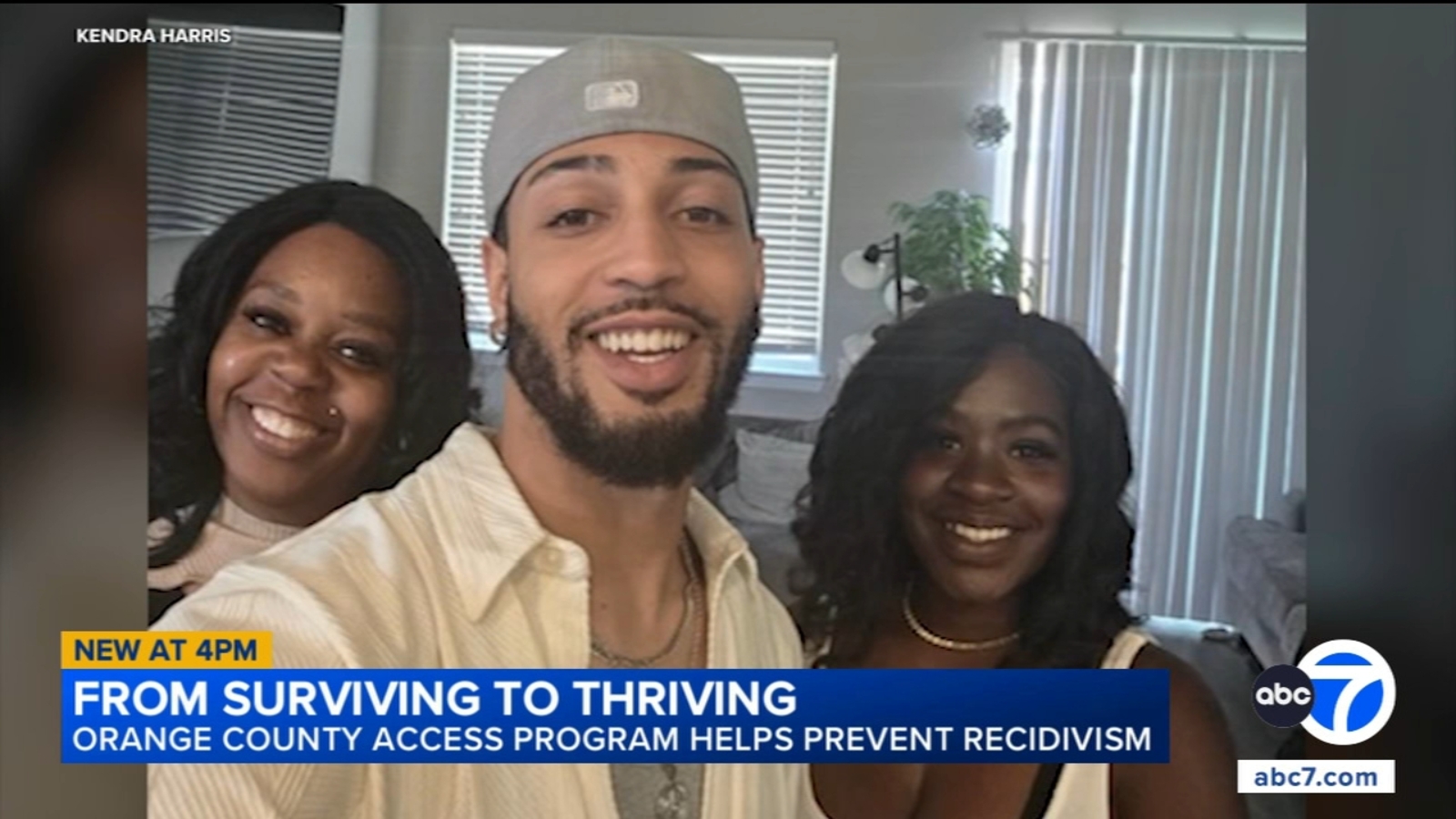
Those involved with the program knew that Tiffany Emerson would be a good candidate.
“Survival is just survival I guess, you know? You just do what you have to do,” Emerson said.
For the past ten years, Emerson called the streets and tunnels of Anaheim home. She ended up on the streets after a situation at home required her to leave.
“Some of the hardest things that I think I had to deal with was probably just being alone, you know? By myself as a female,” Emerson said.
Emerson turned to drugs and it was not uncommon for her to run into Anaheim police, namely Officer Ryan Lee with the department’s Homeless Assessment Liaison Officer team (HALO).
“Tiffany is a really sweet person,” Officer Lee said. “We contact so many people who have these unfortunately similar issues where they have drug addiction, mental health or a combination of the two. The more time you spend with them, the easier it is to look past that and see who they are as a person and how they ended up in this position.”
Officer Lee and his team are tasked with being the liaison between the police department and the care community, contacting homeless individuals and conducting assessments to see if they need resources or law enforcement intervention.
He said it typically takes several interactions with the same person before they are ready for services.
“Recovery is forever. So for somebody like Tiffany, we always want to try the next thing. We want to recalibrate our resource. What is it that we tried and why didn’t it work?” Lee explained.
Officer Lee didn’t give up and neither did Emerson’s family. When she went missing earlier this year, her sister, Kendra, happened to find her in an Anaheim restaurant. Her plan was to get her help and take her home with her to Texas.
After living in the tunnels of the city, there was finally a light at the end of one.
“When Kendra contacted me and I heard that Tiffany was in the hospital, their plan was to drive back to Texas. And I said because of how opiate withdrawal works, I said I don’t think she’s gonna make it. And I want her to be successful,” Lee said.
And because Emerson had open court cases, Lee immediately called the Anaheim City Attorney’s Prosecution Office, suggesting Emerson for the ACCESS program.
“We’re at the intersection of homelessness, substance use and/or mental health. And so we tried to take a different look at how we are prosecuting those cases,” said Jennifer Contini, Chief Assistant City Attorney for the City of Anaheim’s prosecution division.
The program was designed to prevent recidivism. It allows those charged with misdemeanor offenses who are struggling with addiction or mental health issues the ability to seek treatment, rather than face the criminal justice system.
“There are so many places where we can have win-wins, where what’s good for the individual is also good for the community at large. And so to find those, it is probably the most fulfilling work that we do,” Contini said.
Emerson is one of around 600 people who have taken part in the program, according to Contini.
Wasting no time, police and prosecutors secured her a spot at Anaheim Lighthouse for detox.
“We help people break free from their addiction of alcoholism, drug addiction. Learn how to live life again on life’s terms,” said Teresa Kothrade, Anaheim Lighthouse’s Executive Director.
Kothrade said Anaheim is confronting homelessness and addiction from a place of compassion, with every agency working together to provide wraparound services the second someone says they want help.
Lighthouse is licensed for 111 beds and they provide all levels of care, from withdrawal management to residential and sober living services.
“We have heart. We meet the clients where they’re at. There’s nobody better than anybody here. A lot of client engagement. And we just really give them that unconditional positive regard and just encourage them and love them until they can love themselves,” Kothrade said.
In addition to accepting private and county-funded insurance, along with Medi-Cal, they have a scholarship bed with the City of Anaheim, knowing not everyone has insurance.
“Jail is not the solution. And they need to find treatment. These are just lost individuals trying to seek help,” Kothrade said.
Now that Emerson has done that, she has moved to Texas to live with her sister.
“She had such a good life, bright future, you know, an amazing little girl and all these things and this is back to what I remember of her being that,” said Kendra Harris, Emerson’s sister.
Emerson’s journey is only beginning, but she wants to pay it forward, helping others facing similar struggles. It’s a shift from surviving her life to living it.
“When it seems hardest, just keep pushing, because it gets ugly before it gets better,” Emerson said.
© 2026 Television,