






Travellers are facing rising airfare costs and reductions in flight schedules as the conflict in the Middle East causes oil prices to soar.
ADVERTISEMENT


ADVERTISEMENT
Experts predict ticket prices could remain elevated for months even if the war de-escalates.
Increased demand on flight routes that avoid Middle East and Gulf stopovers also means flyers are having to pay more.
Which airlines are increasing fares?
The US-Israel and Iran war has seen oil prices rocket due to attacks on refineries in the region and the impossibility of transporting oil through the Strait of Hormuz, which in turn is spiking jet fuel costs.
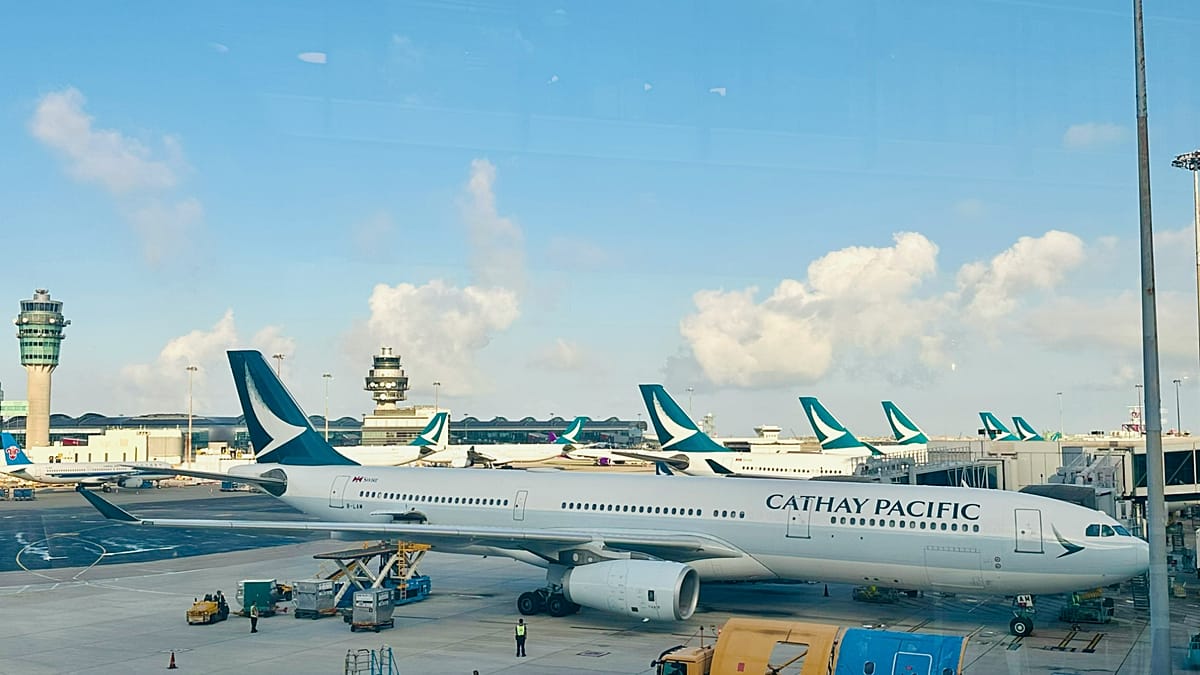
Cathay Pacific, AirAsia and Thai Airways are among a growing number of airlines increasing fares to offset the hikes.
During a media session on Wednesday, Ronald Lam, chief executive of Cathay Pacific, said the cost of fuel so far this month is double the average of the previous two months.
The carrier has updated fuel surcharges, which will affect all of its routes from 18 March.
AirAsia announced it would temporarily raise ticket prices and fuel surcharges on Thursday, promising to revise fares as market conditions changed.
Thai Airways officials told press they expect airfares to increase by 10% to 15%, while Qantas said it had lifted prices by differing amounts depending on the route.
Scandinavia’s SAS said it has introduced a “temporary price adjustment”.
Air New Zealand has upped prices. In an emailed response to Reuters, the carrier said it has raised one-way economy fares by NZ$10 (€5.10) on domestic routes, NZ$20 (€10.20) on short-haul services and NZ$90 (€45.90) on long-haul flights.
Other airlines with fuel hedging (which locks in specific prices for future consumption) in place have been able to secure part of their supply at fixed prices, including Lufthansa and Ryanair, according to Reuters.
Thousands of flights scrapped
Air New Zealand has also said it is reducing its services by 5%. The airline has cancelled approximately 1,100 flights from 16 March to 3 May, which is likely to impact about 44,000 passengers.
Dozens of carriers have also extended flight suspensions to destinations in the Middle East.
Finnair has scrapped Doha and Dubai flights until 29 March and is not flying through the airspace of Iraq, Iran, Syria and Israel.
Italian airline ITA Airways has suspended flights to Tel Aviv until 2 April and extended Dubai cancellations until 28 March.
KLM services to Dubai are halted until 28 March, while flights to Tel Aviv are cancelled for the remainder of its winter season.
Lufthansa Group, which includes Lufthansa, Austrian Airlines, Swiss and Brussels Airlines, has scrapped flights to Tel Aviv through 2 April and Dubai through 28 March.
Wizz Air has halted flights to Israel until 29 March and suspended services to Dubai, Abu Dhabi, Amman and Jeddah from mainland European destinations until the middle of September.
Non-European carriers, including Delta, Cathay Pacific and Air Canada, have also made schedule changes.
These flight disruptions have pushed up fares as demand surges for alternative routes that bypass the Middle East.
Cathay Pacific recently made headlines for offering business class return trips from Sydney to London in April at A$39,577 (€24,142).
Read the full article here