










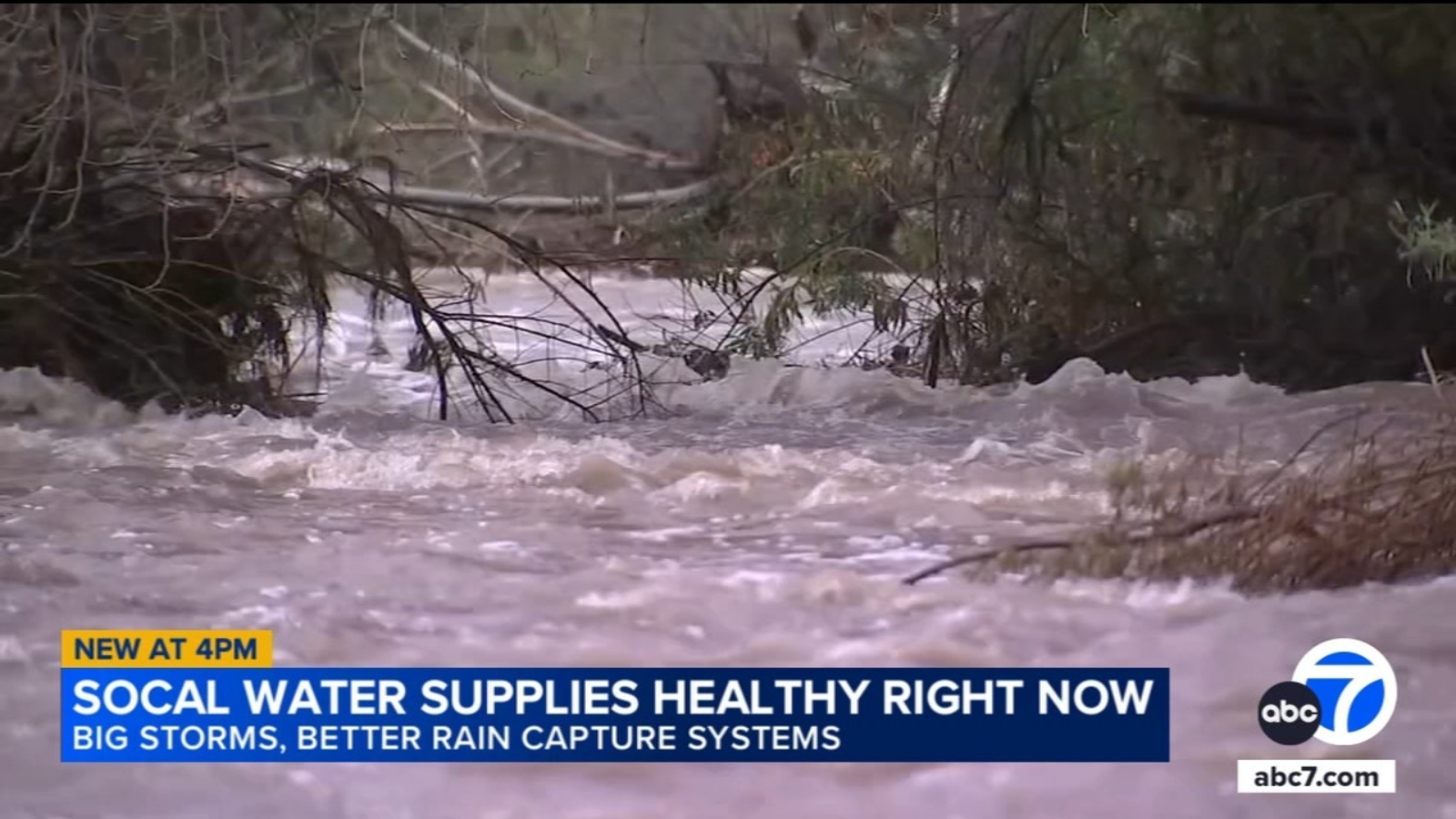
Southern California’s largest reservoir, Diamond Valley Lake, is nearly full due in large part to two powerful sets of storms that drenched the region over the Christmas and New Year’s holidays.
It’s at 94% capacity.
Many of the reservoirs in Los Angeles County, just as critical, are also in good shape.
It’s been a long time since the region has seen this much rain this early in the season.
“This was a significant period of rainfall for us,” said Kerjon Lee with the L.A. County Department of Public Works. “It actually set a 54-year record. It goes all the way back to 1971, when we had that much rainfall over the holidays.”
At places like the Rio Hondo Spreading Grounds, all of that water is seeping into the ground, slowly recharging our underground aquifers.
“There’s certainly some work to be in some of the aquifer areas, but those aquifers provide a third of the drinking water supply for the L.A. County region.”
Lee says a lot has been done over the years to keep as much water as possible from simply flowing downstream into the ocean. Spreading grounds, as they’re called, go a long way in making that happen.
“That open ground, it allows the water to trickle down into layers of sand and gravel into the underground aquifers that are under a good portion of the L.A. basin,” he added.
Of course, there’s always focus on the burn areas, especially Altadena and the Paliades. But Lee says we shouldn’t lose sight of just how important all of this water is.
“There’s been a lot of focus on safety, on safety from mud debris flow, from flooding, just general flooding as well. But the other side of this story is the significant amount of rain that we’re able to capture for the local water supply.”
© 2026 Television,