









This week marks the premiere of Faces of Death, a remake of the controversial snuff-style movie from 1978 that fooled many into believing it was a documentary.
The remake stars Euphoria’s Barbie Ferreira, Stranger Things’ Dacre Montgomery and Charli XCX.
With the film now playing in theaters, Watch With Us wants to take a look back at some of the most controversial horror movies of all time — including the original Faces of Death.
Whether they were banned in multiple countries, incited walkouts, backlash, censoring or even vomiting, these five movies were not quite warmly received upon release.
5. ‘Faces of Death’ (1978)
![Faces of Death (1979) [Vinegar Syndrome Archive 4K UHD & Blu-ray Promo Trailer]](https://i.ytimg.com/vi/TXH7T74xdIQ/hqdefault.jpg)
Faces of Death combines staged sequences with archival documentary footage to present its viewers with several gruesome deaths, all of which are narrated by a fictional pathologist named Francis B. Gröss (Michael Carr). After performing an autopsy, Gröss informs the viewer that he has compiled footage that showcases the many “faces of death,” as he is interested in the transitional period between life and death while being desensitized to the macabre.
While many of the movie’s most infamous sequences are re-enactments, the archival footage depicting all-too-real deaths in concentration camps and slaughterhouses caused the film to be banned in several countries, like Germany and the U.K., the latter of which dubbed it a “video nasty.” A mathematics teacher who showed it in his class in 1985 even had a legal case brought against him for the emotional distress caused by traumatizing two of his students.
4. ‘Cannibal Holocaust’ (1980)

While filming local indigenous tribes rumored to be cannibals in the Amazon, a documentary crew mysteriously disappears. Anthropologist Harold Monroe (Robert Kerman) travels to the Amazon searching for them and recovers their lost footage. When Monroe returns to New York, he watches the recovered footage and witnesses exactly what horrific fate befell the woefully underprepared film crew.
Cannibal Holocaust reigns supreme as one of the most notorious horror movies of all time. Ten days after the movie screened in Milan in 1980, the film was seized and director Ruggero Deodato and some of the crew were charged with obscenity. Later, Deodato would even be charged with murder due to rumors that actors were actually killed in the film (these charges were dropped when it was proven to be untrue). The film was banned in several countries over its depictions of violence, which did include real animal killings. However, Cannibal Holocaust’s visual realism style was highly influential on the found footage genre, paving the way for the success of The Blair Witch Project.
3. ‘The Exorcist’ (1973)
Regan (Linda Blair) and her single mother, actress Chris MacNeil (Ellen Burstyn), are temporarily living in Washington, D.C. while Chris films her new movie. But somewhere along the way, Regan’s body becomes the host for a malevolent entity who turns Regan from a sweet-natured adolescent girl into a bile-spewing demon. Desperate for answers, Chris takes Regan to several doctors and specialists who turn up nothing, forcing Chris to go the spiritual route. She enlists the help of Father Damien Karras (Jason Miller), a priest undergoing his own crisis of faith, to exorcise Regan of what ails her.
William Friedkin‘s The Exorcist is widely regarded as one of the best horror movies ever made, though at the time its reception was mixed in part due to its controversial material. Yet it was this very notoriety at the time that allowed the film to break ground as the first horror movie to be nominated for an Academy Award for Best Picture. Still, the movie endured a rocky reception from screenings (with reports of vomiting and nausea), religious groups and ratings boards, and it was banned in parts of the U.K. until the late ’90s. Even in America, the trailer was banned due to strobe effects inducing seizures and vomiting in test audiences.
2. ‘Possession’ (1981)
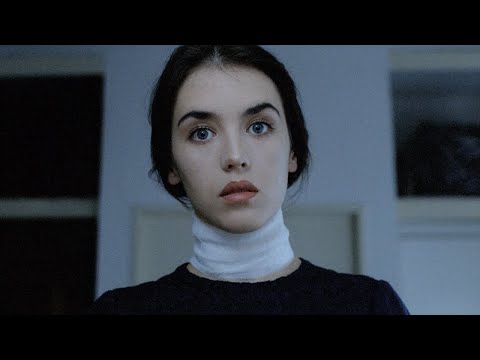
Married couple Mark (Sam Neill) and Anna (Isabelle Adjani) are thrown into emotional turmoil after Anna admits to Mark that she is having an affair. Anna leaves Mark and the son (Michael Hogben) that they share, and Mark grows increasingly unhinged, with subsequent interactions between the estranged couple becoming more violent and surreal. As Mark’s distress threatens to consume him, he hires a private investigator (Carl Duering) to follow Anna and find out what dark secrets she’s been harboring in an abandoned apartment nearby. Meanwhile, Mark becomes fixated on his son’s schoolteacher (Adjani), who bears a striking resemblance to Anna.
Possession was met with positive reviews at the Cannes Film Festival in 1981, yet was quickly labeled a video nasty in the United Kingdom due to what was deemed as extreme and disturbing content. In America, the film didn’t get a release until 1983, when a heavily edited, 81-minute version, which lost one-third of the film’s original runtime, was dismissed by critics. However, the film has recently enjoyed a 4K restoration that premiered in New York City in 2021. It is now regarded by many as one of the best horror films of all time.


1. ‘Martyrs’ (2008)

Lucie Jurin (Mylène Jampanoï) escapes unimaginable abuse and torture as a young child and is placed into an orphanage, where she befriends a fellow orphan named Anna (Morjana Alaoui). Lucie suffers from extreme PTSD while being stalked by a demonic female figure who frequently attacks her. Years later, Lucie grows up hellbent on exacting revenge on her tormentors, whom she believes have taken the guise of a seemingly normal, nuclear family. After slaughtering all of them, Anna arrives to help clean up, unsure if Lucie has really found the right perpetrators. But her uncertainty changes when she discovers a secret passageway in the home.


The 1970s were an amazing year for cinema. Many talented emerging directors had untethered creative reign and financial backing to use the medium as their playground. And some of the most beloved, iconic classics of horror cinema came from the ’70s. This includes genre-defining work from directors like John Carpenter, David Cronenberg, William Friedkin and […]
The New French Extremity film Martyrs caused many walkouts at its premiere at the Marché du Film festival in 2008 and allegedly induced vomiting at a screening in Toronto. It received a controversial 18+ rating in France, only the second film to receive such a designation since Saw III. However, a successful appeal resulted in the rating being dropped to 16+, which was chronicled in the documentary film Martyrs vs Censorship. Though the Weinstein Company acquired the film for release in North America, Bob Weinstein was so disturbed by the movie that he sent it straight to DVD, and Martyrs was never officially released in the United States.